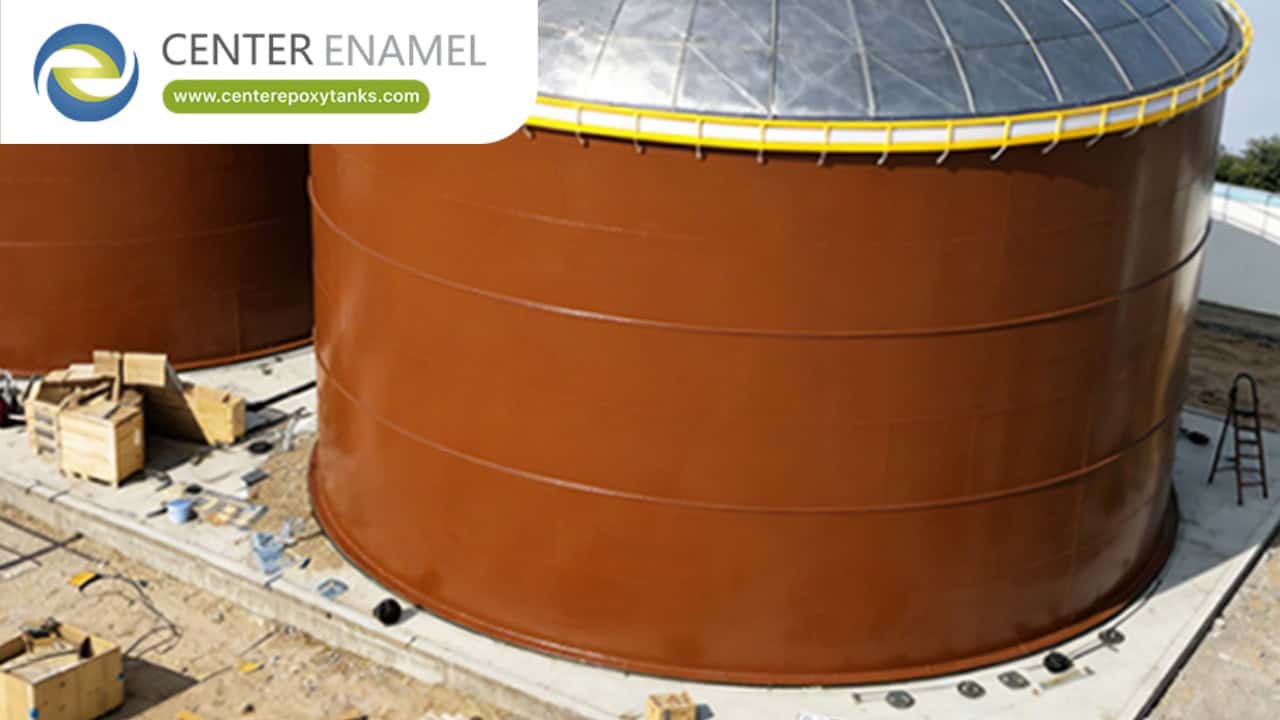
Oil Tank Domes for Remote Cold Sites
A north korea oil tank domes is a self-supporting cover that closes the tank without internal columns, protecting oil inventory from weather, contamination, and vapor loss in remote service.
This article covers aluminum and geodesic dome roofs, where they beat a conventional cone roof, and the load cases that govern specification in remote climates.
Main Topic / Definition
A geodesic is a clear-span, frameless or near-frameless shell - typically aluminum or epoxy-coated steel - that spans the tank without internal support columns, so the full tank volume stays usable and the vapor space is enclosed.
Aluminum vs geodesic
· Aluminum dome: light, corrosion-resistant, bolted panels; ideal for moderate spans and fast erection.
· Geodesic dome: triangulated steel or aluminum frame; handles very large diameters and heavy snow or process loads.
Key Characteristics / Components / Types
Structural logic
· Self-supporting: loads transfer to the tank rim, not the floor - no product-displacing columns.
· Panel system: factory-formed panels bolt to a compression ring sized for wind, snow, and seismic load.
· Access: roof manways, vents, and nozzles integrate without breaking the span.
Applications / Use Cases
remote domes are common on crude oil, refined product, and water tanks where weather protection, vapor containment, or a column-free interior matters.
· Coastal and high-humidity sites favor aluminum for corrosion resistance.
· Cold or snow-load regions (e.g., remote) need a geodesic or reinforced aluminum frame.
Technical Considerations
Design loads follow ASCE 7 (wind, snow, ice) and the tank standard. In remote climates, temperature swing, dust, and UV drive coating and joint selection.
· Wind uplift often governs on open sites; verify the anchor and compression ring.
· Vapor: a dome still needs API 2000 venting sized to the enclosed space.
Advantages and Limitations
· Advantages: column-free interior, long life, low maintenance, weather and vapor containment.
· Limitations: higher upfront cost than a simple cone roof; large spans need engineered framing.
Comparison / Selection Guide
Cover type | Span | Corrosion resistance | When to use |
Aluminum dome | Medium-Large | Excellent | Weather/vapor cover, fast install |
Geodesic dome | Very large | Good (coated steel/alum) | Heavy snow or process loads |
Fixed cone roof | Any | Coating-dependent | Lowest cost, no column constraint needed |
Best Practices / How to Choose
· Size the frame to local ASCE 7 loads, not a generic wind speed.
· Confirm venting for the enclosed vapor space before closing the tank.
· Specify coating and fasteners for the local corrosion class (C3-C5).
A geodesic gives a column-free, weather-tight enclosure that a cone roof cannot. Choose aluminum for corrosion service and geodesic for large or heavy-load spans.
Frequently Asked Questions (FAQ)
What is a north korea oil tank domes and when is it used?
A north korea oil tank domes is a containment or cover solution for oil service, used where standard bulk tanks need material, roof, or coating specification to perform safely and meet code. Selection starts from the product and duty, not a default form.
How do I choose between roof types for oil?
Match the roof to product volatility and climate. Floating roofs cut vapor loss on volatile liquids; domes enclose the vapor space and remove internal columns. Verify local wind, snow, and seismic loads before fixing the form.
Which standard applies to north korea oil tank domes?
Storage tanks follow API 650, with Annex C for external floating roofs and Annex H for internal floating roofs; venting follows API 2000 and fire protection NFPA 30. Domed covers add ASCE 7 load cases.
How long does a north korea oil tank domes last?
Service life follows material and maintenance: welded carbon steel with a good coating and bottom program runs decades; stainless and GFS extend life further. Inspection and lining care decide the outcome.
What are the most common failures to avoid with north korea oil tank domes?
The usual problems are wrong coating for the product, ignored rim seals on floating roofs, under-specified venting, and no bottom-inspection plan. Address these at specification, not after commissioning.


