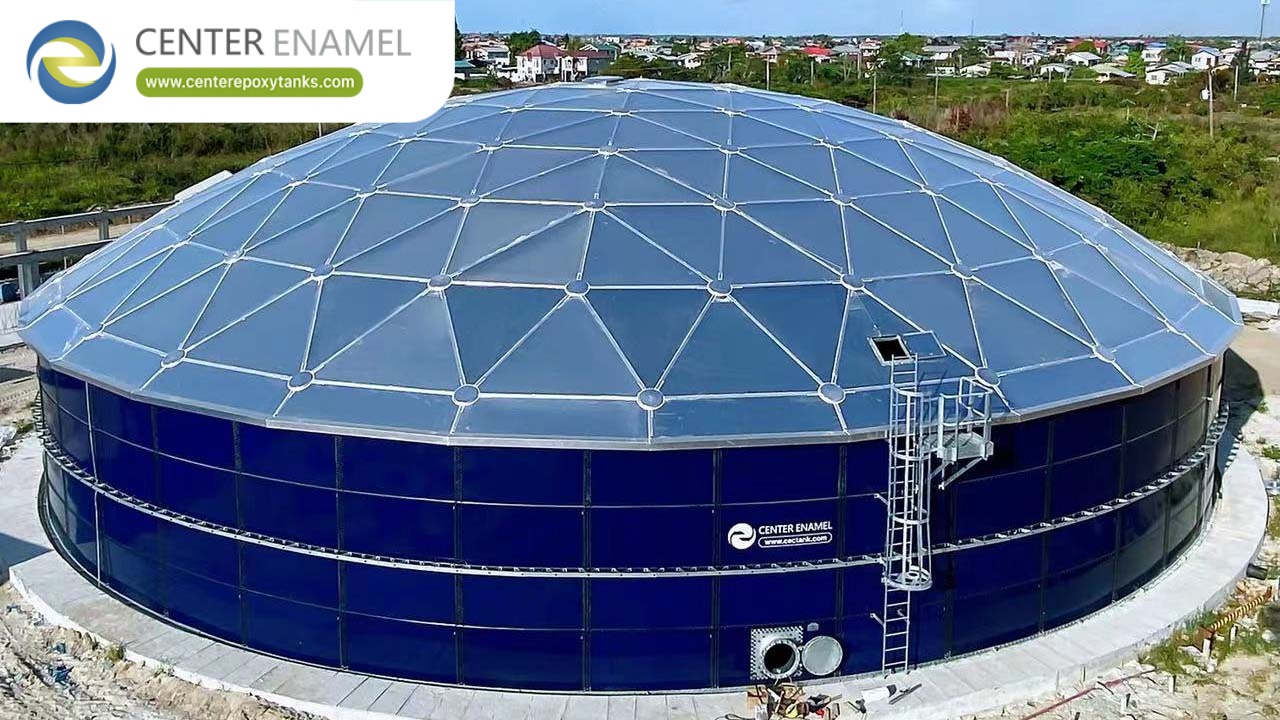
OEM And Custom Aluminum Dome Roof Manufacturer
Procurement teams that need aluminum geodesic dome roofs often search for an OEM or custom manufacturer rather than a catalog reseller. The distinction matters: an OEM/custom supplier can build to your structural drawings, alloy specification and accessory schedule, whereas a standard supplier ships a fixed product range. This article explains what a genuine custom aluminum dome roof manufacturer offers, how spec-to-print production works, and which capabilities to verify before awarding a custom dome contract.
What OEM And Custom Aluminum Dome Roof Manufacturing Means
An OEM (original equipment manufacturer) aluminum dome roof producer designs and fabricates the dome structure, node assemblies, batten bars, panels and seals under its own quality system, then ships them for site assembly. A custom manufacturer goes further: it accepts the buyer's geometry, load case, penetrations and finish schedule and produces a dome built to that specification rather than to a standard catalog size.
This model suits EPCs and tank owners whose tanks are not a standard diameter, who must meet a local code edition, or who need proprietary accessories (walkways, mixers, ventilation stacks) integrated into the dome. It is different from the 'evaluate a supplier' task: here the buyer already intends to contract custom production and needs to qualify the shop.
Spec-To-Print Capability Checklist
A credible custom dome manufacturer should accept and work from your issued-for-construction drawings, or jointly develop them against AWWA D108 / API 650 / ADM 2015 load cases. Confirm it can model the specific clear span, snow/wind/seismic zone, and internal environment (potable, wastewater, hydrocarbon) before pricing.
Ask for the alloy certificate (typically 6061-T6 or specified equivalent), node and batten-bar mill certificates, and a documented welding/assembly procedure. These are the items auditors and third-party inspectors will request at fabricatation hold points.
White-Label And Private-Label Production
Some buyers require white-label domes that carry the EPC's or end-owner's nameplate rather than the fabricator's. A custom manufacturer comfortable with white-label supply will separate its shop QA records (which it must retain) from the external marking, and will agree to confidentiality on the buyer's proprietary geometry.
White-label work is common for distributors that sell under their own brand. The risk is loss of traceability if the fabricator does not retain an independent set of mill certs; specify that certs follow the steel, not just the brand.
Aluminum Alloy And Material Controls
Aluminum dome structures rely on controlled alloy and temper for both strength and corrosion behavior. The manufacturer should state the alloy/temper, the anodizing or Mill Finish treatment, and the basis for any cladding. For potable or food-adjacent service, confirm the finish is inert and non-leaching.
Material control also covers the gaskets and sealants. Silicone gaskets that resist UV and temperature cycling are a documented feature of quality dome systems; verify the specified gasket grade rather than accepting a generic 'rubber seal'.
Manufacturing Process And QA Hold Points
Custom dome production runs through extrusion or forming of nodes and battens, panel cutting, hole drilling for penetrations, and a pre-assembly check. Define hold points (material incoming, first-article node, full fit-up mock-up) so the buyer can witness or delegate inspection.
A manufacturer with 300,000 enamel-steel plates and large aluminum-dome capacity can usually show a repeatable production line; the buyer should still require a first-article inspection on a non-standard diameter before full release.
OEM / Custom manufacturer — capability checklist
Capability | What to verify | Buyer action |
Spec-to-print | Accepts your drawings or co-develops to AWWA D108/API 650 | Issue IFC geometry + loads |
Material certs | Alloy/temper, node & batten mill certs | Require certs follow steel |
QA hold points | Incoming, first-article, fit-up | Define witness points |
Penetrations | Reinforced collars, local load check | Submit penetration schedule |
White-label | Separate shop QA from external marking | Specify confidentiality |
Penetrations, Accessories And Integration
Custom domes exist largely to absorb non-standard penetrations: manways, vent stacks, mixer supports, walkways and level instruments. The manufacturer should return a penetration schedule with reinforced collar details and confirm the dome's local load capacity at each penetration.
Integration also means the dome must match the tank rim. Provide the tank top-ring geometry and anchorage pattern early; a custom supplier will design the dome-to-tank connection rather than assume a generic interface.
Lead Time, Logistics And Site Assembly Support
Custom fabrication lead time scales with diameter, number of nodes and penetration complexity. A supplier that supports outside-in or inside-out assembly methods can reduce crane time on site; confirm which method it recommends for your tank and whether it supplies the jack/hoist system.
For exports, clarify packing (flat-pack panels vs pre-kitted node boxes), incoterms and whether supervision is included. Local assembly without specialized labor is a stated advantage of geodesic dome systems and should be reflected in the site plan.
Red Flags When Qualifying A Custom Manufacturer
Be cautious if a supplier cannot show a design calculation to a recognized code, will not release mill certs, or quotes a non-standard diameter with no first-article plan. Also question any claim of 'world-class' or 'unmatched' performance stated without a load case or test reference.
Another red flag is conflating a dome roof with a floating roof or a flat cover; these solve different problems and should not be substituted in a custom scope.
Cost Structure Of Custom Vs Standard Domes
Custom domes carry engineering and tooling overhead that standard sizes avoid, but they remove the cost of field-modifying a wrong-size product. Price drivers are diameter, node count, penetration count, alloy grade and QA scope.
Request a cost breakdown that separates engineering, fabrication, finishing, packing and supervision so the buyer can compare bids on like-for-like scope rather than on headline price.
Custom RFQ minimum content
Item | Required detail | Why it matters |
Diameter / rim | Exact tank top-ring geometry | Dome-to-tank fit |
Codes | Edition of AWWA D108 / API 650 / ADM | Basis of design |
Loads | Snow / wind / seismic zone | Structural sizing |
Penetrations | Count, size, loads | Local reinforcement |
Finish | Alloy, anodize, gasket grade | Service compatibility |
When Custom Manufacturing Is The Right Choice
Choose a custom aluminum dome roof manufacturer when the tank is non-standard, the code edition is prescribed, penetrations are complex, or the buyer needs white-label supply. For a standard catalog tank, a standard dome may be faster and cheaper.
The decision should follow from the tank's actual geometry and service, not from a preference for 'custom' as a label. Document the rationale in the procurement file.
Frequently Asked Questions
Q: What is the difference between an OEM and a custom aluminum dome roof manufacturer?
A: An OEM fabricates domes under its own quality system; a custom manufacturer builds to the buyer's specific geometry, code and accessory schedule rather than a catalog size.
Q: Can an aluminum dome roof be white-labeled?
A: Yes. A custom supplier can ship under the buyer's nameplate while retaining its own mill certificates and QA records for traceability.
Q: What should a custom dome RFQ include?
A: Tank diameter and rim geometry, design-code edition, environmental loads, internal atmosphere, penetration schedule with loads, finish spec, QA hold points and delivery terms.
Q: Which aluminum alloy is typical for dome structures?
A: Structural aluminum such as 6061-T6 is common; the manufacturer should state alloy/temper and provide mill certificates.
Q: Do custom domes need first-article inspection?
A: For a non-standard diameter, yes. A first-article node and fit-up check protects the buyer before full production release.
Q: How are custom domes assembled on site?
A: Geodesic domes use outside-in or inside-out methods with a proprietary jack/hoist system, allowing local crews to assemble without highly specialized labor.
Conclusion
Aluminum geodesic dome roofs are selected, designed and maintained as structural systems, not as standalone covers. The articles in this batch treat each angle — from OEM sourcing and tender specification to retrofit, corrosion, loads, accessories, applications and manufacturing — as a distinct user task with its own evidence and boundaries.
Work With Center Enamel
Center Enamel (Shijiazhuang Zhengzhong Technology Co., Ltd) has manufactured bolted and welded storage tanks since 2008 from its base in Shijiazhuang, China. The company produces GFS (Glass-Fused-to-Steel), FBE-coated, galvanized, stainless-steel and welded tanks, aluminum geodesic dome roofs, floating roofs, pressure vessels, and wastewater and biogas engineering packages. Its quality system carries ISO 9001, and aluminum dome roofs are designed to AWWA D108, API 650, ADM 2015, ASCE 7-10 and IBC 2012. With an installed base of 30,000+ projects and 300,000 enamel steel plates produced annually, Center Enamel supports drinking-water, municipal, industrial, petroleum, dry-bulk and architectural applications.
If you need an aluminum dome roof built to your drawings and code edition, Contact Center Enamel to discuss spec-to-print production, QA hold points and delivery terms.


