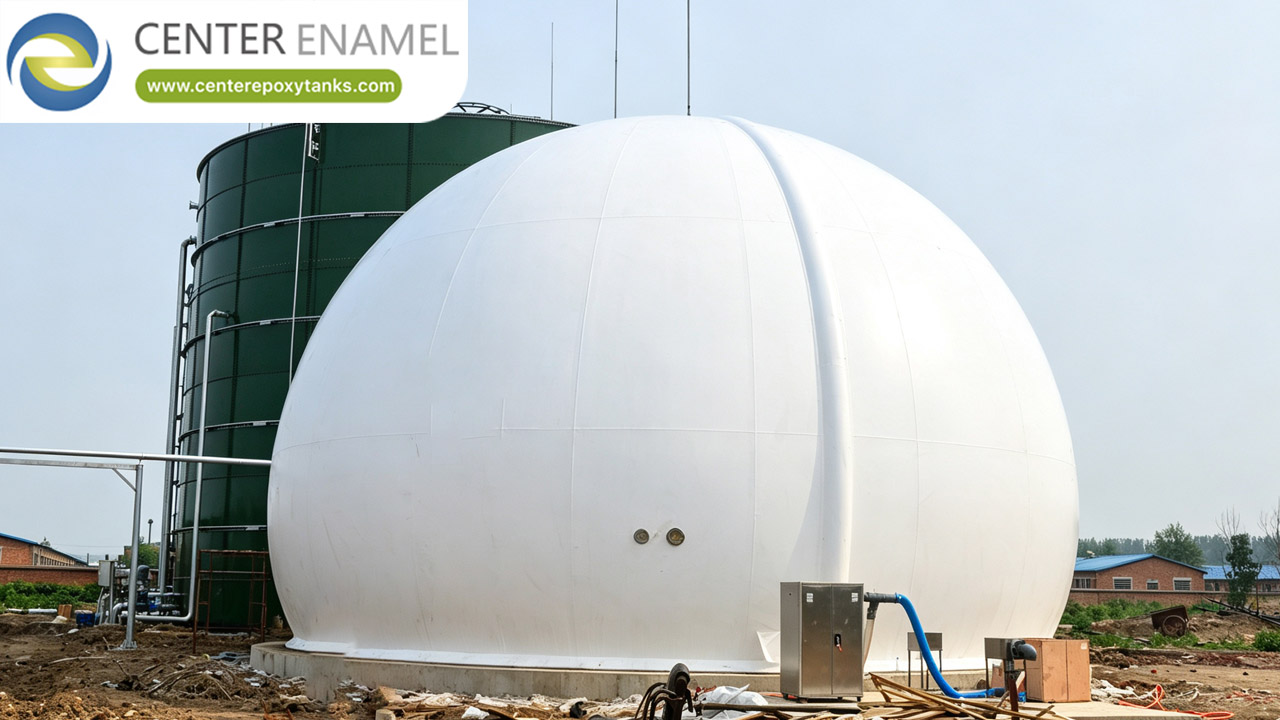
Membrane Gas Holder for Pig Farm Wastewater Treatment Projects: Optimizing Biogas Storage and Environmental Compliance
Intensive livestock production generates vast quantities of high-strength organic effluent, commonly known as pig slurry or manure. Managing this wastewater responsibly is vital for environmental protection, odor suppression, and regulatory compliance. The most sustainable and effective treatment method is anaerobic digestion (AD), which stabilizes the organic load while converting waste into high-value, methane-rich biogas.
However, because biological gas production fluctuates based on feeding schedules, herd variations, and ambient temperature shifts, while downstream energy generation (combined heat and power [CHP] engines or biomethane upgrading units) requires a steady input, facilities require a reliable buffer system. The membrane gas holder acts as the indispensable dynamic interface for pig farm wastewater treatment projects, bridging variable gas generation with continuous energy utilization.
Core Functions and Engineering Design in Swine Facilities
Integrated into agricultural wastewater infrastructure, modern membrane gas holders provide critical operational advantages:
Dynamic Buffer Capacity: Pig slurry digestion produces variable daily gas volumes. The flexible membrane holder dynamically expands and contracts to absorb production peaks and troughs, ensuring a continuous baseload supply for farm heating or electricity generation.
Constant Pressure Regulation: Utilizing a dual-membrane pneumatic structure with an automated control blower, the system maintains consistent operational delivery pressure to downstream combustion units, preventing equipment trip-offs and efficiency loss.
Superior Airtightness and Emission Control: Fabricated from high-tenacity, chemically resistant polymer materials, membrane holders provide an impenetrable barrier against gas leakage. This maximizes methane capture for green energy while suppressing odorous greenhouse gas emissions.
Corrosion Resistance Against Hydrogen Sulfide (H2S): Pig biogas typically contains moisture and corrosive H2S. Inert PVC/PVDF-coated architectural fabrics resist chemical degradation entirely, avoiding the rust and pitting common in untreated carbon steel structures.
Data Table: Comparative Analysis of Biogas Containment Options for Pig Farms
Technical Parameter | Double-Membrane Gas Holder | Rigid Welded Steel Tank | Fixed Concrete Gas Cover |
Corrosion Resistance (H2S) | Excellent; inert polymer membranes resist aggressive agricultural gases | Moderate; requires continuous internal epoxy recoating and weld inspections | Moderate; vulnerable to microbial-induced concrete corrosion (MIC) |
Volumetric Flexibility | Dynamic expansion and contraction matching real-time gas production | Fixed permanent volumetric capacity | Fixed containment space with zero elasticity |
On-Site Installation Time | Rapid modular deployment (7 to 10 days) | Extended field welding and rigging (30 to 45 days) | Slow civil pouring and multi-week concrete curing schedule |
Maintenance Profile | Low long-term overhead; modular component inspection | High ongoing maintenance for rust prevention and paint renewal | Moderate maintenance involving joint sealing and crack repair |
Frequently Asked Questions (FAQ)
Q: What is the role of a membrane gas holder in a pig farm wastewater treatment project?
A: It acts as a flexible buffer storage reservoir that captures methane-rich biogas produced during the anaerobic digestion of pig slurry, smoothing out production fluctuations and delivering a steady, constant-pressure gas supply to downstream power generators or boilers.
Q: How does a double-membrane gas holder maintain constant gas pressure?
A: An automated air blower system maintains positive air pressure in the inter-membrane space between the outer weather protection shell and the inner gas-tight bag, pressing downward to ensure uniform gas output pressure.
Q: Why are polymer membranes preferred over steel for pig farm biogas storage?
A: Pig slurry biogas contains high concentrations of moisture and hydrogen sulfide (H2S), which rapidly corrode steel. High-strength polymer and PVC/PVDF-coated fabrics are chemically inert, rust-free, and specifically engineered to withstand aggressive agricultural environments.
Q: Can membrane gas holders be installed directly on top of anaerobic digesters?
A: Yes. They can be configured either as integrated tank-mounted double-membrane roofs directly on top of circular CSTR anaerobic digesters or as independent standalone storage holders positioned on dedicated concrete foundation slabs.


