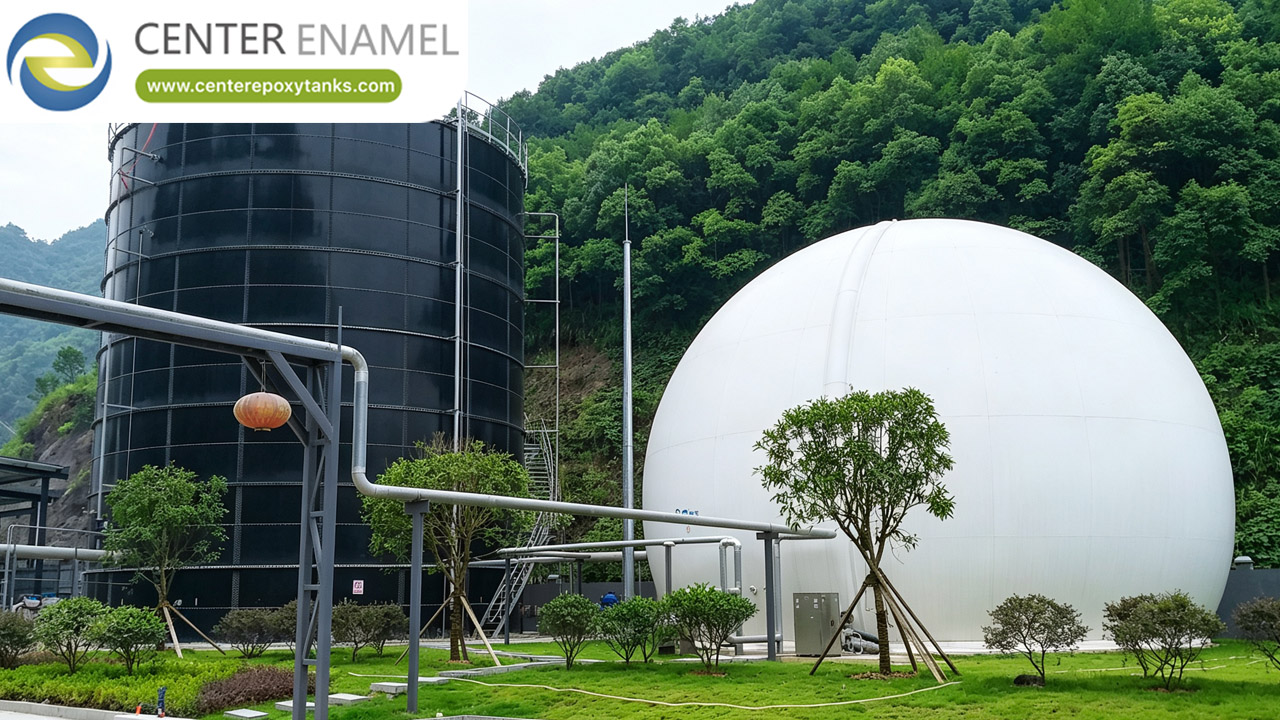
Membrane Gas Holder for Meat Processing Wastewater Treatment Projects: Maximizing Energy Recovery and Environmental Compliance
Slaughterhouses, meat processing plants, and commercial abattoirs generate high-strength wastewater laden with organic compounds, blood, paunch manure, fats, oils, and greases (FOGs). Treating this intensive wastewater stream requires robust biological systems, with anaerobic digestion serving as the cornerstone technology to break down complex organic loads, reduce chemical oxygen demand (COD), and generate substantial volumes of valuable biogas.
However, because slaughterhouse wastewater production and organic loading fluctuate based on daily processing shifts, managing the resulting biogas safely and efficiently is a critical engineering challenge. To maintain a steady fuel supply for combined heat and power (CHP) engines or boiler systems, facilities rely on advanced Membrane Gas Holders. As a globally trusted leader in environmental containment engineering, Shijiazhuang Zhengzhong Technology Co., Ltd. (Center Enamel) delivers specialized double-membrane gas storage systems designed explicitly to withstand the demanding conditions of meat processing wastewater projects.
The Critical Role of Membrane Gas Holders in Abattoir Wastewater Plants
In a meat processing wastewater treatment facility, the membrane gas holder functions as the vital dynamic interface between variable biogas generation and constant energy utilization:
Hydrogen Sulfide (H2S) and Moisture Resistance: Meat processing biogas contains significant concentrations of moisture and corrosive hydrogen sulfide gas derived from protein degradation. Traditional carbon steel gas holders suffer rapid pitting and structural oxidation in this environment. Center Enamel's membrane holders utilize chemically inert, high-tenacity PVC-coated polyester fabrics with specialized PVDF top layers that offer absolute corrosion immunity.
Buffer Capacity and Flow Stabilization: Inconsistent slaughterhouse operating schedules cause peaks and troughs in biogas generation. The flexible inner membrane expands and contracts dynamically, providing essential volumetric buffer capacity to smooth out flow irregularities.
Constant Pressure Regulation: An engineered outer membrane maintained by a continuous support blower system exerts a uniform downward pressure on the inner storage chamber, ensuring a stable, controlled output pressure for downstream combustion equipment.
Odor and Greenhouse Gas Control: Precision-engineered high-frequency welded seams create a 100% gas-tight envelope that prevents fugitive methane emissions and locks in pungent abattoir odors, ensuring strict compliance with local environmental protection mandates.
Data Table: Biogas Storage Technologies for Meat Processing Wastewater
Technical Parameter | Center Enamel Double Membrane Gas Holder | Traditional Welded Steel Gas Holder | Fixed Concrete Digester Cover |
Corrosion Resistance | Excellent; completely inert to H2S, moisture, and organic acids | Low; highly vulnerable to pitting and biogenic sulfuric acid attack | Moderate; prone to sulfate attack and concrete spalling |
Installation Velocity | Rapid modular site erection completed in days to weeks | Slow; prolonged by heavy field welding, craning, and coating | Extremely slow multi-month pouring and curing phases |
Gas Pressure Control | Constant, regulated output pressure via intelligent air blower system | Variable pressure dependent on mechanical piston or counterweight | Fixed or limited internal pressure management |
Structural Footprint | Lightweight architecture; minimal structural loading on tanks | Heavy structural dead load requiring robust foundations | Heavy monolithic structural footprint |
Lifecycle Maintenance | Minimal; zero routine anti-corrosion painting required | High; requires frequent rust remediation and seal inspections | Moderate; periodic joint and crack sealing |
Deployment Configurations for Meat Processing Plants
Depending on the plant layout and existing wastewater infrastructure, Center Enamel provides flexible deployment configurations:
Tank-Mounted Systems: Installed directly on top of anaerobic reactors, CSTR tanks, or Glass-Fused-to-Steel (GFS) wastewater buffers using secure stainless steel clamping systems, combining liquid containment and gas storage into a unified footprint.
Free-Standing (Slab-Mounted) Systems: Erected independently on a concrete foundation pad near the wastewater treatment plant, acting as a central clean-gas buffer reservoir for site-wide energy production.
Frequently Asked Questions (FAQ)
Q: Why are membrane gas holders essential for meat processing wastewater treatment projects?
A: Meat processing wastewater generates high-strength biogas containing corrosive hydrogen sulfide and moisture. Membrane gas holders provide complete chemical corrosion immunity, absorb production fluctuations from varying slaughter schedules, and deliver stable gas pressure for on-site energy generation.
Q: How do membrane gas holders handle variable biogas production rates?
A: The flexible inner membrane expands and contracts dynamically to accommodate peak and trough gas volumes, while the outer membrane maintains consistent operating pressure via automated support blowers.
Q: Can these membrane gas holders be retrofitted onto existing abattoir anaerobic tanks?
A: Yes. Center Enamel specializes in custom-engineered mounting solutions that allow double-membrane gas holders to be secured directly onto existing concrete or steel anaerobic digesters using specialized perimeter clamping rings.
Q: What is the expected operational lifespan of a Center Enamel membrane gas holder in an industrial wastewater plant?
A: Fabricated using high-tenacity, UV-resistant, and PVDF-lacquered synthetic textiles, these gas holders are engineered to deliver a long-term service life of 15 to 20 years with minimal routine maintenance requirements.


