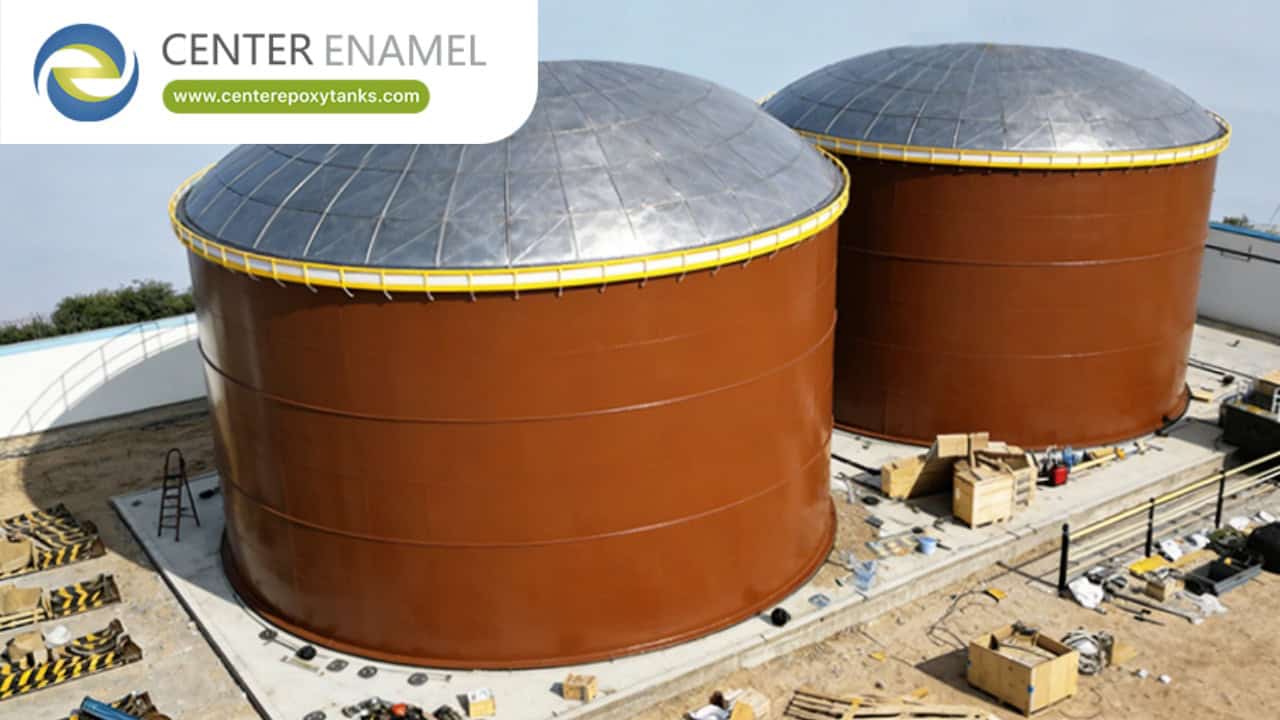
Leading China Welded Steel Water Treatment Tank Manufacturer
What is a welded steel water treatment tank? A welded steel water treatment tank is a heavy-duty containment vessel used in municipal and industrial processes to treat, filter, and store water. Fabricated through continuous seam welding, these tanks provide a 100% leak-proof and structurally rigid solution compared to bolted alternatives. They are essential for processes involving high pressure, chemical aeration, or thermal fluctuations in wastewater and potable water plants.
Technical Superiority of China-Made Welded Water Treatment Tanks
Modern water treatment requires infrastructure that can withstand corrosive environments and high-volume throughput. Selecting a premier China manufacturer offers several strategic advantages:
1. Advanced Fabrication and Welding Standards
Top-tier manufacturers utilize Submerged Arc Welding (SAW) and Robotic Arm Welding to ensure deep penetration and uniform seams. These tanks are designed in strict accordance with international codes:
● AWWA D100: Standard for Welded Carbon Steel Tanks for Water Storage.
● Eurocode 3: Design of steel structures.
● API 650: Welded tanks for oil and water storage.
2. Specialized Anti-Corrosion Systems
Since water treatment often involves aggressive chemicals (coagulants, chlorine, or lime), the internal coating is critical.
● Fusion Bonded Epoxy (FBE): A specialized coating that provides a high-build barrier resistant to pH fluctuations.
● Stainless Steel (304/316L): For ultra-pure water or highly acidic wastewater.
● Galvanized Steel: Offers sacrificial protection for fire water and raw water applications.
Technical Specifications & Engineering Data
Below are the core benchmarks for professional-grade welded water treatment tanks:
Feature | Specification / Technical Detail |
Capacity Range | 50 m³ to 60,000 m³+ |
Material Types | Carbon Steel (Q235B/Q345B), Stainless Steel (304/316L) |
Coating Standards | NSF/ANSI 61 (Potable), ISO 12944 (Corrosion) |
Welding Quality | 100% Visual Inspection; Ultrasonic (UT) & X-ray (RT) testing |
Operating Temp | -50°C to +200°C (depending on lining) |
Design Life | 30 - 50 Years |
Global Project References & Success Cases
● Municipal Sewage Treatment: Implementation of large-scale aerobic and anaerobic digesters, such as the Chengdu Sewage Treatment Plant Project (Total volume: 60,870 m³).
● Industrial Effluent Treatment: Specialized tanks for complex chemical waste, exemplified by the Ethiopian Textile Industrial Park Project (Total volume: 32,838 m³).
● Potable Water Infrastructure: High-capacity reservoirs for drinking water, like the Maldives Drinking Water Project (Total volume: 43,067 m³) completed in 2023.
● Landfill Leachate Treatment: Robust welded solutions for hazardous runoff, such as the Beijing Daxing Anding Project (Total volume: 10,392 m³).
Why Partner with an Integrated China Manufacturer?
Choosing an EPC (Engineering, Procurement, and Construction) capable manufacturer in China simplifies the project lifecycle:
● Custom Design: Engineering calculations based on local seismic zones and wind loads.
● Rapid Delivery: Direct access to major steel mills ensures shorter lead times compared to Western fabricators.
● Full Certification: Compliance with ISO 9001, ISO 14001, and ISO 45001 ensures safety and environmental standards are met.
Frequently Asked Questions (FAQ)
1. Welded vs. Bolted Water Treatment Tanks: Which is better?
Welded tanks are superior for high-pressure and high-volume applications where a permanent, leak-proof seal is mandatory. Bolted tanks are more efficient for remote locations with limited site access due to their modular shipping capability.
2. Can welded steel tanks handle wastewater with high salinity?
Yes. For saline or brackish water, manufacturers recommend 316L Stainless Steel or specialized Fusion Bonded Epoxy linings to prevent chloride-induced pitting.
3. How often do these tanks require maintenance?
With modern FBE or Glass-Fused coatings, these tanks typically require only visual inspections every 3-5 years, with major maintenance cycles occurring every 15-20 years.


