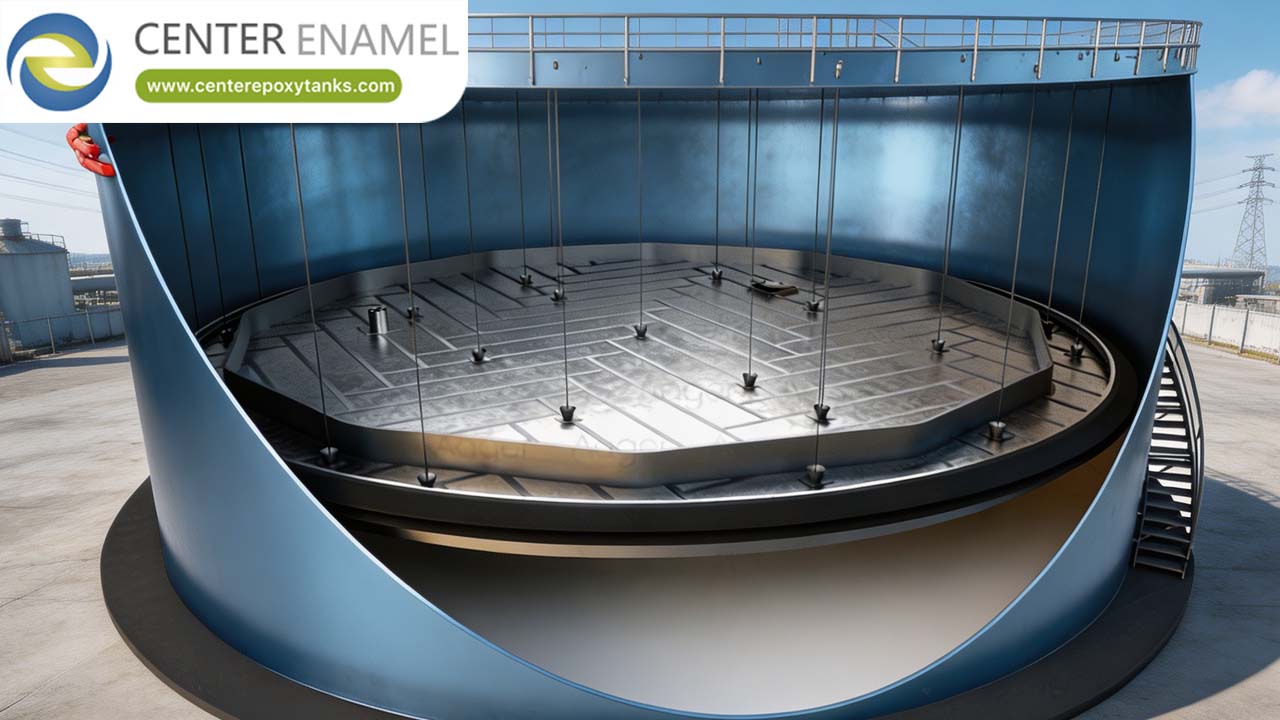
Internal Floating Roofs for Stainless Steel Chemical Tanks: Emission Control Guide
In the chemical and petrochemical industries, the storage of volatile liquids presents a dual challenge: minimizing environmental impact through the reduction of Volatile Organic Compounds (VOCs) and ensuring operational safety. For stainless steel chemical tanks, the installation of an Internal Floating Roof (IFR) is the industry-standard solution to manage these challenges effectively.
By eliminating the vapor space above the stored liquid, IFRs prevent the accumulation of flammable or hazardous gases, providing a robust defense against evaporation and internal tank fires.
The Engineering Advantage of IFRs in Chemical Tanks
Stainless steel is frequently chosen for chemical storage due to its inherent corrosion resistance. However, without an internal barrier, the headspace above the liquid becomes a "vapor space" where product evaporates. An IFR acts as a buoyant deck that rests directly on the liquid surface, moving vertically as the liquid level changes.
Key Operational Benefits:
VOC Emission Control: By minimizing the vapor space, IFRs suppress evaporation by over 90–98%, helping facilities meet stringent environmental regulations.
Enhanced Fire Safety: Removing the headspace eliminates the oxygen-rich, fuel-vapor-laden environment where ignition typically occurs.
Product Conservation: Reducing "breathing" and "working" losses means less product evaporation, directly protecting your bottom line.
Weather Protection: Unlike external floating roofs, IFRs are protected by the tank’s fixed roof, shielding the deck from wind, rain, and snow.
Technical Design Considerations
Compliance with API 650 Annex H is the global benchmark for designing internal floating roofs. When selecting a design for stainless steel tanks, engineers typically evaluate two primary configurations based on the chemical profile and tank diameter.
Comparison of IFR Configurations
Feature | Pontoon-Type IFR | Full-Contact IFR |
Design | Buoyancy provided by tubular pontoons. | Deck sits directly on the liquid surface. |
Vapor Control | High (but has some vapor space). | Superior (zero vapor space). |
Material Usage | Lightweight (often aluminum or SS). | Robust sandwich panels (often SS). |
Ideal For | Standard hydrocarbon storage. | High-volatility/High-purity chemicals. |
Compliance and Safety Standards
To ensure mechanical integrity, internal floating roofs must be designed according to rigorous standards:
API 650 Annex H: The definitive standard for material requirements, design modifications, and testing of internal floating covers.
Seal Effectiveness: Primary and secondary seals (mechanical shoe or wiper seals) must be used to bridge the gap between the deck and the tank shell, ensuring airtight vapor containment.
Electrical Grounding: Because internal floating roofs are moving metallic components, they must be properly bonded to the tank shell to prevent static electricity buildup—a vital safety precaution for flammable liquids.
Corrosion Compatibility: For stainless steel tanks, fasteners and hardware should also be stainless steel to prevent galvanic corrosion and ensure the IFR’s lifespan matches that of the tank shell.
Frequently Asked Questions (FAQ)
Q: Can I retrofit an existing stainless steel tank with an Internal Floating Roof?
A: Yes. Internal floating roofs are designed as modular systems that can be assembled on-site. They are frequently retrofitted into existing fixed-roof tanks to bring older infrastructure into compliance with modern environmental regulations.
Q: Which seal type is best for chemical storage?
A: Mechanical shoe seals or resilient liquid-mounted seals are typically preferred for chemical storage. These seals offer excellent contact with the tank shell, accommodating minor irregularities while effectively preventing vapor leakage.
Q: How do I handle maintenance on an Internal Floating Roof?
A: Modern IFR designs include adjustable support legs. These allow the roof to "park" at a set height during maintenance or cleaning, providing safe access for personnel beneath the deck while keeping the roof secure.
Q: Does an Internal Floating Roof affect the storage capacity of the tank?
A: There is a minor reduction in capacity due to the volume displaced by the roof deck and the necessity of support legs. However, the benefits in product conservation and emission control far outweigh this nominal loss in volume.
Are you evaluating storage upgrades for your facility? [Contact an expert engineering team] to discuss how IFR retrofitting can improve your stainless steel tank’s performance and regulatory compliance.


