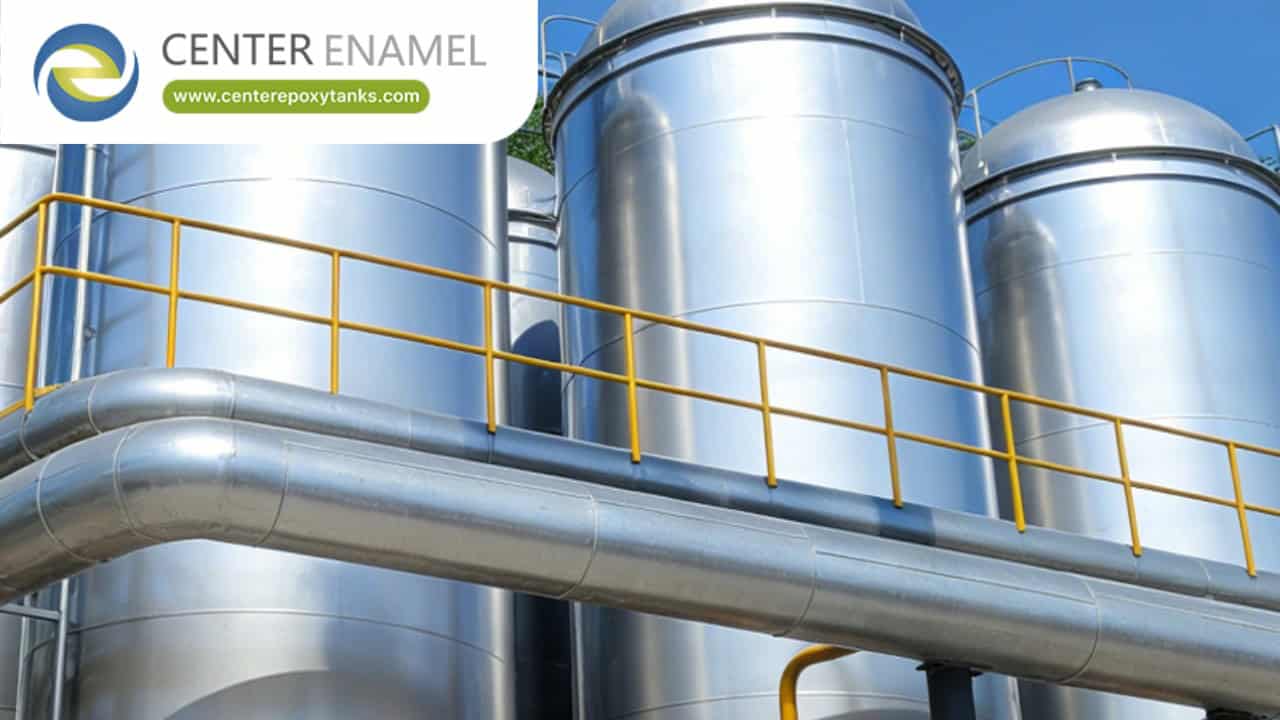
Industry-Leading China Welded Stainless Steel Edible Oil Tanks: A Procurement & Engineering Guide
For the edible oil industry, storage tank selection is not merely about capacity—it is about product purity, oxidation prevention, and hygienic integrity. Leading Chinese manufacturers of welded stainless steel tanks have pivoted from generic industrial fabrication to specialized, sanitary-grade production. By combining advanced welding techniques (meeting international ASME/API standards) with strict food-grade finishing (Ra ≤ 0.8 μm), these manufacturers now provide global edible oil processors with high-performance, cost-effective storage solutions that meet the most stringent global safety certifications (ISO, FDA, GMP).
1. Engineering for Edible Oil: The "Sanitary" Standard
Unlike industrial chemical tanks, edible oil storage requires design features that prevent rancidity and microbial growth. When sourcing from a Chinese manufacturer, ensure their "Welded Stainless Steel" capability includes these critical sanitary design elements:
● Self-Draining Design: Tanks should feature conical or sloped bottoms to ensure 100% discharge, preventing sediment or old oil from stagnating.
● Surface Finish (Hygiene): The interior must be polished to a surface roughness of Ra ≤ 0.8 μm. This smooth, non-porous surface prevents bacterial biofilm accumulation and facilitates effective Cleaning-in-Place (CIP).
● Continuous Welding: All interior seams must be fully penetrated and ground smooth. "Dead zones" or crevices where product can trap are the primary cause of contamination and must be eliminated through proper welding/polishing protocols.
● Inert Atmosphere Protection: For oils sensitive to oxidation, tanks should support nitrogen blanketing systems to exclude oxygen and extend shelf life.
2. Material Selection Matrix: 304 vs. 316L
Understanding material grades is the first step in cost-effective procurement.
Feature | 304 Stainless Steel | 316L Stainless Steel |
Typical Usage | Standard refined oils (Sunflower, Soy) | Aggressive/High-acid oils (Olive, specialized fatty acids) |
Corrosion Resistance | Excellent for neutral oils | Superior (Molybdenum content) |
Cost Efficiency | High | Moderate (Higher upfront investment) |
Food Safety | Standard food-grade compliance | Premium food-grade & Pharma-grade |
3. Why Global Buyers Choose China for Welded Tanks
The "Industry-Leading" label in China’s manufacturing sector today is backed by technical standardization:
● Manufacturing Capability: Large-scale automated welding lines (Submerged Arc Welding/GTAW) ensure consistent weld penetration and minimal Heat Affected Zones (HAZ), which are critical for preserving the chromium-oxide protective layer of stainless steel.
● API-650 Compliance: While API-650 is a general structural standard, top Chinese manufacturers apply these rigorous structural principles (weld testing, hydrostatic testing, wall thickness calculations) to edible oil projects, ensuring tanks can withstand site-specific seismic and wind loads.
● Integrated Tech: Modern tanks are rarely "just a shell." Leading Chinese fabricators integrate:
○ Heating/Cooling Jackets: To maintain oil viscosity and pumpability.
○ CIP (Clean-in-Place) Systems: Integrated spray balls for automated sanitation.
○ Agitation/Mixing: To maintain product homogeneity in bulk storage.
4. Critical Specifications for Your RFQ
To receive an accurate and competitive quote, your Request for Quotation (RFQ) should specify:
1. Product Viscosity & Temp: Specify if the oil requires heating or if it stays liquid at ambient temperature.
2. Sanitary Finish: Explicitly state "Internal surface finish Ra ≤ 0.8 μm" and "Full penetration welding with ground smooth finish."
3. Certification Needs: Require Mill Test Reports (MTRs) for steel quality and specify if you need third-party inspection (SGS/TUV/BV).
4. Cleaning System: Define whether a CIP system or manual access (manways) is required.
5. Frequently Asked Questions (FAQ)
Q: Why welded instead of bolted for edible oil?
Welded stainless steel provides a seamless, monolithic structure that is far easier to sanitize than bolted/gasketed joints. For food-grade applications, avoiding gaskets and crevices where bacteria can colonize is essential for food safety.
Q: How can we verify the "Food Grade" quality of Chinese tanks?
Reputable manufacturers provide certifications like ISO 9001, ASME, and sometimes CE/PED. Additionally, request a "Passivation Report" to verify that the stainless steel surface has been treated to maximize corrosion resistance after welding.
Q: Can these tanks handle temperature fluctuations?
Yes. Welded stainless steel tanks can be fitted with dimple jackets or half-pipe coils for steam or water circulation to maintain specific temperatures, ensuring your edible oil remains homogenous during transfer.
Procurement & Engineering Support
Selecting a manufacturing partner for your edible oil storage infrastructure is a strategic decision that affects product quality and plant uptime. Our team facilitates full design reviews, material compatibility assessments, and quality control verification for industrial storage projects worldwide.
We provide CAD/BIM assets, sanitary design reviews, and API-650 compliance verification for industrial stainless steel storage projects.


