How to Install a Data Center Thermal Energy Storage Tank: Erection to Commissioned Stratification
Installing a how to install a data center thermal energy storage tank correctly is what converts a good design into a performing asset. This article covers the installation sequence and pitfalls for data-center cooling duty.
Install a how to install a data center thermal energy storage tank by preparing the foundation, erecting the shell from bolted panels (or shipping a welded shell), fitting diffusers and nozzles, insulating, hydrotesting, and commissioning stratification. Bolting shortens the site schedule versus welded field fabrication; commissioning must verify the thermocline before handover.
Foundation and Erection
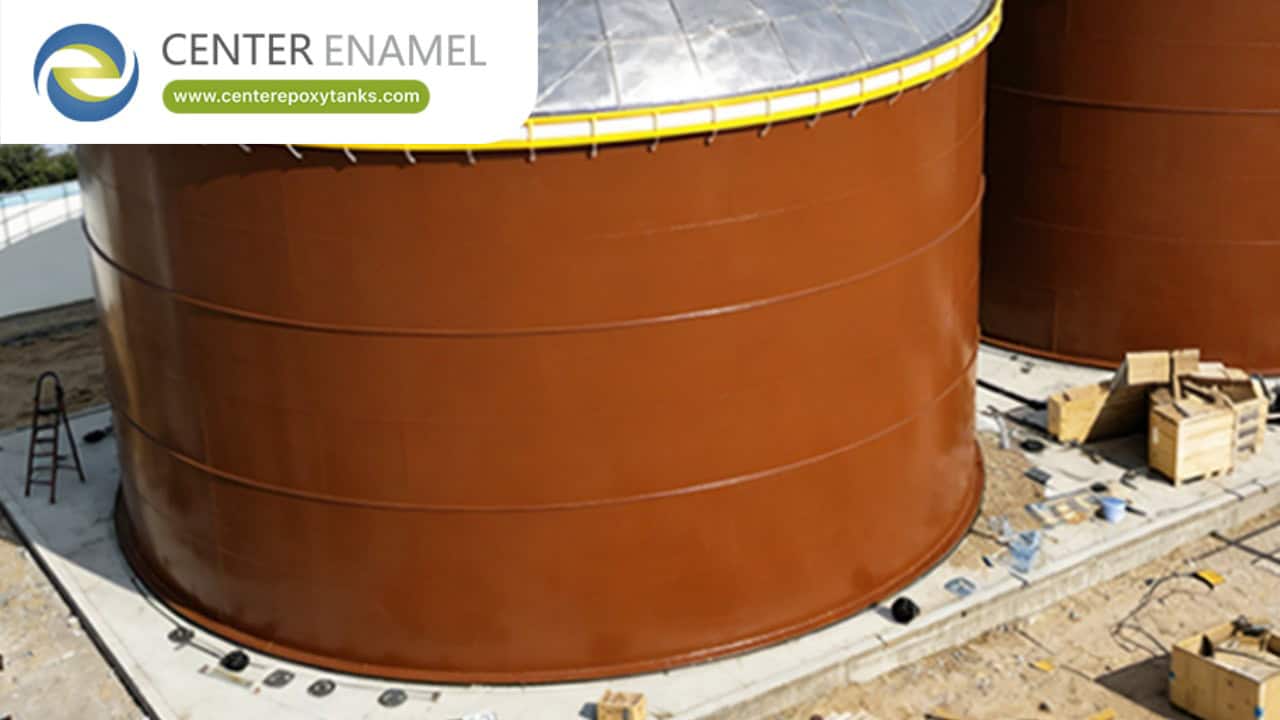
A ring-wall or slab foundation is built from the geotech report and surveyed for level; the shell is then erected from bolted panels with torque-controlled fastening and gasketed joints.
Bolted construction lets large diameters go up from containerised kits, shortening the critical path versus welded field work.
Piping, Diffuser, and Insulation
Nozzles, manways, and the diffuser manifold are set to the hydraulic design. Insulation (PU or mineral wool) is applied for the chilled duty to limit heat gain.
All water-contact surfaces are verified clean before fill, and trace heating or glycol is set if any exposed loop can approach freezing.
Hydrotest and Commissioning
The tank is filled and hydrotested per the applicable standard, then charged and discharged while multi-depth sensors confirm the thermocline forms and holds.
Only after stratification is verified is the tank handed to operations; this step is where design intent is proven.
Technical Specifications
Parameter | Specification |
Tank type | Atmospheric, stratified, or ASME-coded (duty dependent) |
Shell material | bolted glass-fused-to-steel (GFS) |
Capacity range | 20-60,000 m3 (bolted GFS, water/liquid duty) |
Stored medium | Chilled water (sensible) or phase-change medium (latent) |
Design temperature | -10 to 50 C (site / water dependent) |
Corrosion protection | Glass enamel, FBE, stainless, or galvanizing |
Insulation | Optional PU / mineral wool for chilled duty |
Codes / standards | AWWA D103, ISO 28765, EN 1090, ASME VIII |
Erection | Bolted modular panels, short site schedule |
QA | ISO 9001, NSF/ANSI 61, WRAS where applicable |
Foundation | Ring wall or slab per geotech report |
Verified Tank Engineering Reference
Center Enamel's verified record includes a 2022 Drinking water project in Namibia - 4 unit(s), φ41.26*8.4m (H) 4 set, 44,900 m3 total, GFS (Glass-Fused-to-Steel) bolted tank. Center Enamel has no published thermal-energy-storage or data-center TES project; this reference demonstrates the comparable large-tank manufacturing capability relevant to supplying stratified chilled-water TES vessels.
Project location | Namibia |
Application | Drinking water |
Tank type | GFS (Glass-Fused-to-Steel) bolted tank |
Scale | 4 unit(s), φ41.26*8.4m (H) 4 set |
Total volume | 44,900 m3 |
Year | 2022-09 |
Note | Cited as manufacturing-capability evidence, not a thermal-energy-storage project. |
Center Enamel Capability
Center Enamel (Shijiazhuang Zhengzhong Technology) manufactures bolted glass-fused-to-steel (GFS) tanks and ASME-coded pressure vessels for water and thermal-energy storage duty. For thermal-energy-storage (TES) service, the relevant products are large-diameter bolted GFS tanks, FBE-coated tanks, stainless steel tanks, welded shells, and ASME Section VIII vessels for pressurized or stratified chilled-water storage.
Quality is managed under ISO 9001, with bolted tanks built to AWWA D103 and ISO 28765 and available certified to NSF/ANSI 61 and WRAS where potable or indirect-potable contact applies. GFS shells are fired at 820-930 C to fuse the glass enamel, giving a durable, inert liner suited to treated chilled water; stainless and FBE options serve aggressive or high-purity loops. CE's verified delivery record - including a large Namibia installation - demonstrates the manufacturing capability behind these specifications.
Frequently Asked Questions
Q: Bolted or welded?
A: Bolted shortens schedule; welded suits shop-built shells where code allows.
Q: Why commission stratification?
A: To prove the thermocline forms and the tank delivers designed storage.
Q: What insulation is used?
A: PU or mineral wool for chilled duty to limit heat gain.
Q: Is hydrotest required?
A: Yes - per the applicable AWWA / ASME standard before handover.
Q: How long does install take?
A: Driven by foundation and shell size; bolted kits are fastest on site.
Q: How do I install a how to install a data center thermal energy storage tank?
A: Foundation, shell erection, diffuser/nozzle fit, insulation, hydrotest, then stratified commissioning.
Installing a how to install a data center thermal energy storage tank is a discipline of level foundations, correct torque, clean water contact, and a commissioned thermocline. Skip the last step and you never know if it works for data-center cooling duty.
Suggested Next Step
Let our field team sequence erection and commissioning so the tank is proven before handover.


