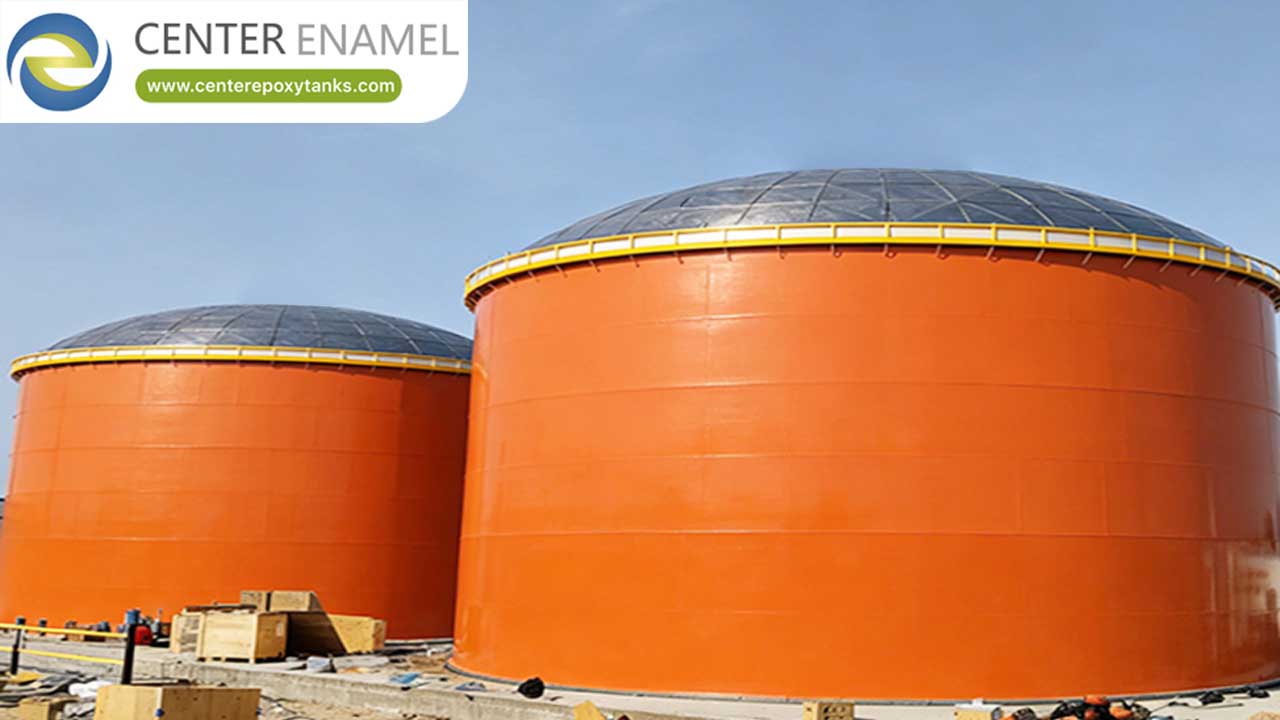
How to Choose the Right Aluminum Dome Roof for Your Storage Tank
When specifying a roof for large-diameter storage tanks, the aluminum geodesic dome roof has become the industry standard for environmental protection and asset longevity. Unlike fixed steel roofs, which are prone to corrosion and heavy maintenance, aluminum domes provide a self-supporting, lightweight, and corrosion-resistant structure. Choosing the right dome requires balancing structural load requirements, environmental compatibility, and long-term asset management goals.
1. The Engineering Standard: Aluminum Geodesic Domes
Aluminum dome roofs utilize a triangular grid geometry (geodesic structure) that distributes stresses across the entire frame, allowing for massive clear spans without internal support columns.
Most high-quality dome projects are engineered to comply with:
● API 650 (Appendix G): The standard for aluminum dome roofs on welded steel oil storage tanks.
● AWWA D108: The standard specifically covering aluminum structures for water and wastewater treatment tanks.
2. Key Selection Factors for Procurement
To choose the right roof, you must evaluate the project against the following "Decision Pillars":
A. Span and Geometry
● Clear Span Capability: Aluminum domes can span over 100 meters without internal supports. Determine if your tank size requires a specific radius or "rise-to-span" ratio to handle rain runoff or snow shedding.
● Tank Geometry: Ensure the dome curvature aligns with the tank shell diameter to ensure a proper peripheral seal.
B. Structural Load Engineering
The dome must be calculated based on your site's specific environmental data:
● Snow Loads: Vital in colder climates. The geodesic design must be reinforced to prevent accumulation.
● Wind Loads: Aluminum domes are aerodynamic, reducing the wind surface area compared to flat or conical roofs.
● Seismic Design: Because the dome is lightweight (often 1/10th the weight of steel), it significantly reduces the seismic load transmitted to the tank shell and foundation.
C. Environmental & Chemical Compatibility
● Vapor Containment: If the tank stores odorous or VOC-heavy liquids (wastewater/chemicals), select a sealed dome design with vapor-tight gaskets.
● Corrosion Resistance: Aluminum naturally develops an oxide layer, providing immunity to most atmospheric corrosion. However, in aggressive chemical environments (e.g., hydrogen sulfide or high chlorides), verify the need for specific anodizing or resin-based coatings on the aluminum panels.
D. Access and Ancillaries
A roof is only as good as its access points. When specifying, include:
● Hatches & Vents: Are standard roof hatches or specialized gauge hatches required?
● Walkways & Platforms: Will the dome accommodate external catwalks or internal suspended platforms for sensor maintenance?
3. Comparison of Tank Roof Types
Feature | Aluminum Geodesic Dome | Fixed Steel Roof | Floating Roof |
Corrosion Resistance | Superior (Natural) | Moderate (Requires Coating) | Poor (Steel/Pontoon) |
Self-Supporting | Yes (No interior columns) | Rarely (Needs support) | N/A |
Weight | Extremely Low | High | Moderate |
Maintenance | Minimal | High (Repainting/Repair) | Very High (Drainage issues) |
Installation Speed | Fast (Modular/Bolted) | Slow (Field Welding) | Moderate |
4. Specification Checklist for Engineers
To ensure you receive an accurate, compliant bid from manufacturers, provide the following data in your Request for Proposal (RFP):
1. Tank Dimensions: Precise diameter and shell height.
2. Environmental Data: Maximum wind speed (km/h or mph), ground snow load (kPa or psf), and seismic zone classification.
3. Containment Needs: Are internal vapors corrosive? (Requires material grade confirmation, e.g., 6061-T6 alloy).
4. Seal Requirements: Specify heavy-duty, EPDM weather-tight perimeter gaskets to prevent water ingress and vapor escape.
5. Standards Compliance: Explicitly state the required compliance (e.g., API 650 Appendix G or AWWA D108).
Future-Proofing with Aluminum
Choosing an aluminum dome roof is a strategic investment in Total Cost of Ownership (TCO). While the initial capital expenditure may be higher than a flat-welded steel roof, the elimination of recurring painting, the reduction of structural load on the tank foundation, and the increase in overall tank capacity (by removing interior columns) make it the most efficient choice for modern storage infrastructure.


