Horizontal Oil Storage Tank Cover: Access and Vapor
Oil storage tanks come in welded steel, bolted coated, stainless, and domed variants; the right choice follows the product, code, and site. For horizontal oil storage tank cover the first step is matching service to tank type, not picking a price.
What Is Horizontal Oil Storage Tank Cover?
An oil storage tank is any engineered vessel that holds crude, fuel, edible, or process oil. The family spans welded carbon-steel API 650 tanks, bolted glass- or epoxy-coated tanks, stainless vessels, and tanks fitted with floating or dome roofs — each suited to a different oil and duty.
How Does It Work?
Selection starts with the stored product's flammability, vapor pressure, corrosivity, and hygiene needs, then applies the governing code (API 650, EN 14015, ISO 28765, AWWA D103-09). Roof type follows vapor pressure; material follows corrosivity; foundations and dikes follow site and environment.
Key Types, Components, and Features
· Welded carbon steel:flammable crude/fuel, large diameters.
· Bolted coated (GFS/FBE):water, edible oil, mild process streams.
· Stainless:edible and clean lube oil.
· Roofed variants:floating (EFR/IFR) or aluminum dome by vapor pressure.
Applications
· Refineries, terminals, and fuel depots
· Food plants (edible oil)
· Power and industrial lube/hydraulic oil
· Mining, marine, and remote sites
Technical Considerations
· Standards:API 650 / EN 14015 for steel; ISO 28765 / AWWA D103-09 for coated bolted.
· Roof:vapor pressure decides fixed, floating, or dome.
· Material:corrosivity and hygiene decide carbon, coated, or stainless.
· Containment:bund or double wall per environmental rules.
Key Engineering Parameters
Design Parameter | Typical Value / Range | Why It Matters |
Standards | API 650 / EN 14015 / ISO 28765 | Code mapping |
Roof by vapor pressure | Fixed / floating / dome | Emission control |
Material by corrosivity | Carbon / coated / stainless | Durability |
Containment | Bund / double wall | Environment |
Foundation | Ring wall / pad | Settlement |
Capacity | 20-60,000 m³ typical | Range |
Welding | RT/UT, hydrostatic | Integrity |
Coating | Blast + system | Service life |
Project Case Study
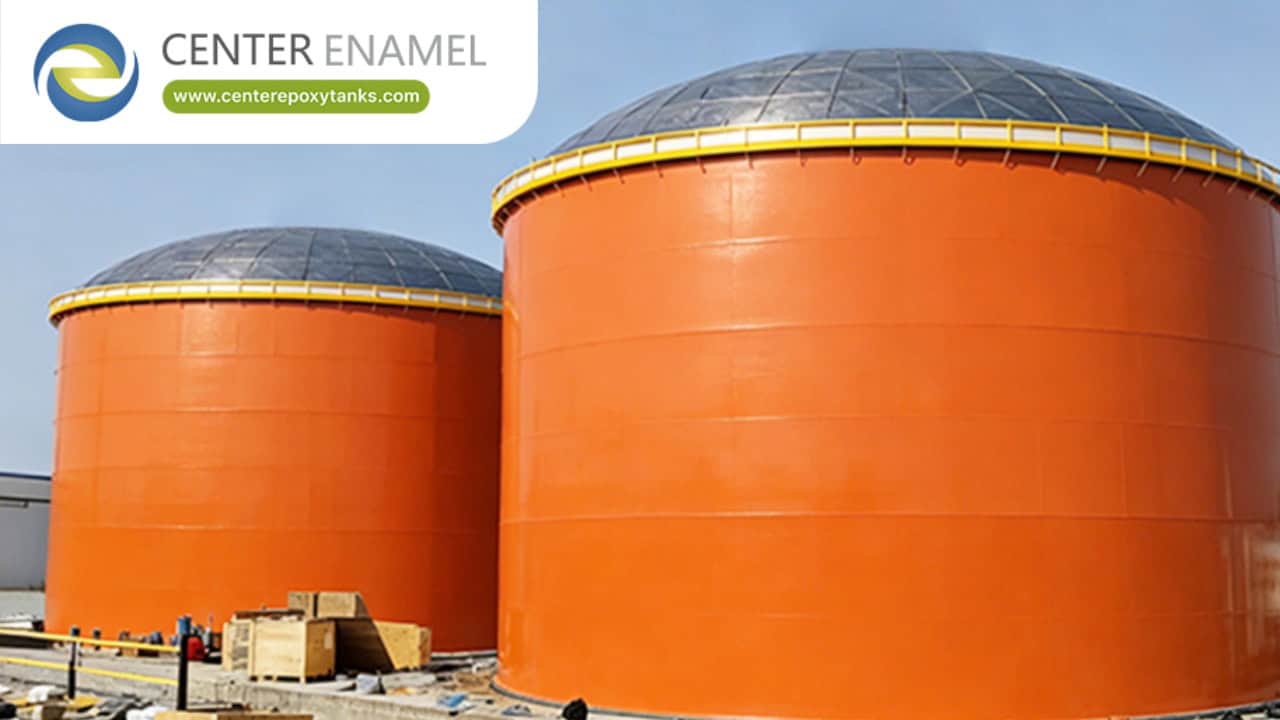
The following verified installation demonstrates the containment engineering discipline behind horizontal oil storage tank cover. (Application shown is the tank's actual delivered service; the same bolted, coated, or stainless engineering underlies oil-storage designs discussed here.)
Project Information | Details |
Location | India |
Year | 2024 |
Industry / Application | Fire-protection water for an industrial facility |
Product / Tank type | GFS bolted |
Configuration | 3 tanks, φ 19.86 × 13.2 m |
Capacity | 12,261 m³ |
Standards | AWWA D103-09 / ISO 28765 |
Status | Completed |
This reference is cited for its documented liquid-containment and corrosion-control engineering; it is not represented as an oil tank where it was a water or wastewater installation.
Advantages and Limitations
Advantages
· A type exists for nearly every oil duty
· Code basis (API/EN/ISO) keeps designs defensible
· Roof and material can be matched independently
Limitations
· Wrong roof/material choice is hard to retrofit
· Floating/dome options raise cost
· Site, climate, and code add constraints
Comparison
Tank type | Best oil | Key limit | Standard |
Welded steel | Crude, fuel | Field weld time | API 650 |
Bolted GFS/FBE | Edible, mild | Not for gasoline | ISO 28765 |
Stainless | Edible, lube | Cost | EN 1090 |
Domed/floating | Volatile | Vapor envelope | API 650 |
How to Select the Right Solution
· Define the product and its vapor pressure first
· Pick material by corrosivity and hygiene
· Choose roof by emissions and code
· Confirm foundation and containment with the site
· Validate against the applicable standard
horizontal oil storage tank cover are chosen by matching product, code, and site before cost. A disciplined selection avoids the expensive retrofits that follow a wrong first guess.
Frequently Asked Questions (FAQ)
What types of oil storage tanks exist?
Welded carbon steel (API 650), bolted coated (GFS/FBE), stainless, and roofed variants (floating or aluminum dome) — each for different oils and duties.
Which standard applies?
API 650 or EN 14015 for steel; ISO 28765 or AWWA D103-09 for coated bolted tanks, chosen by project location.
How do I choose the roof?
Vapor pressure decides: fixed roof for low-vapor liquids, floating roof for volatile crude/fuel, dome for sealed service.
What material for edible oil?
Stainless 304/316L or food-grade GFS, with passivation or LFGB certification as needed.
What about environmental rules?
Bund or double-wall containment plus monitored vents meet most spill and air permits.
What information is needed for a quote?
Product, capacity, vapor pressure, corrosivity, site loads, roof type, and applicable standard.
For horizontal oil storage tank cover, share your product, capacity, vapor pressure, corrosivity, and site loads with an engineering team to receive a specification and quotation aligned to API 650, EN 14015, ISO 28765, or AWWA D103-09.


