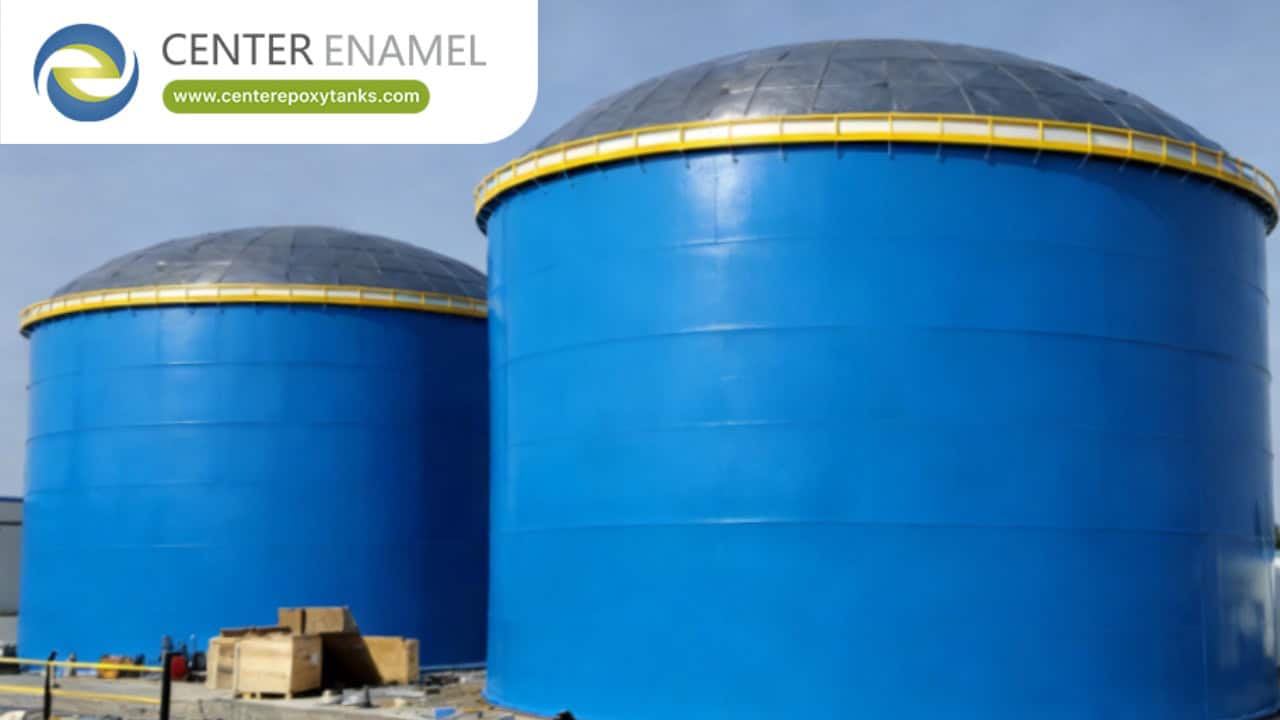
High-Strength Aluminum Geodesic Domes for Fuel Tanks
For the modern oil and gas industry, storage tank integrity is paramount. Conventional carbon steel roofs are increasingly being replaced by high-strength aluminum geodesic domes to address the dual challenges of operational longevity and environmental compliance.
At Center Enamel, we engineer geodesic domes that serve as the definitive "fixed roof" solution for fuel storage. Unlike traditional cone roofs, our aluminum structures are clear-span, corrosion-resistant, and designed to integrate seamlessly with both new and existing storage infrastructure.
Why Leading Terminals Switch to Aluminum Domes
Fuel storage facilities face harsh realities: sulfur-rich vapors, unpredictable wind and snow loads, and the constant threat of volatile organic compound (VOC) emissions. Our aluminum geodesic domes provide a comprehensive engineering response to these issues.
1. Superior Corrosion Resistance
Crude oil and refined fuels release chemical vapors that rapidly accelerate the degradation of steel roofs. Our domes are manufactured from high-strength aluminum alloys (e.g., 6063-T6) that form a naturally protective oxide layer. This eliminates the need for expensive sandblasting, recoating, or "roof-rot" repairs, ensuring a maintenance-free service life of 40+ years.
2. Clear-Span Structural Design
Traditional steel roofs often require internal support columns, which create "dead zones" and obstruct the operation of internal floating roofs (IFR). Our geodesic domes are fully self-supporting. By removing internal columns, you maximize the tank’s operational volume and ensure the free, unobstructed movement of floating roof systems.
3. Vapor Containment and Environmental Compliance
Environmental regulations regarding VOC emissions are tightening globally. A geodesic dome creates a sealed, controlled environment that significantly reduces product evaporation. When paired with an internal floating roof, it provides a "double-barrier" defense that makes it easy to meet EPA and international air quality standards.
Comparative Analysis: Aluminum Dome vs. Carbon Steel Roof
Engineering Metric | Aluminum Geodesic Dome | Carbon Steel Cone Roof |
Maintenance | Near-zero (No painting/coating) | High (Requires periodic repainting) |
Corrosion | Excellent (Inherent oxide shield) | Poor (Prone to chemical "rot") |
Internal Support | None (Clear-span) | Often requires columns |
Installation Speed | Fast (Modular/Bolted) | Slow (Field-welding/Heavy cranes) |
Load Bearing | High strength-to-weight ratio | Heavy (Requires shell reinforcement) |
Engineering for API 650 Compliance
Safety is not negotiable. Center Enamel’s domes are engineered in strict accordance with API 650 (Appendix G) standards. Our structural analysis accounts for site-specific environmental data, including:
Wind Loads: Aerodynamic geometry minimizes uplift, ensuring stability in hurricane-prone zones.
Seismic Coefficients: Lightweight aluminum reduces the structural burden on the tank shell during seismic events.
Access Requirements: We integrate customized hatches, vents, and platforms to ensure your maintenance teams can access the tank interior safely and efficiently.
Frequently Asked Questions (FAQ)
1. Can an aluminum dome be installed on an existing fuel tank?
Yes. One of the primary advantages of our modular geodesic design is the ability to retrofit existing tanks. Because our domes are lightweight and bolt-together, they can be assembled on the ground and hoisted into place, often without requiring the tank to be taken out of service for extended periods.
2. How does the dome handle fuel vapors?
The geodesic dome acts as a fixed, vapor-tight shield. When combined with an internal floating roof (IFR), it effectively stops the "breathing" effect of the tank, capturing vapors and preventing them from reaching the atmosphere.
3. Is aluminum safe for fuel storage environments?
Aluminum is non-sparking and non-combustible, making it inherently safer than steel in potentially explosive petrochemical atmospheres. It provides an excellent fire safety profile for fuel terminals and refineries.
4. How long does it take to install a dome on a 30-meter tank?
Due to our precision-manufactured, bolt-together modular system, a 30-meter diameter dome can typically be assembled and installed in less than two weeks, depending on the site conditions and crew size.
5. Does Center Enamel provide site supervision?
Absolutely. While our systems are designed for straightforward assembly, we provide comprehensive technical manuals and, upon request, can dispatch experienced installation supervisors to your site to ensure your project meets all structural and safety certifications.


