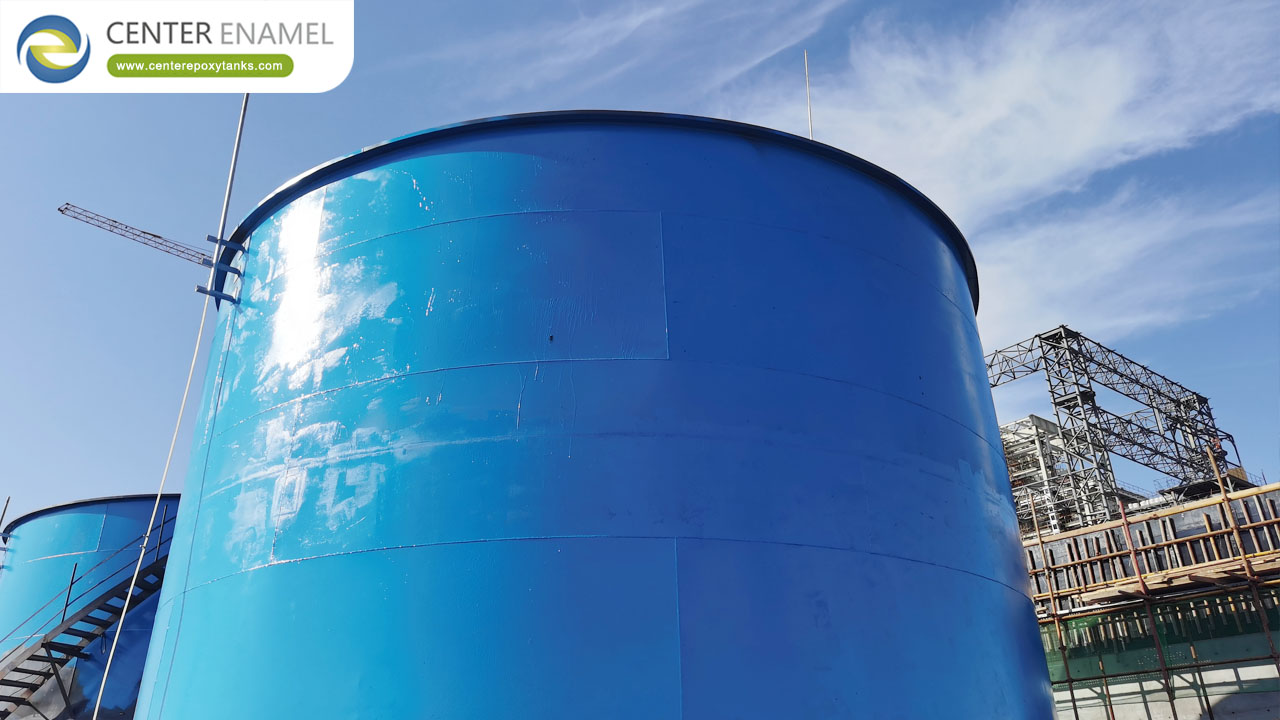
High-Quality Welded Carbon Steel Tanks: Industrial Fuel Storage Engineering
Welded carbon steel tanks are the primary infrastructure for large-scale industrial fuel storage, including diesel, heavy fuel oil (HFO), and aviation kerosene. Engineered to API 650 and EN 1090 standards, these tanks provide a monolithic, leak-proof structure capable of managing the high hydrostatic pressures and volatile organic compound (VOC) containment required for energy security. Center Enamel (Shijiazhuang Zhengzhong Technology Co., Ltd) specializes in high-integrity carbon steel vessels featuring advanced internal linings and Non-Destructive Testing (NDT), ensuring a 30-year service life for power generation, mining, and chemical processing facilities globally.
1. Technical Specification & Compliance Matrix
Feature | Technical Specification (2026 Standard) | Strategic Utility Value |
Material Grade | ASTM A36 / A516 / Q235B & Q345B | High-yield strength; optimized for weldability and toughness. |
Design Codes | API 650 / AWWA D100 / EN 1090 | Global benchmarks for atmospheric and low-pressure storage. |
Welding Protocol | Automated SAW (Submerged Arc Welding) | Ensures 100% penetration and uniform, leak-proof seams. |
Internal Linings | Phenolic Epoxy / Glass-Flake Polyester | Prevents fuel-induced corrosion and microbial "pitting." |
Testing Standards | RT (Radiographic) / UT (Ultrasonic) | Verifies weld integrity to prevent catastrophic fuel loss. |
Compliance | ISO 9001 / ISO 14001 / ISO 45001 | Certified quality, environmental, and safety management. |
2. Structural Dynamics: The Science of Fuel Containment
Advanced Corrosion Mitigation & Lining Chemistry
Industrial fuels often contain trace amounts of water and sulfur, which can lead to localized "pitting" corrosion at the tank bottom.
● The Barrier Solution: Center Enamel utilizes factory-applied, high-build epoxy linings. These coatings are chemically inert to hydrocarbons, preventing the electrochemical reaction between the fuel’s moisture content and the carbon steel shell.
● Monolithic Integrity vs. Mechanical Joints: For flammable fuels, welded construction is superior to bolted designs as it eliminates thousands of potential leak paths (bolts and gaskets), providing a seamless, fire-safe containment vessel.
Vapor Management & Environmental Safety
To meet modern ESG (Environmental, Social, and Governance) mandates, Center Enamel tanks are engineered for zero-emission performance:
● Vapor Recovery Integration: Our tanks are designed to interface with Vapor Recovery Units (VRU) to capture VOCs, reducing environmental impact and preventing the loss of valuable fuel through evaporation.
● Non-Destructive Verification: Every critical weld undergoes Radiographic (RT) or Vacuum Box Testing to ensure 100% airtightness before the tank enters service.
3. Specialized Applications in Global Energy & Industry
● Power Generation (HFO & Diesel): Providing massive strategic reserves for continuous-duty and peak-load power plants.
● Mining & Resource Extraction: Robust storage for remote sites where fuel tanks must withstand extreme temperature fluctuations and mechanical stress.
● Transportation Logistics Hubs: High-throughput bulk storage for rail, trucking fleets, and marine bunkering.
● Chemical Processing: Compatible containment for industrial solvents and feedstocks requiring high-yield carbon steel alloys.
4. Why Partner with Center Enamel?
As a leading Welded Carbon Steel Tanks Manufacturer, Shijiazhuang Zhengzhong Technology Co., Ltd (Center Enamel) offers a unique technological and logistical advantage:
● Decades of Engineering Mastery: We provide a single point of accountability—from initial API-compliant design and Finite Element Analysis (FEA) to international logistics and technical supervision.
● Precision Fabrication Base: Our facility utilizes fully automated production lines and CNC laser cutting, ensuring that every steel plate is prepared with sub-millimeter precision for perfect on-site fitment.
● Global Supply Chain Resilience: With successful project executions across all continents, we possess the logistical expertise to deliver large-scale components to remote industrial sites without material degradation.
● Integrated Support Systems: We offer a full range of appurtenances, including spiral stairways, fire-suppression foam chambers, and digital level-monitoring interfaces.
5. Technical FAQ: Industrial Fuel Storage
Q: How do you protect the tank bottom from "soil-side" corrosion?
A: We utilize high-performance external coatings combined with Cathodic Protection (CP) systems or specialized HDPE liners underneath the tank to prevent moisture from reaching the bottom plates.
Q: Can these tanks handle biofuels or ethanol blends?
A: Yes. However, these fuels are more aggressive than standard diesel. We specify higher-grade internal linings (such as novolac epoxies) to ensure material compatibility and prevent lining degradation.
Q: What is the typical inspection interval for a welded carbon steel fuel tank?
A: Following API 653 guidelines, we recommend a visual external inspection every year and a comprehensive internal "out-of-service" inspection every 10 to 20 years, depending on the fuel type and corrosion rates.


