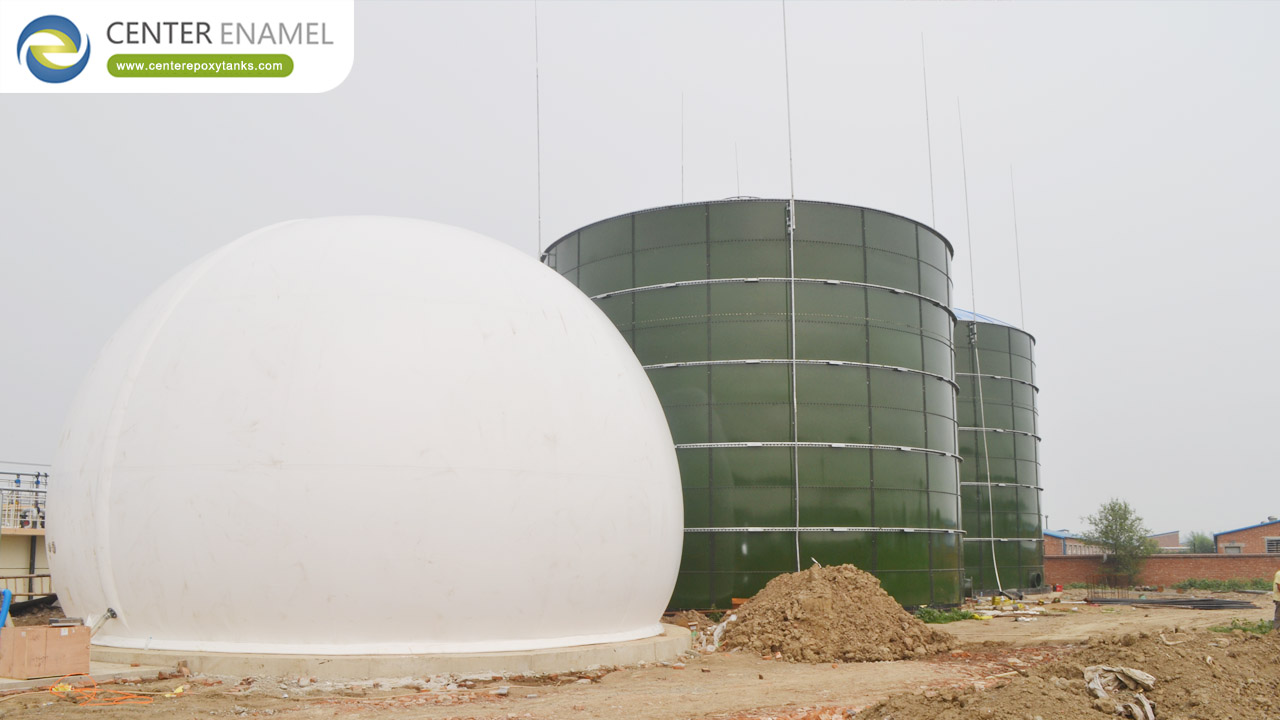
High-Quality Double Membrane Gas Holders: The Industrial Standard for Biogas Storage
A double membrane gas holder is an advanced, flexible storage system designed to sit atop anaerobic digesters or storage tanks, functioning simultaneously as a weather-resistant tank cover and an integrated gas storage vessel. Unlike rigid steel roofs, these systems feature two layers of high-strength, coated polyester fabric (typically PVDF or PVC) that expand and contract to store biogas, manage internal pressure, and protect the tank from atmospheric corrosion. They are the preferred solution for modern biogas plants, agricultural co-digestion facilities, and wastewater treatment centers due to their massive gas-holding capacity, low maintenance, and cost-effective deployment.
Why Industry Leaders Switch to Double Membrane Systems
Traditional steel roofs for anaerobic digesters have inherent limitations: they are heavy, require complex structural support, and offer zero gas storage capability. The transition to double membrane gas holders is driven by the need for operational efficiency and environmental safety.
Integrated Gas Storage: The space between the inner and outer membranes acts as a variable-volume gas reservoir. This allows facilities to store biogas generated during peak times and consume it during energy production cycles, maximizing the efficiency of Combined Heat and Power (CHP) units.
Material Resilience: High-quality manufacturers use PVDF (Polyvinylidene Fluoride) coated fabrics, which offer exceptional UV resistance, anti-fungal properties, and durability against the aggressive chemicals found in biogas (e.g., $H_2S$).
Pressure Management: The system utilizes an automated air-inflation unit that maintains a constant pressure in the outer membrane, ensuring the gas holder remains rigid against wind and snow loads while safely regulating the gas storage volume.
Comparative Overview: Storage Roof Technologies
Feature | Double Membrane Gas Holder | Fixed Steel Cone Roof | Floating Steel Roof |
Gas Storage | High (Integrated) | None | None |
Weight | Lightweight | Heavy | Moderate |
Installation | Fast (Modular) | Slow | Slow |
Corrosion | Immune (Inert Material) | High (Requires Coating) | High |
Compliance | ATEX/Explosion Proof | N/A | N/A |
Engineering Parameters for High-Quality Membranes
When evaluating a manufacturer, engineers look for specific performance benchmarks that dictate the longevity of the installation:
Material Tensile Strength: Measured in N/5cm, high-quality fabrics must withstand extreme wind loads without tearing or permanent deformation.
UV & Thermal Stability: The outer membrane must withstand constant sun exposure for 15+ years without chalking or cracking.
Weld Integrity: High-frequency welding is mandatory. Unlike manual stitching, high-frequency heat welding creates a seam stronger than the base material, ensuring gas tightness.
Integrated Safety Systems: Modern systems include over-pressure relief valves (PVRV), vacuum relief valves, and radar-based volume measurement sensors that integrate directly into the plant’s SCADA system.
Frequently Asked Questions (FAQ)
Q: What is the typical service life of a double membrane roof?
A: With proper operation and maintenance, high-quality PVDF-coated membranes typically have a service life of 15 to 20 years. Regular inspection of the ventilation fans and pressure valves is the primary maintenance requirement.
Q: Are these membranes safe against fire and explosions?
A: Yes. The fabrics used are inherently flame-retardant (meeting international standards like DIN 4102-B1). Furthermore, the double-membrane design prevents the formation of an explosive air-gas mixture, provided the system is operated according to the manufacturer’s pressure management protocols.
Q: Can you install these membranes on existing tanks?
A: Yes. Because double membrane systems are significantly lighter than steel, they can often be retrofitted onto existing anaerobic digesters or wastewater tanks without requiring major foundation reinforcements.
Partnering with Expert Engineering
Selecting a gas holder is a core infrastructure decision for any biogas project. By partnering with a manufacturer that combines advanced membrane material science with precision pressure-management engineering, you ensure that your energy plant operates at peak storage efficiency with minimal downtime.
Are you developing a new anaerobic digestion plant or retrofitting an existing tank farm?
Contact our engineering team to request a structural sizing calculation, gas storage capacity assessment, and a technical proposal tailored to your daily biogas yield requirements.


