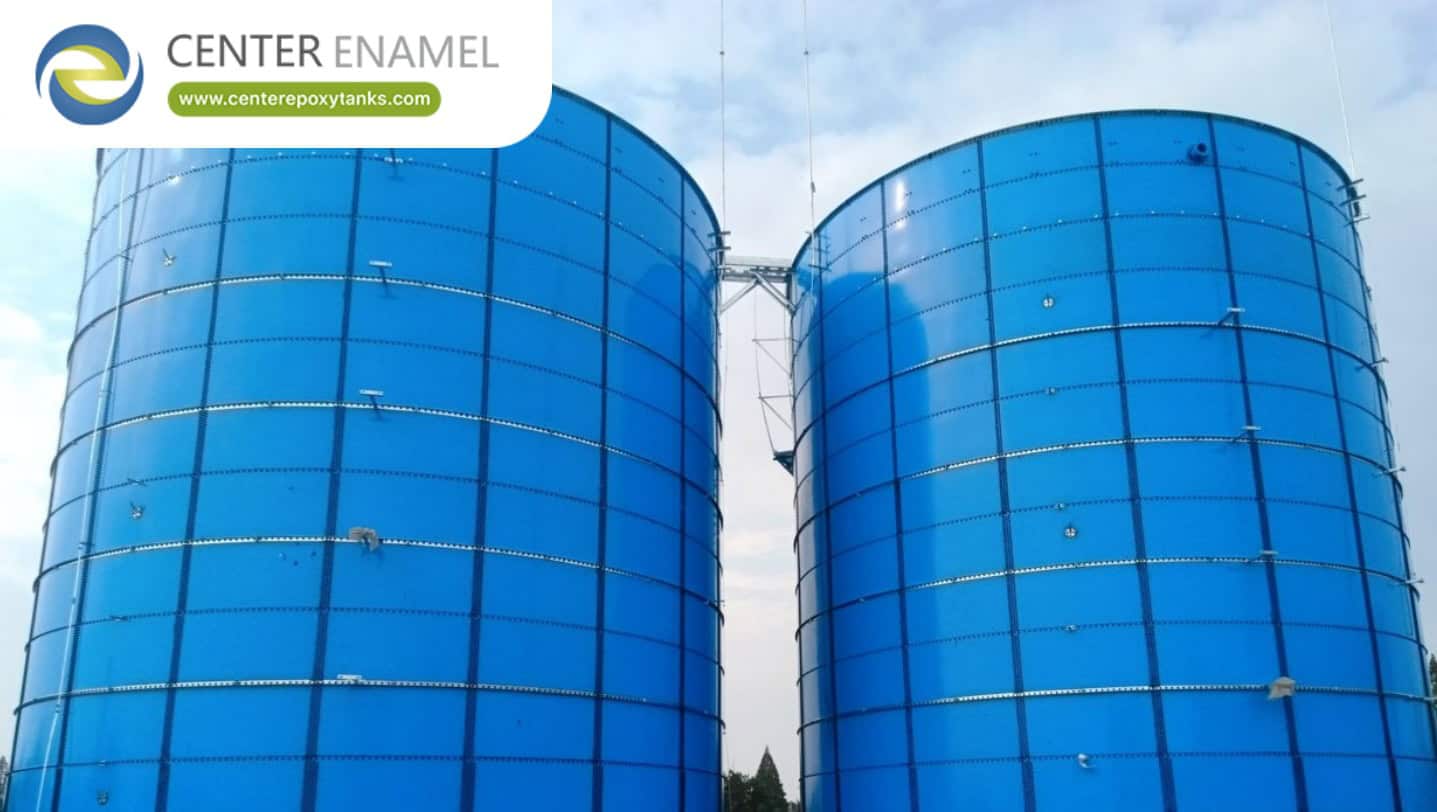
High-Performance Fusion Bonded Epoxy (FBE) Tanks for Desalination Plants
Desalination plants operate in some of the most aggressive environmental conditions on earth. Between the highly saline processed water and the salt-laden coastal atmosphere, infrastructure is under constant, relentless attack by corrosion. For engineers and facility managers, the containment vessel is not just a tank—it is a critical barrier between the process and environmental failure.
Fusion Bonded Epoxy (FBE) tanks have emerged as the definitive choice for modern desalination facilities, outperforming both traditional concrete and high-grade stainless steel in specific, high-chloride applications.
The Engineering Challenge: The "Chloride Problem"
In coastal or saltwater environments, standard industrial materials often hit a wall:
Stainless Steel Risks: While often considered "premium," stainless steel (304/316) is highly susceptible to Chloride Stress Corrosion Cracking (CSCC). In the presence of salt air and saline water, stainless steel can develop microscopic cracks that lead to catastrophic structural failure.
Concrete Degradation: Saltwater penetration causes the steel rebar within concrete to rust, leading to spalling, cracking, and eventual structural instability.
Why FBE Technology is the Desalination Industry Choice
Fusion Bonded Epoxy (FBE) technology solves these challenges through a factory-controlled thermal bonding process. The epoxy is fused to the steel substrate at high temperatures, creating an inert, non-metallic, and non-porous barrier that is effectively immune to chloride-induced corrosion.
Material Performance Comparison
Feature | Fusion Bonded Epoxy (FBE) | Stainless Steel (304/316) | Reinforced Concrete |
Saltwater/Chloride Resistance | Excellent (Inert Barrier) | Poor (Susceptible to CSCC) | Low (Rebar corrosion) |
Installation Speed | Fast (Modular) | Slow (Field-Welded) | Very Slow (Curing) |
Structural Reliability | High | High (Until CSCC occurs) | Moderate |
Maintenance | Minimal | Low | High |
Lifecycle ROI | Highest | Moderate | Low |
Advantages for Desalination Infrastructure
1. Immunity to Chloride-Induced Cracking
FBE tanks provide an inorganic, chemically inert barrier. Because the epoxy coating acts as a dielectric shield, it is completely immune to the chloride stress corrosion cracking that plagues stainless steel in desalination environments. This makes FBE the safer, more predictable choice for coastal sites.
2. Factory-Controlled Quality
Desalination plant sites are often remote or difficult to access. Our bolted steel tanks are fabricated in a controlled factory environment where coating consistency is verified via high-voltage "holiday testing." This eliminates the risk of inconsistent field welds or porous coatings, which are common failure points in other tank designs.
3. Rapid Deployment & Scalability
Our modular, bolted design allows for rapid assembly. Whether your desalination plant is expanding capacity or requires a quick-deploy solution for a temporary operation, our FBE tanks can be assembled with minimal on-site impact compared to the heavy machinery required for poured-in-place concrete.
4. Optimized Total Cost of Ownership (TCO)
In the harsh desalination environment, infrastructure maintenance is a significant expense. FBE tanks are designed for a 30+ year lifespan with minimal upkeep, providing a superior return on investment by eliminating the need for periodic painting, structural sealing, or catastrophic repairs.
Frequently Asked Questions (FAQ)
Q: Are FBE tanks truly suitable for saltwater environments?
A: Yes. FBE tanks are often superior to stainless steel in high-chloride, coastal environments. The chemically inert epoxy barrier is immune to the "pitting" and stress corrosion cracking that can cause stainless steel to fail in the presence of salt spray and saline water.
Q: Can these tanks be used for raw seawater or reverse osmosis (RO) permeate?
A: Absolutely. FBE tanks are widely used for various stages of the desalination process, from raw intake storage to permeate stabilization and treated water storage.
Q: Do I need cathodic protection for an FBE tank in a marine environment?
A: No. Because the factory-applied FBE creates a complete, continuous dielectric barrier, there is no need for complex cathodic protection systems, significantly simplifying your long-term maintenance.
Q: How does the assembly process handle high-wind coastal areas?
A: Our bolted steel tanks are engineered to meet stringent wind and seismic codes (e.g., AWWA D103). The modular nature of the tank allows it to be structurally analyzed and reinforced for specific local weather conditions before it ever arrives on-site.
Q: Is the FBE coating repairable if damaged?
A: Yes. In the unlikely event of mechanical damage during installation, site-proven touch-up kits are available to restore the coating’s integrity, ensuring the tank remains fully protected and leak-proof.


