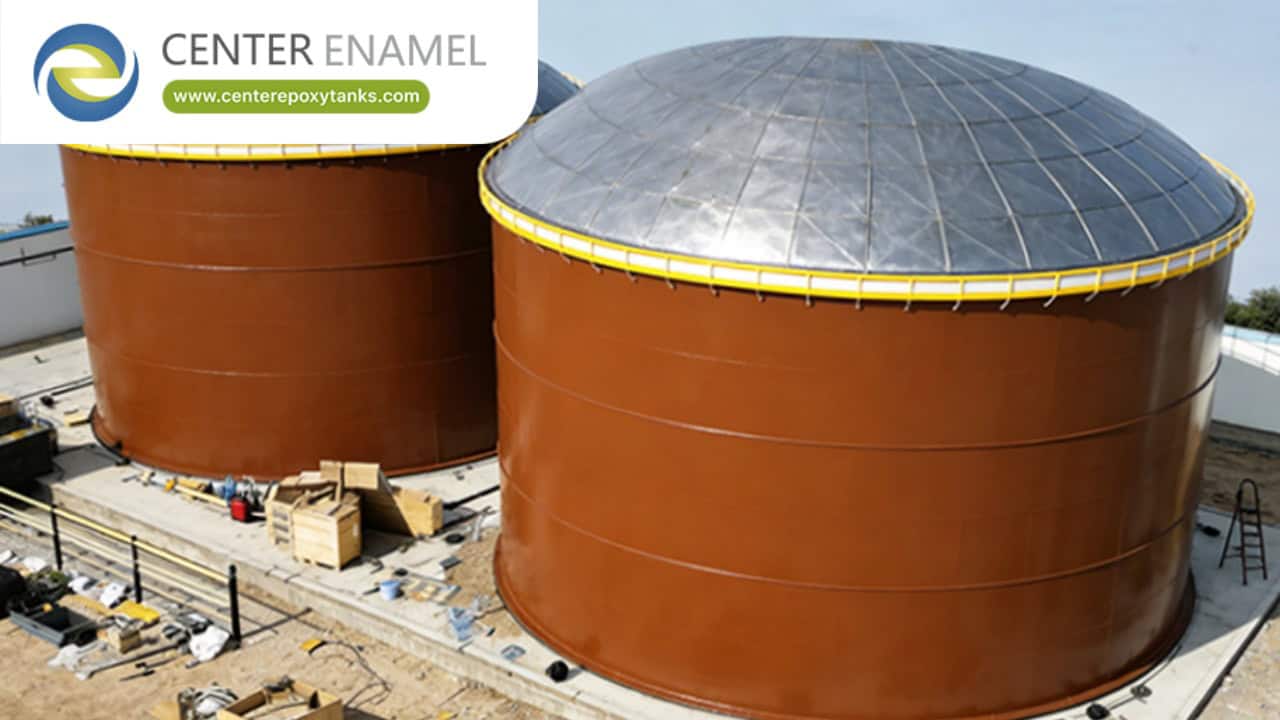
High-Performance Crude Oil Storage Tanks
A high performance crude oil storage tank stores unrefined or stabilized crude before pipeline, ship, or refinery transfer; the specification sets both safety and throughput for the whole upstream chain.
This guide covers material and construction choices for high performance crude oil tanks, the standards that apply, and how to specify capacity and containment.
Main Topic / Definition
Crude oil storage tanks are atmospheric or low-pressure vessels, usually vertical, cylindrical, and built to API 650, that hold crude from production separators through to export.
Atmospheric vs pressurized
· Atmospheric fixed-roof or floating-roof tanks dominate bulk crude storage.
· Low-pressure bullets or spheres handle stabilized, volatile fractions where pressure is economical.
Key Characteristics / Components / Types
Build forms
· Welded, field-erected: the norm for large crude volumes.
· Bolted, factory-coated (e.g., GFS): faster erect, good where coating integrity matters.
· Floating-roof option: external or internal float cuts crude VOC loss.
Applications / Use Cases
Crude tanks sit at wellheads, gathering stations, export terminals, and refinery tank farms. High performance applications emphasize uptime and transfer reliability.
· Export terminals size tanks to ship parcel volume plus buffer.
· Infield tanks size to separator surge plus truck/pipe rhythm.
Technical Considerations
Crude is variable - wax, water, H2S, and sand change the spec. Bottom and floor protection, internal coating, and proper venting (API 2000) are non-negotiable.
· Heating coils or insulation matter for waxy or high-pour crude.
· Secondary containment and leak detection protect soil and water.
Advantages and Limitations
· Advantages: welded steel scales to very large volumes; floating roofs cut loss and fire risk.
· Limitations: coating and bottom maintenance; external floating roofs need rim-seal management.
Comparison / Selection Guide
Construction | Typical use | Erection speed | Key trade-off |
Welded field-erected | Large crude volumes | Slower | Highest volume, on-site welds |
Bolted GFS | Coated, faster erect | Faster | Coating fired in factory, size steps |
Bolted carbon steel | General bulk | Faster | Field coating quality risk |
Best Practices / How to Choose
· Size to transfer rhythm plus surge, not just daily rate.
· Specify floating roof for volatile crude and emissions-limited sites.
· Include heating and bottom protection for waxy or watery crude.
A high performance crude oil storage tank should be specified by crude character and transfer duty first, then by construction. Floating roofs and proper venting protect both product and permit.
Frequently Asked Questions (FAQ)
What is a high performance crude oil storage tank and when is it used?
A high performance crude oil storage tank is a containment or cover solution for crude oil service, used where standard bulk tanks need material, roof, or coating specification to perform safely and meet code. Selection starts from the product and duty, not a default form.
Welded or bolted - which is better for crude oil?
Welded gives a continuous shell and the largest volumes; bolted (including GFS) erects faster with factory coating control. Choose by schedule, volume, and whether bolted seams are acceptable for the duty.
What standards apply to high performance crude oil storage tank?
API 650 governs welded atmospheric tanks; AWWA D103-09 covers bolted factory-coated steel. Venting (API 2000), fire (NFPA 30), and containment (SPCC where applicable) are companions, not options.
How long does a high performance crude oil storage tank last?
Service life follows material and maintenance: welded carbon steel with a good coating and bottom program runs decades; stainless and GFS extend life further. Inspection and lining care decide the outcome.
What are the most common failures to avoid with high performance crude oil storage tank?
The usual problems are wrong coating for the product, ignored rim seals on floating roofs, under-specified venting, and no bottom-inspection plan. Address these at specification, not after commissioning.


