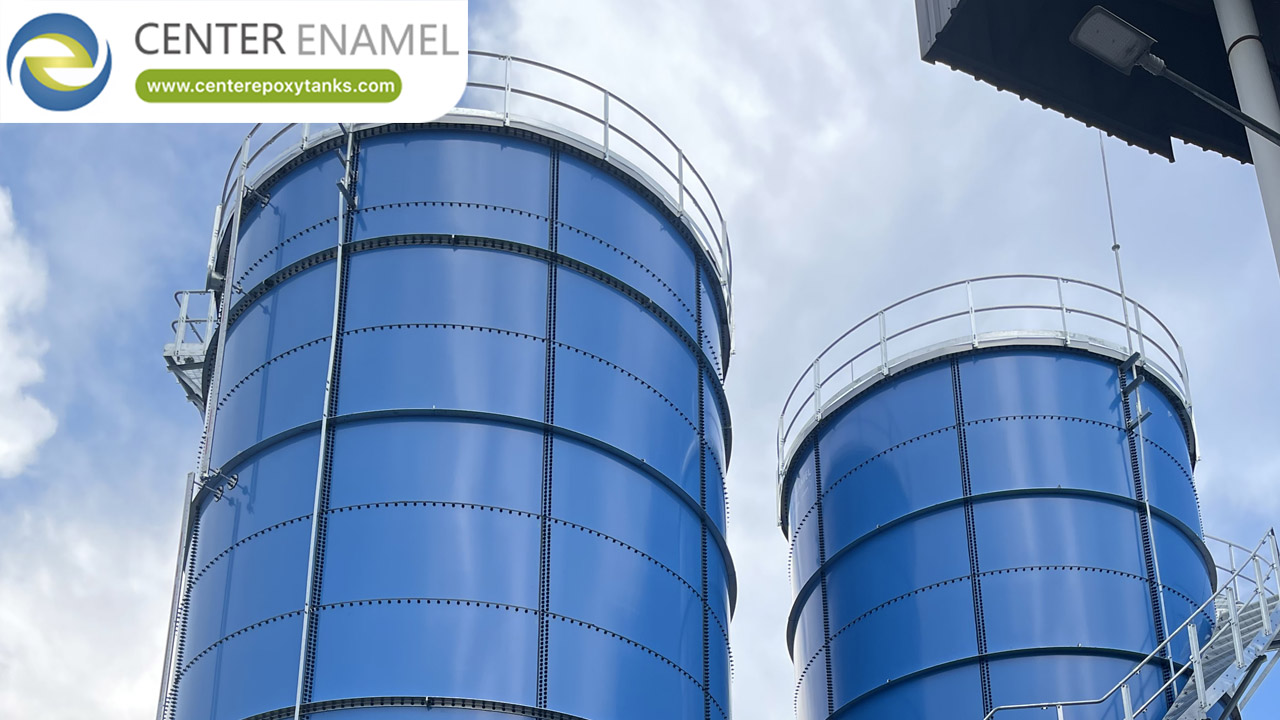
What Is an Epoxy Coated Steel Tank? Structure, Benefits, and Industrial Applications
When industrial facilities, municipal water authorities, and agricultural enterprises require reliable liquid containment, selecting the right material is vital. Corrosive chemicals, aggressive wastewater, and even mineral-stripped potable water can rapidly degrade standard carbon steel or cause micro-cracking in concrete reservoirs. To bridge the gap between high structural strength and chemical inertness, industry professionals rely on epoxy coated steel tanks.
An epoxy coated steel tank is a heavy-duty industrial storage vessel constructed from high-tensile steel plates protected by a thermoset epoxy resin coating—most commonly applied via advanced Fusion Bonded Epoxy (FBE) technology. This engineering approach combines the high load-bearing capacity of steel with a smooth, chemically inert, non-porous barrier that shields the substrate from rust, moisture, and chemical attack. Shijiazhuang Zhengzhong Technology Co., Ltd. (Center Enamel) leads the manufacturing of these advanced bolted tanks for international infrastructure projects.
Manufacturing Process: How Fusion Bonded Epoxy Works
Unlike standard field-painted tanks that are prone to bubbling, peeling, and uneven coverage, professional-grade epoxy coated tanks undergo a rigorous factory-controlled coating process:
Substrate Preparation: High-grade steel panels are precision grit-blasted to remove mill scale, oil, and impurities, creating an optimal anchor profile for mechanical bonding.
Electrostatic Powder Application: Thermoset epoxy resin powder is electrically charged and sprayed uniformly across both sides of the steel panels, ensuring complete, edge-to-edge coverage over bolt holes and complex contours.
Thermal Curing: The coated panels are baked in specialized industrial ovens at high temperatures, triggering a cross-linking chemical reaction that permanently fuses the epoxy powder into a hard, durable, and chemically resistant protective shell.
Key Advantages of Epoxy Coated Steel Tanks
Superior Corrosion Resistance: The seamless epoxy barrier prevents water, oxygen, and corrosive ions from reaching the underlying steel substrate, eliminating rust formation.
Potable Water Safety: High-grade interior epoxy formulations comply with strict international health regulations such as NSF/ANSI 61 and WRAS, ensuring stored drinking water remains completely safe and free of toxic leaching.
Rapid Modular Installation: Because epoxy-coated panels are bolted together on-site, tanks can be erected quickly in remote industrial or municipal locations without the weather delays associated with concrete pouring.
Cost-Effective Scalability: The modular design allows facility operators to easily expand tank capacity by bolting on additional ring panels as operational demands grow.
Data Table: Comprehensive Comparison of Liquid Storage Technologies
Technical Parameter | Fusion Bonded Epoxy (FBE) Bolted Tanks | Glass-Fused-to-Steel (GFS) Tanks | Cast-in-Place Concrete Reservoirs |
Surface Coating Technology | Factory-applied electrostatic thermoset epoxy resin, thermally cured | Molten glass-ceramic fused to steel at 820°C–930°C | Minimal interior waterproofing membranes or bare concrete |
Corrosion & Chemical Defense | Excellent resistance across a broad pH range; ideal for water and wastewater | Ultimate inert glass surface; impervious to harsh acids and chemical attack | Vulnerable to sulfate attack, carbonation, and concrete spalling |
Installation Speed & Modularity | Rapid bolted modular assembly; erected in weeks | Rapid bolted modular erection independent of weather delays | Extremely slow construction timeline with multi-week concrete curing |
Maintenance Profile | Low ongoing maintenance; smooth surface resists buildup | Virtually maintenance-free over a 30–40+ year span | High remediation costs if structural micro-cracking or leaks occur |
Frequently Asked Questions (FAQ)
Q: What is an epoxy coated steel tank?
A: It is an industrial liquid storage tank made from high-strength steel plates protected by a factory-applied, thermally cured epoxy resin barrier that prevents corrosion and chemical degradation.
Q: Are epoxy coated tanks safe for drinking water storage?
A: Yes. High-quality epoxy coated tanks utilize food-grade, NSF/ANSI 61 certified formulations that ensure the interior coating is non-toxic and safe for municipal potable water supplies.
Q: How long do fusion bonded epoxy coated steel tanks last?
A: With proper factory manufacturing, correct installation, and routine maintenance, fusion bonded epoxy tanks provide a reliable operational service life of 25 to 30+ years.
Q: Can epoxy coated tanks be installed in cold or remote locations?
A: Yes. Because these tanks are prefabricated in a controlled factory setting and assembled using modular bolts on-site, they can be efficiently shipped and erected in remote regions regardless of local weather constraints.


