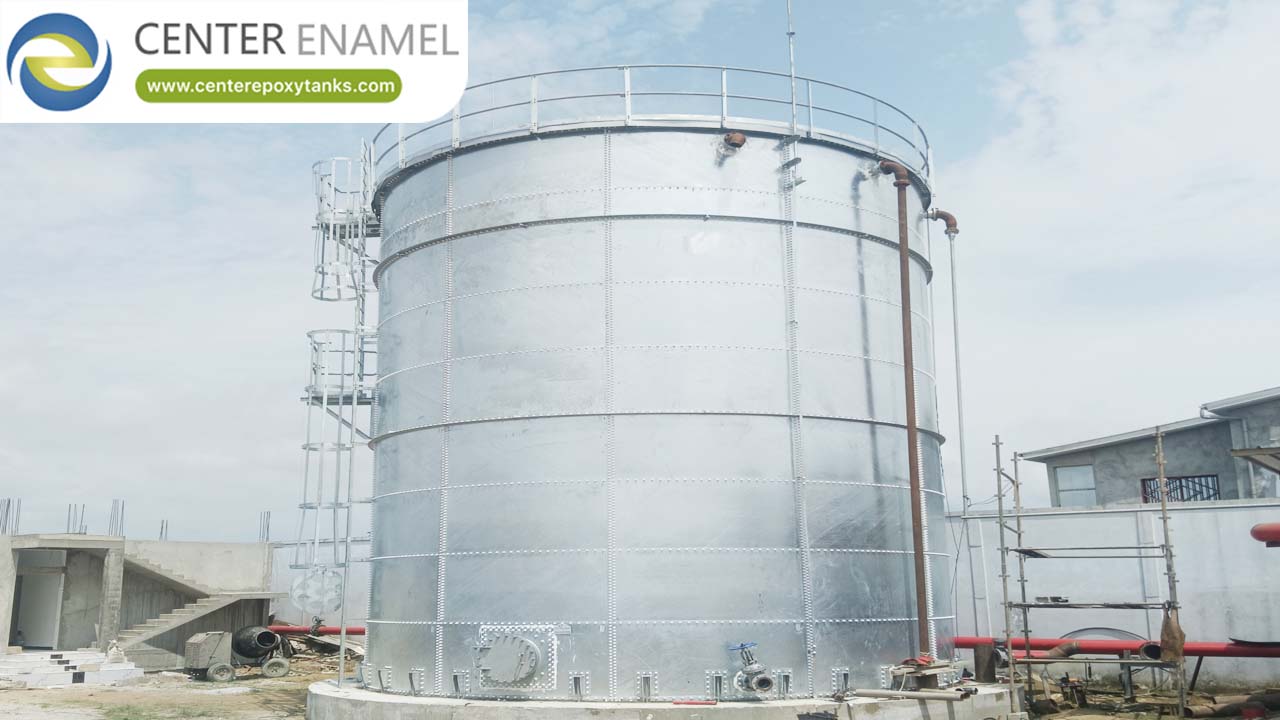
Galvanized Steel Tanks for Irrigation Water Storage
Galvanized steel tanks are the industry-standard infrastructure for large-scale agricultural irrigation water storage due to their high structural strength, modular assembly, and superior corrosion resistance. Unlike monolithic concrete or brittle plastic alternatives, these tanks consist of corrugated, hot-dip galvanized steel panels that provide an exceptional strength-to-weight ratio. They are engineered to be assembled on-site, making them ideal for remote farming locations. The zinc coating provides dual-action protection: it serves as a physical barrier against moisture and, through cathodic protection, sacrifices itself to prevent the underlying steel from rusting, ensuring a service life that often exceeds 30 to 40 years.
The Engineering Principle: Why Galvanization Matters
Agricultural water storage is an aggressive environment for any material. Exposure to varying pH levels, high UV radiation, and shifting soil loads requires a storage solution that doesn't just hold water, but survives the environment.
Sacrificial Protection: The galvanization process involves coating the steel in a metallurgical bond of zinc. Even if the surface of the tank is scratched during installation or debris impact, the surrounding zinc will corrode instead of the steel, effectively "self-healing" the localized damage.
Structural Versatility: Irrigation demands often fluctuate with seasonal crop cycles. Galvanized steel tanks can be engineered in modular sizes ranging from 10,000 liters to over 1,000,000 liters, allowing farms to scale their water storage capacity as their operations grow.
Aerodynamic Integrity: Corrugated steel panels offer superior rigidity against high wind loads on open farmland, preventing the "buckling" or "cracking" failures common in lightweight plastic or rigid concrete tanks.
Comparative Analysis: Irrigation Storage Materials
Choosing the right material depends on the scale of operation, site accessibility, and long-term budget.
Feature | Galvanized Steel Tank | Concrete (RCC) | Plastic (HDPE/Poly) |
Structural Strength | High (High-yield steel) | High (Requires reinforcement) | Moderate (Limited by size) |
Installation | Fast (Bolted assembly) | Slow (Civil/curing time) | Very Fast (Pre-molded) |
Transport | Efficient (Palletized kits) | Difficult (Heavy/Bulky) | Moderate (Bulky but light) |
Lifespan | 30–50+ Years | 30–50+ Years | 10–25 Years |
Maintenance | Low (Inspect coatings) | Moderate (Seal cracking) | Low |
Ideal For | Large-scale irrigation | Permanent, high-load sites | Small/Remote sites |
Technical Best Practices for Irrigation Tanks
To maximize the lifecycle and efficiency of your irrigation water storage, consider the following technical specifications during procurement:
Liner Selection: While the steel provides the structure, the internal liner is the primary waterproof seal. Ensure the manufacturer specifies a food-grade, UV-stabilized PVC, PE, or EPDM liner that is compatible with the water chemistry being stored (especially if using recycled or brackish irrigation water).
Foundation Prep: Galvanized tanks are relatively lightweight compared to concrete. However, a properly compacted gravel or concrete ring foundation is critical to prevent settling, which can stress the bolt-together seams.
Sediment Management: Irrigation water often carries silt or organic matter. Install a suction flange with a vortex inhibitor to prevent sediment intake, and ensure the tank is equipped with an easily accessible clean-out hatch or manway for seasonal maintenance.
Coating Synergy: In highly aggressive environments (coastal areas with salt spray or industrial agricultural zones with high chemical use), specify a duplex coating system—galvanized steel with an additional exterior polymer or epoxy coating—which can extend the "time to first maintenance" by up to 2x compared to standard galvanization alone.
Frequently Asked Questions (FAQ)
Q: Are galvanized steel tanks safe for all irrigation water types?
A: Yes, provided they are fitted with the correct liner. Since the water never comes into direct contact with the steel (it is held by the internal liner), the chemical compatibility is determined by the liner material, not the tank shell itself.
Q: Can these tanks be moved if I need to change my farm layout?
A: Yes. One of the primary advantages of bolted steel panels is their ability to be disassembled, transported, and re-erected at a new site. This "asset agility" makes them a safer capital investment for leased land or evolving agricultural operations compared to permanent concrete structures.
Q: Do I need to worry about rust if the tank is in a humid climate?
A: Standard hot-dip galvanized tanks are rated for high-humidity and outdoor exposure. However, if your farm is located in a high-salinity coastal zone, ensure your specification requires a higher zinc-coating thickness (e.g., G-90 or G-115 grade galvanization) to account for accelerated atmospheric corrosion.
Q: How does the cost compare to plastic tanks?
A: While the initial "kit" price for a large-capacity galvanized tank may be higher than a single large plastic tank, the cost-per-liter for very large capacities (100k+ liters) is usually lower for steel. Additionally, because galvanized tanks can be repaired panel-by-panel, the total cost of ownership is often lower over a 30-year lifecycle.


