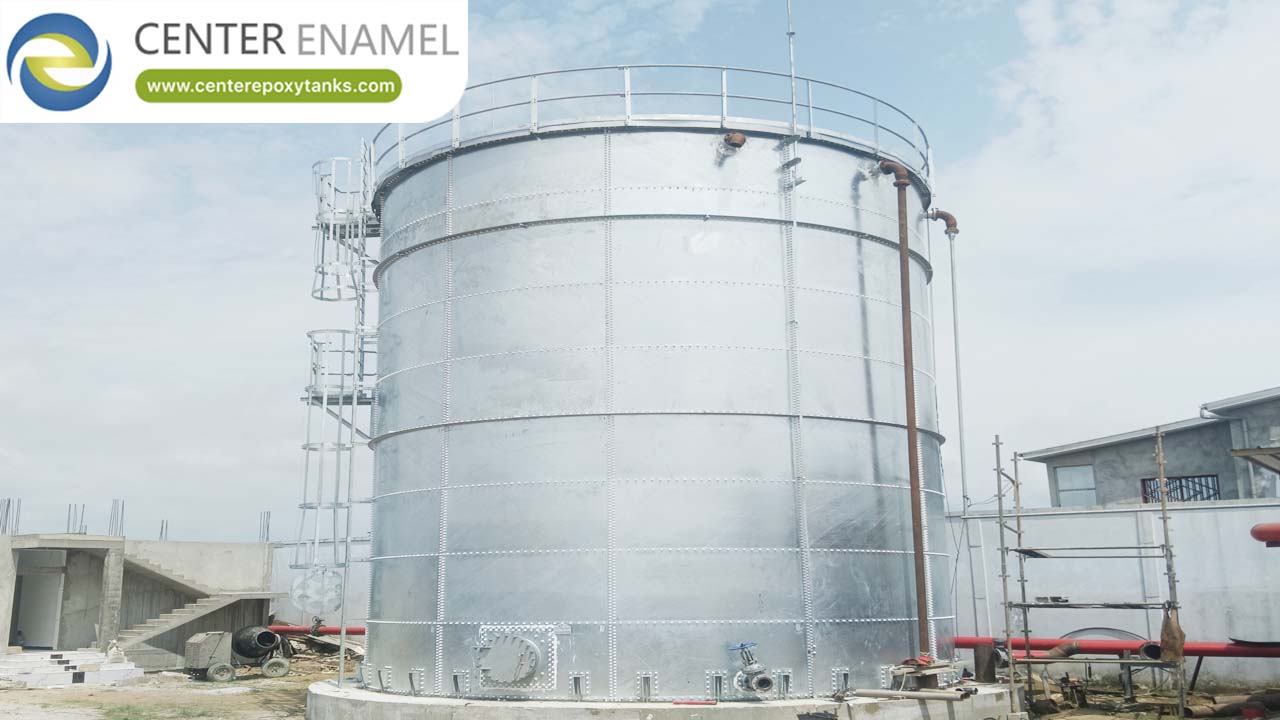
Galvanized Steel Liquid Fertilizer Storage Tanks: Engineering & Procurement Guide
In commercial agriculture and industrial chemical distribution, bulk liquid fertilizer storage demands heavy-duty structural engineering. Storing large volumes of high-density solutions—such as Urea Ammonium Nitrate (UAN), Ammonium Nitrate Urea Solution (AHL), or Ammonium Sulfate Solution (ASL)—requires a careful balance between structural strength, long-term corrosion prevention, and upfront capital expenditure.
Modular galvanized bolted steel tanks have emerged as a dominant choice for large-capacity agricultural operations. However, storing liquid fertilizer in a galvanized vessel requires a critical engineering rule: because liquid fertilizer aggressively attacks zinc and bare carbon steel, the system must deploy a high-durability internal containment liner. This technical guide reviews the engineering mechanics, chemical constraints, and design requirements for lined galvanized steel fertilizer storage systems.
1. The Heavy-Load Structural Advantage
Liquid fertilizers are significantly heavier than water. For instance, standard UAN 32% liquid fertilizer has a specific gravity of roughly 1.32, meaning it weighs 32% more than an equal volume of water.
A 100,000-liter water tank holds 100 metric tons of mass, but the same tank filled with UAN must withstand 132 metric tons of hydrostatic load.
● High Tensile Strength: Factory-engineered galvanized steel panels deliver the high structural yield strength necessary to resist the extreme outward hoop stresses generated by heavy agricultural chemicals.
● Engineered Safety Margin: Top-tier manufacturers design these vessels according to structural standards like AWWA D103 or BS EN 1993, building in a minimum safety margin of 40% to account for environmental forces and fluid density variations.
● Foundation Stability: Because of the extreme weight concentration, these flat-bottom systems are securely anchored to a reinforced structural concrete pad (typically a minimum of 100mm to 150mm thickness of high-grade concrete), ensuring uniform load distribution without localized shifting.
2. Chemical Compatibility and the Liner Mandate
While galvanized steel provides excellent exterior protection against atmospheric rust, UV rays, and weathering, it cannot contact liquid fertilizer directly.
The Chemistry Reality: Free ammonium (NH4+) and nitrate (NO3-) ions aggressively attack bare zinc coatings and unalloyed carbon steel. Direct exposure can trigger severe pitting, accelerated surface corrosion, and catastrophic stress-corrosion cracking along joints.
To bypass this issue, modern agricultural engineers use the galvanized steel shell purely as an outer structural exoskeleton. The liquid chemical is entirely contained within an advanced, chemical-grade internal drop-in membrane or bladder liner. This configuration separates structural strength from chemical containment, providing the durability of steel alongside the chemical resistance of specialized polymers.
3. High-Performance Liner Options
The internal liner must resist chemical degradation, puncture risks, and seasonal temperature swings. The primary membrane formats include:
Liner Material | Key Chemical Performance | Temperature Range | Ideal Application |
Greenseal EPDM | Exceptional resistance to agricultural nitrogen solutions; completely UV and ozone resistant. | Remains flexible down to -40°C without cracking. | Standard farm-scale bulk UAN and liquid fertilizer storage. |
Premium Butyl Rubber | High material density; maximum resistance to abrasion, puncture, and high-concentration industrial chemicals. | Excellent resilience up to 50°C and down to -30°C. | High-throughput commercial fertilizer blending terminals. |
Reinforced PVC / Poly Liners | Economical, food-grade option; completely inert with zero plasticizer leaching risk. | Moderate temperature tolerance. | Multi-use agricultural water, irrigation, and mild fertilizer blends. |
4. Operational and Logistical Benefits
Rapid Modular Installation
Because galvanized bolted tanks are entirely prefabricated in a controlled factory setting, panels arrive flat-packed and ready for rapid assembly. A small crew using specialized mechanical jacks can construct a 200,000-liter tank in a matter of days. This completely avoids the expensive field-welding, non-destructive X-ray weld testing, and multi-layer field painting required by traditional welded mild steel tanks.
Flat-Pack Transport Logistics
An entire modular tank assembly—including high-strength panels, structural roof trusses, and the rolled internal bladder—can be securely packed onto standard shipping pallets. This footprint drastically lowers inland and ocean freight costs, easing delivery to remote agricultural production zones or crowded industrial sites.
Future Expansion and Relocation
Should an agribusiness expand or shift its layout, bolted panel designs offer unique flexibility. The structure can be systematically unbolted, packaged, relocated to a new facility, or expanded in capacity by adding an extra ring of steel sheets to the base.
5. Procurement Engineering Checklist
When issuing a Request for Proposal (RFP) for a liquid fertilizer storage asset, ensure your technical compliance documents enforce the following criteria:
1. Specific Gravity Certification: Explicitly state that the tank structure must be calculated for a minimum fluid density of 1.35 g/cm³ (or the specific gravity matching your exact chemical compound) to ensure the lower panel courses feature adequate steel thickness.
2. Double-Wall or Secondary Containment Integration: Depending on localized groundwater protection rules (such as European AwSV or US EPA SPCC regulations), liquid fertilizer must reside inside a double-wall system or a single-wall tank surrounded by an approved structural containment bund capable of holding 110% of the tank's maximum capacity.
3. Encapsulated Stainless Hardware: Ensure all internal fasteners or penetrations below the liquid level are constructed from 304 or 316 Stainless Steel with molded synthetic washers to eliminate galvanic corrosion risks.
Lined galvanized steel bolted tanks provide a highly dependable, logistically streamlined, and economically optimized solution for high-volume liquid fertilizer storage. By utilizing the mechanical strength of factory-galvanized panels to manage heavy hydrostatic loads, and isolating corrosive chemicals inside advanced EPDM or Butyl bladders, operators achieve a high-capacity system with a reliable 20+ year service life.


