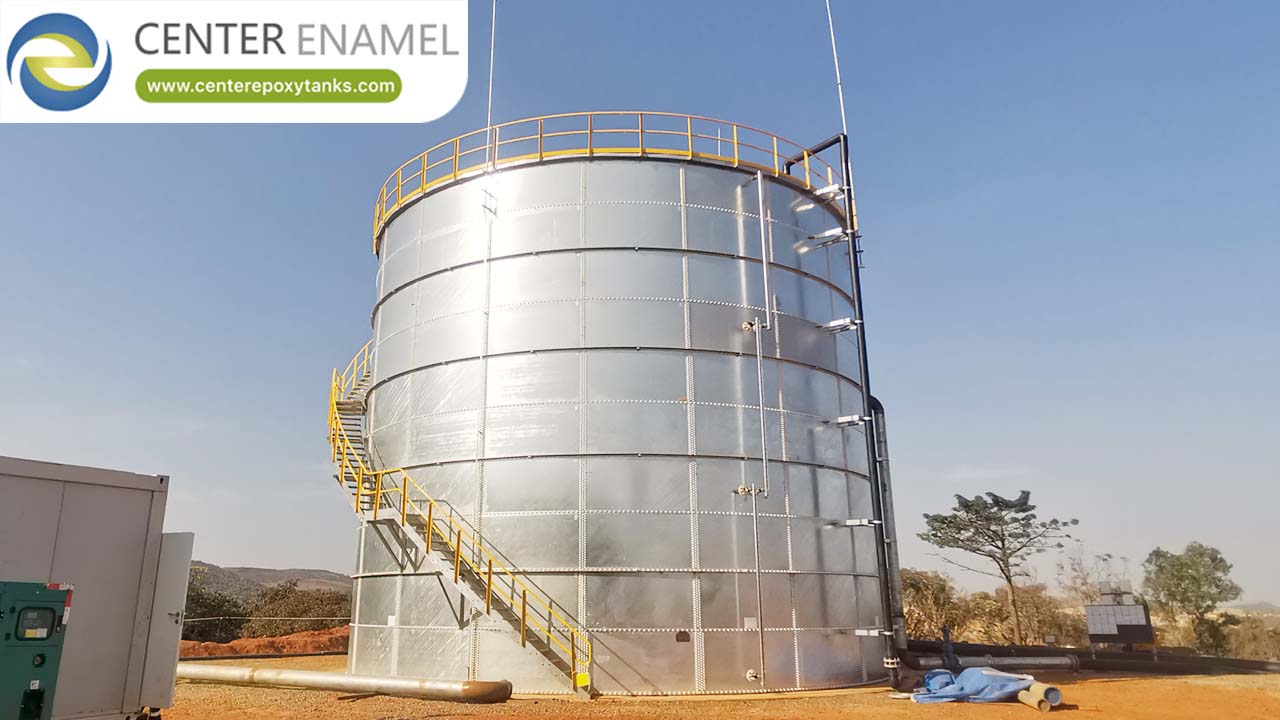
 Galvanized Steel Fire-Fighting Water Tanks: Robust Solutions for Industrial Safety
Galvanized steel fire-fighting water tanks are the industrial standard for reliable fire protection storage. These tanks utilize hot-dip galvanized steel panels that are bolted together in a modular, clear-span design, ensuring exceptional corrosion resistance and rapid on-site assembly. Leading Chinese manufacturers, including Center Enamel, produce these tanks in strict compliance with NFPA-22 and AWWA D103 standards, offering a cost-effective, durable, and seismic-resistant storage solution for municipal, commercial, and industrial fire suppression systems.
The Critical Role of Firewater Storage Reliability
In any fire suppression system, the water tank is the most vital, yet often overlooked, component. If a fire occurs, the storage system must be fully operational, regardless of environmental conditions or time elapsed since the last inspection. Facility managers prioritize galvanized steel tanks for several key reasons:
Corrosion Resistance: The hot-dip galvanizing process bonds a protective zinc layer to the steel, providing cathodic protection that prevents oxidation even in high-humidity or coastal environments.
Structural Durability: Bolted steel construction allows for controlled, high-quality fabrication in a factory setting, ensuring every bolt and panel joint is perfectly aligned and sealed.
Modular Efficiency: Because these tanks are shipped as flat-packed panels, they can be deployed to remote construction sites or dense urban centers with significantly reduced logistics costs compared to pre-cast concrete or massive welded vessels.
Comparative Overview: Fire Protection Storage Materials
Feature | Galvanized Steel Tank | Concrete Tank (RCC) | Welded Carbon Steel |
Installation Time | Very Fast (Bolted) | Very Slow | Slow (Field Welding) |
Corrosion Resistance | Excellent (Zinc Coating) | Low (Needs Liners) | Moderate (Needs Painting) |
Seismic Performance | High (Flexible Bolted Joints) | Low (Brittle) | Moderate |
Maintenance Needs | Minimal | High (Crack Repairs) | Moderate (Recoating) |
Cost-Efficiency | Excellent | Variable/High | Moderate |
Why Global Procurement Managers Choose China
China has established itself as the world’s most advanced hub for high-capacity, modular steel tank fabrication. Procurement managers are increasingly shifting their supply chain to specialized Chinese manufacturers (such as Center Enamel) for the following strategic reasons:
Standardized Compliance: Elite Chinese manufacturers perform rigorous testing to ensure products meet NFPA-22 (Standard for Water Tanks for Private Fire Protection) and AWWA D103 (Bolted Steel Tanks) specifications, facilitating smooth project approval.
Advanced CNC Fabrication: Every steel panel undergoes CNC punching and drilling. This guarantees that when the panels arrive on-site, the bolt holes align perfectly, ensuring a leak-proof structural assembly every time.
Logistics Expertise: Manufacturers have optimized the "flat-pack" method, allowing these large tanks to be containerized for sea freight, which drastically lowers the landed cost for projects in Europe, the Middle East, Southeast Asia, and the Americas.
Frequently Asked Questions (FAQ)
Q: Are these tanks compliant with NFPA-22?
A: Yes. Professional manufacturers provide detailed engineering calculations, structural drawings, and material certifications that verify compliance with NFPA-22 standards for firewater storage, ensuring they meet the requirements of local fire marshals and insurance agencies.
Q: How long is the service life of a galvanized steel fire tank?
A: When properly maintained and correctly specified for the local environment, these tanks typically provide a 25–40 year service life. The hot-dip galvanized finish provides robust protection that significantly outlasts standard painted steel options.
Q: Can you install these tanks in earthquake-prone regions?
A: Yes. Bolted steel tanks are often preferred in seismic zones because the flexible joints between panels can absorb energy better than rigid, brittle materials like concrete. Manufacturers perform Finite Element Analysis (FEA) to ensure the design meets local seismic load requirements.
Partnering with Expert Engineering
Selecting a fire-fighting water tank is a critical safety investment. By choosing a manufacturer that combines advanced CNC manufacturing, international quality compliance, and global export experience, you ensure that your fire protection infrastructure is both cost-effective and unconditionally reliable.
Are you planning a new facility and need a fire-water storage proposal?
Contact our technical engineering team to receive a site-specific assessment, including capacity volume calculations, structural load data, and a preliminary project quote tailored to your local building codes.


