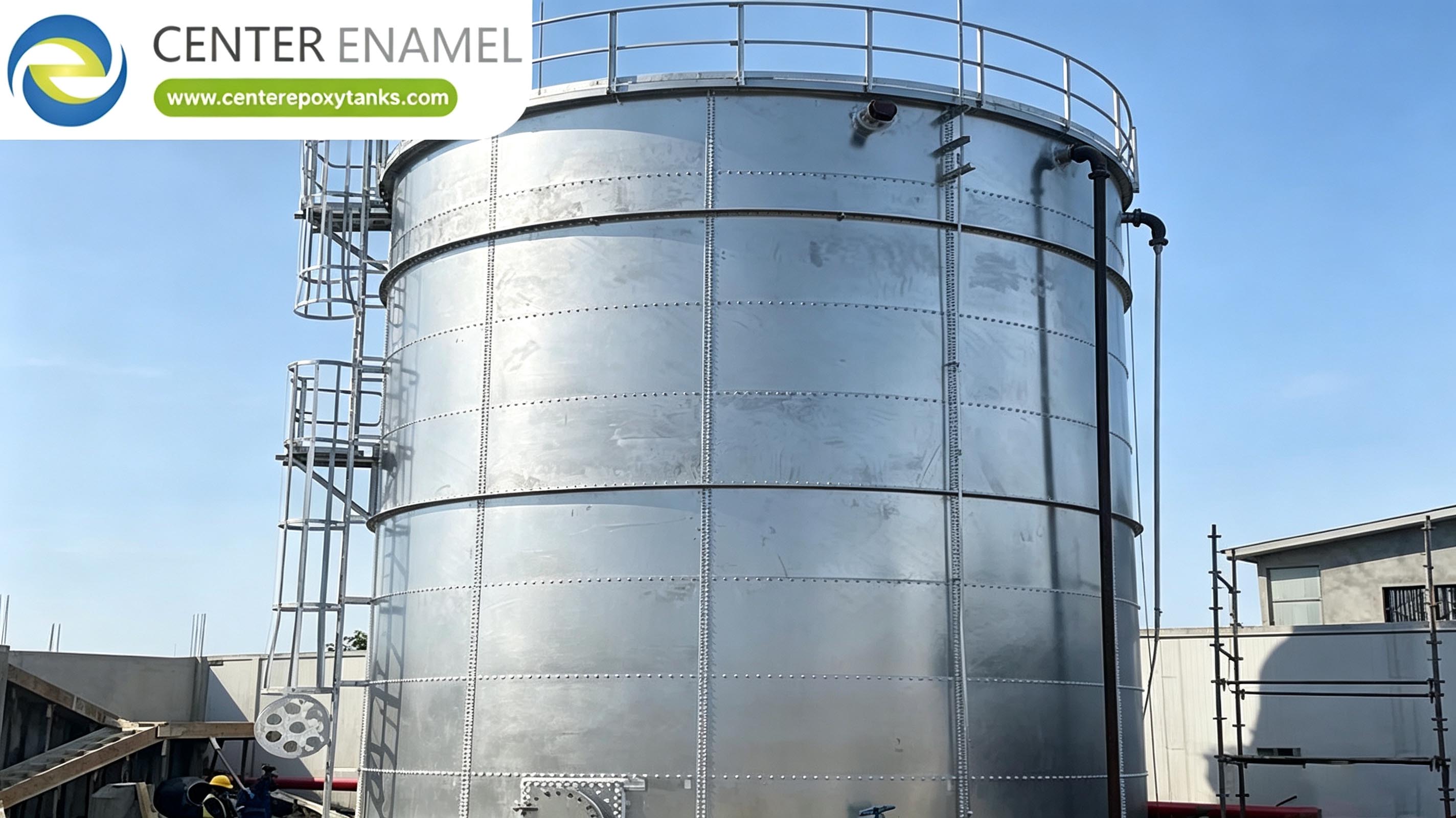
What Is a Galvanised Steel Fire Fighting Water Tank? Engineering, Compliance, and Critical Protection
When a fire emergency strikes, the reliability of your active fire suppression system depends entirely on an immediate, high-volume, and dependable water supply. When municipal water mains experience pressure drops or lack sufficient capacity during peak hazard scenarios, an independent on-site storage reservoir becomes the critical last line of defense. Among all industrial containment options, the galvanised steel fire fighting water tank stands out as the industry-preferred solution for municipal, commercial, and industrial fire protection.
A galvanised steel fire fighting water tank is a heavy-duty, engineered liquid storage vessel constructed from high-tensile steel panels treated with a protective layer of zinc through hot-dip galvanization. Designed specifically to store dedicated fire suppression water for sprinkler systems, standpipes, and private hydrants, these tanks combine the structural rigidity of steel with lifelong corrosion resistance. As a globally trusted leader in advanced liquid storage manufacturing, Shijiazhuang Zhengzhong Technology Co., Ltd. (Center Enamel) delivers precision-engineered galvanised steel water tanks designed to meet rigorous international fire safety standards.
Core Engineering Principles and Protective Mechanics
The structural reliability of a galvanised steel fire protection tank relies on advanced metallurgical processing and precise modular engineering:
Hot-Dip Galvanization Coating: Steel panels are immersed in molten zinc, creating a metallurgical bond that forms multiple alloy layers. This zinc coating acts as a sacrificial anode, shielding the underlying structural steel from moisture, oxidation, and atmospheric weathering without requiring frequent painting.
Modular Bolted Construction: Prefabricated panels allow for rapid, standardized bolt-together assembly on-site, making it possible to install massive high-capacity reservoirs in remote industrial zones, wildfire-prone regions, or cramped urban commercial sites.
Comprehensive Fire Appurtenance Integration: Fully compliant tanks include specialized safety and functional accessories such as anti-vortex plates to prevent pump cavitation, screened roof vents, lockable access hatches, water level indicators, and dedicated fire department connection (FDC) plumbing.
Governing Regulatory Standards: NFPA 22 and AWWA Compliance
To satisfy insurance underwriters, local building codes, and Authorities Having Jurisdiction (AHJs), fire protection water tanks must comply with stringent structural benchmarks:
NFPA 22 (Standard for Water Tanks for Private Fire Protection): Governs the minimum requirements for the design, construction, installation, and maintenance of private fire protection water storage, factoring in hydraulic demand, flow rates, and duration (typically 30 to 90 minutes).
AWWA D103: Establishes rigorous engineering parameters for bolted steel tank structural calculations, hoop shell tension, and wind/seismic load resistance.
IBC Risk Category IV: Ensures the tank structure maintains integrity during extreme weather events (such as hurricanes or major earthquakes) to guarantee emergency water delivery.
Data Table: Comprehensive Comparison of Fire Suppression Tank Technologies
Technical Parameter | Galvanised Steel Bolted Tanks | Welded Carbon Steel Tanks | Cast-in-Place Concrete Reservoirs |
Corrosion Protection | Hot-dip galvanization provides active sacrificial zinc defense against rust | Requires continuous scheduled inspection and protective field painting | Vulnerable to micro-cracking, rebar oxidation, and concrete spalling |
Installation Speed & Modularity | Rapid bolted modular assembly; easily erected in remote locations | Requires intensive field welding and complex staging schedules | Extremely slow construction timeline with multi-week concrete curing |
Seismic & Structural Flexibility | High structural elasticity; absorbs dynamic ground shifts efficiently | Monolithic steel rigidity with high overall strength | High mass, but susceptible to catastrophic cracking during severe ground settling |
Maintenance Profile | Low maintenance; inspect seals and zinc layers periodically | High ongoing maintenance overhead for recoating and weld testing | Moderate to high remediation costs if structural leaks develop |
Frequently Asked Questions (FAQ)
Q: What is a galvanised steel fire fighting water tank?
A: It is a heavy-duty industrial storage tank built from hot-dip galvanized steel panels, designed to provide a dedicated, reliable, and corrosion-resistant water supply for fire sprinkler systems, standpipes, and hydrants.
Q: What is NFPA 22 compliance and why is it important for fire water tanks?
A: NFPA 22 is the standard established by the National Fire Protection Association governing the design, construction, and installation of private fire protection water tanks. Compliance ensures the tank meets strict structural, hydraulic, and safety requirements mandated by fire marshals and insurance underwriters.
Q: How does hot-dip galvanization protect fire storage tanks from corrosion?
A: Hot-dip galvanization fuses a protective zinc layer onto the steel substrate. This zinc acts as a barrier and a sacrificial anode, preventing moisture from reaching the steel and stopping rust even if minor surface scratches occur.
Q: Can galvanised steel fire tanks be used in sub-zero or freezing climates?
A: Yes. In freezing regions, these tanks can be equipped with engineered internal heating systems and thermal insulation compliant with NFPA 22 guidelines to maintain water temperatures safely above freezing.


