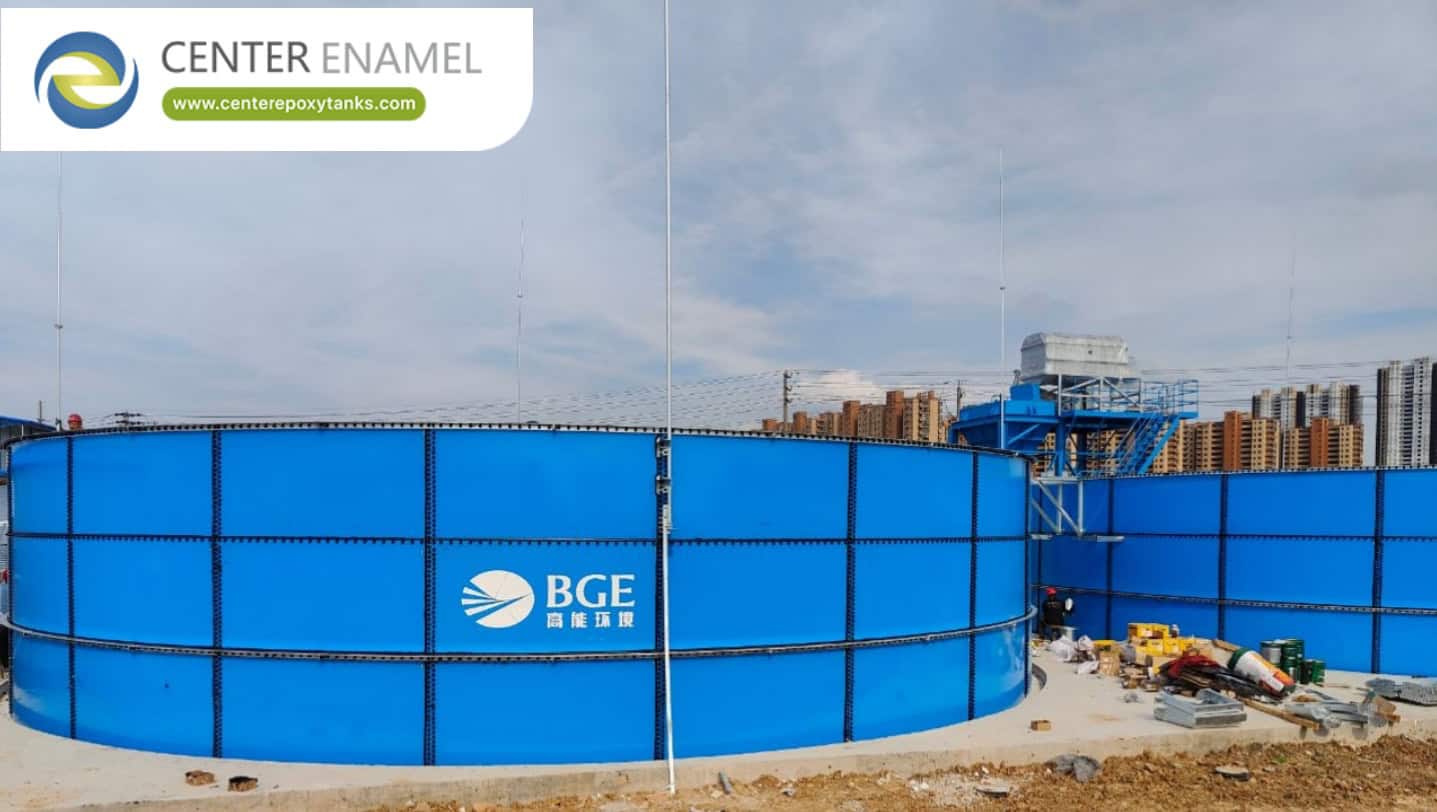
Food-Grade Epoxy Coated Tanks for Vegetable Oil Storage: Engineering & Procurement Guide
Vegetable oil—whether soy, sunflower, canola, or palm—is a chemically reactive commodity. Its quality is highly susceptible to oxidation, trace metal contamination, and hydrolytic rancidity. For large-scale industrial processors, the containment vessel is not merely a container; it is a critical process asset. Food-grade epoxy-coated bolted steel tanks provide an optimal balance between structural strength, cost-effective capacity, and, most importantly, rigorous sanitary compliance. This guide outlines the technical requirements for selecting and verifying these storage assets for edible oil applications.
1. Engineering Standards for Edible Oil Storage
When storing food-grade vegetable oils, the tank wall acts as the primary barrier against environmental contamination. Unlike water or chemical storage, these tanks must meet strict FDA and international food safety certifications.
Core Regulatory Requirements
● FDA/NSF Compliance: The epoxy coating must be certified under NSF/ANSI 61 or FDA 21 CFR 175.300 (Resinous and polymeric coatings). This ensures that no hazardous compounds (bisphenol A, heavy metals, etc.) leach into the oil.
● Inertness: The coating must be chemically inert to prevent the oil's free fatty acid (FFA) content from reacting with the steel substrate.
● Surface Finish: The interior surface must be smooth and non-porous to prevent the accumulation of residual oil, which can oxidize and create "off-flavors" in subsequent batches.
2. Technical Specifications & Load Mechanics
Vegetable oil has a specific gravity (typically 0.91–0.9 at 20C) different from water. Engineering calculations must adjust for this density to ensure structural stability against hydrostatic pressure (Ph).
The hydrostatic pressure at the tank base is defined by:
Coating Thickness and Integrity
Reliable manufacturers provide a high-build coating, typically 250 µm to 400 µm total dry film thickness (DFT). Crucially, this must be verified via Holiday Testing (high-voltage pore detection) to ensure the coating is 100% pinhole-free.
3. Comparative Storage Matrix
Choosing the right storage technology involves balancing capital expenditure (CapEx) with Total Cost of Ownership (TCO) and product safety.
Feature | Food-Grade Epoxy Bolted | Stainless Steel (304/316) | Standard Carbon Steel |
Sanitary Compliance | High (Certified) | Excellent | Low |
Chemical Inertness | High | Excellent | Low (Reacts with oil) |
Installation Speed | Fast (Modular) | Slow (Welding required) | Fast |
Cost Efficiency | High (Optimal TCO) | Low (High CapEx) | Moderate |
Maintenance | Low (CIP compatible) | Low | High |
4. Procurement Vetting Matrix
Sourcing for the food industry requires a stringent audit of the manufacturer's quality control logs. Do not accept generic certifications.
● Certificate of Analysis (COA): Require the COA for the specific batch of epoxy coating used in your tanks, verifying it matches the FDA food-grade certification.
● CIP (Clean-in-Place) Compatibility: The coating must withstand CIP cycles using approved detergents and sanitizers without softening or delaminating. Verify the temperature rating—the coating must survive the specific temperatures used in your cleaning protocols.
● Bolt & Gasket Integrity: In food-grade tanks, internal bolt heads should be covered with FDA-approved plastic caps or coated with the same epoxy as the shell. Gaskets must be made of food-grade EPDM or silicone to prevent taint.
● Traceability: Ensure the manufacturer provides MTRs (Mill Test Reports) for all steel panels to ensure no recycled or contaminated scrap metal was used.
Frequently Asked Questions (FAQ)
Q: Why use Epoxy instead of Stainless Steel for vegetable oil?
A: While stainless steel is the ultimate standard for edible oil, it is significantly more expensive. Epoxy-coated bolted steel tanks provide a cost-effective, sanitary, and durable alternative that is widely accepted in the food processing industry, especially for bulk intermediate storage.
Q: How often does the internal coating need to be inspected?
A: Depending on the oil type and turnover frequency, a visual inspection by a certified inspector is recommended every 3–5 years. This ensures no degradation is occurring near the inlet/outlet valves where turbulence is highest.
Q: Can these tanks handle hot oil intake?
A: Most high-grade food epoxy coatings are rated for service temperatures up to $60^circtext{C}$–$80^circtext{C}$. Always check the manufacturer's "Technical Data Sheet" (TDS) for the maximum continuous service temperature.
Are you currently in the planning/design phase for a new storage facility, or are you looking to retrofit existing tanks to meet updated food-safety standards?


