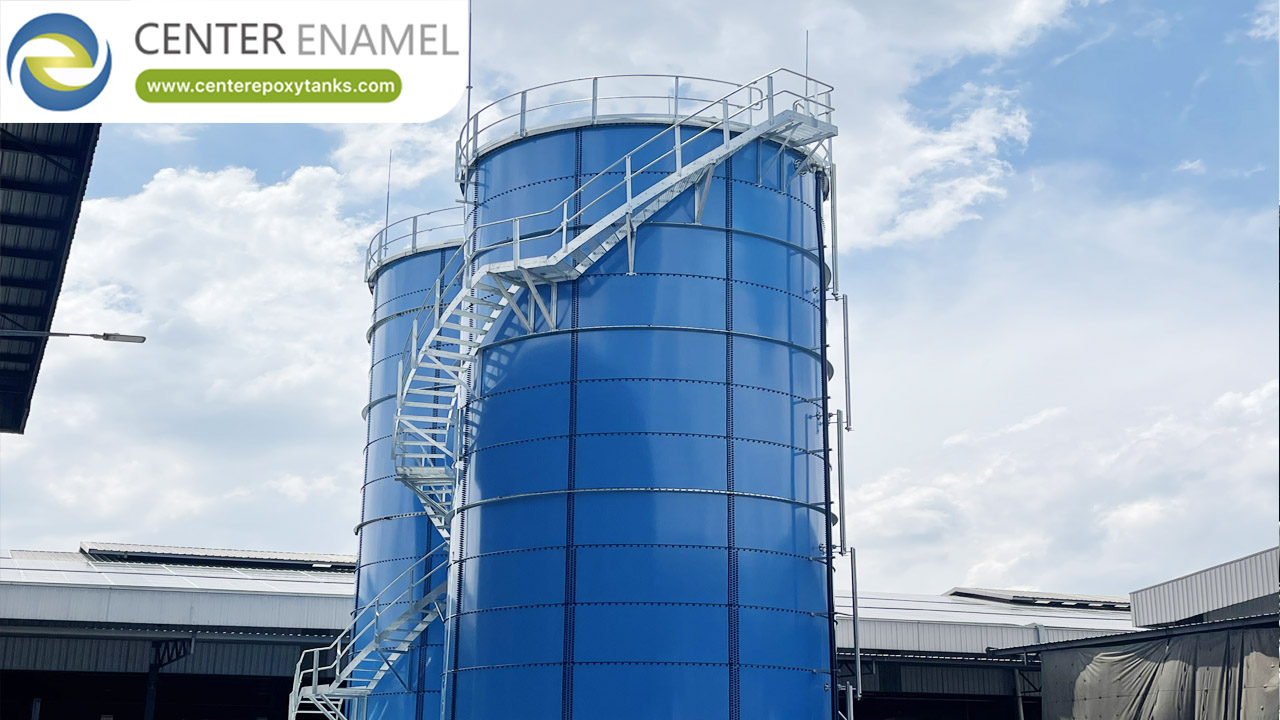
Food Grade Epoxy Coated Steel Storage Tanks: Engineering Purity, Safety, and Durability in Liquid Containment
In the food processing, beverage production, and municipal water supply sectors, maintaining uncompromised hygiene and ingredient purity is a non-negotiable operational priority. Whether holding liquid sweeteners, edible oils, brewing ingredients, or bulk potable water, containment systems must prevent any chemical leaching, resist aggressive clean-in-place (CIP) chemicals, and inhibit bacterial colonization.
The industry standard for achieving structural strength coupled with absolute interior sanitation is the food-grade epoxy coated steel storage tank. By combining the immense mechanical load capacity of high-strength carbon steel with a specialized, non-toxic, cross-linked epoxy lining, these tanks provide a sterile, highly durable environment for sensitive liquid assets.
Core Engineering Mechanics and Coating Formulations
The integrity of a food-grade epoxy tank relies heavily on advanced polymer chemistry and rigorous surface preparation:
High-Solids and Epoxy Phenolic Formulations: Unlike standard industrial paints, food-grade tank linings utilize specialized two-component epoxy or epoxy-phenolic formulations (Part A resin and Part B hardener) that cross-link into an ultra-dense, non-porous film. These systems resist acidic food components, alcohol, and caustic washdown detergents.
Abrasive Blasting and Surface Preparation: Achieving long-term adhesion requires grit-blasting the carbon steel substrate to a near-white metal finish (such as SSPC-SP10) with a precise anchor profile (2 to 3 mils), eliminating mill scale and micro-contaminants.
Holiday Detection (Spark Testing): Every square inch of the cured interior lining undergoes rigorous high-voltage spark testing to detect microscopic pinholes or voids ("holidays"). This guarantees that the underlying carbon steel never makes direct contact with consumable products.
Governing Regulatory Standards for Food Contact
Food-grade containment must comply with strict international regulatory bodies to safeguard public health:
FDA 21 CFR 175.300: Mandates that resinous and polymeric coatings intended for repeated food-contact use meet rigorous extraction limits, ensuring no harmful chemicals migrate into stored edibles.
NSF/ANSI Standard 61: Certifies that tank interior materials are safe for potable water service, ensuring zero heavy metal leaching or toxic contamination.
USDA Compliance: Ensures that surfaces meet stringent hygiene guidelines for meat, poultry, and dairy processing environments.
Data Table: Comprehensive Comparison of Food-Grade Storage Options
Technical Parameter | Food-Grade Epoxy Coated Steel Tanks | Solid Stainless Steel Tanks (304/316) | Polyethylene (Poly) Tanks |
Initial Capital Cost | Highly economical balance of strength and budget | Premium high investment due to raw alloy material costs | Budget-friendly for small to mid-scale volumes |
Corrosion & Chemical Defense | Exceptional barrier protection against organic acids, water, and CIP chemicals | Superior intrinsic corrosion resistance via passive chromium-oxide layer | Inert polymer structure; vulnerable to high heat or UV over time |
Volumetric Scalability | Excellent; modular bolted or field-erected designs allow massive capacities | Moderate to high; requires specialized field welding for large scales | Limited by rotational molding dimensions (smaller capacities) |
Regulatory Compliance | Fully certified under FDA 21 CFR 175.300 and NSF/ANSI 61 | Meets standard sanitary food and beverage requirements | FDA-compliant virgin resins available for moderate service |
Frequently Asked Questions (FAQ)
Q: What makes an epoxy coating safe for food and beverage storage?
A: Food-grade epoxy coatings are specifically formulated to comply with FDA 21 CFR 175.300 and NSF standards, ensuring they form a completely inert, non-toxic, and non-porous barrier that prevents chemical interactions or flavor contamination with stored ingredients.
Q: Can epoxy-coated steel tanks withstand Clean-in-Place (CIP) sanitization cycles?
A: Yes. High-performance epoxy and epoxy-phenolic linings are engineered to withstand aggressive thermal shocks and chemical exposure from CIP routines, which frequently alternate between hot caustic washes and acid rinses.
Q: How do manufacturers ensure there are no flaws in the tank lining?
A: Quality control protocols include rigorous high-voltage "holiday" spark testing across the entire cured interior surface to detect and repair any microscopic pinholes before the tank is approved for food or potable water service.
Q: What types of food products are commonly stored in epoxy-coated steel tanks?
A: These tanks are widely used across industries to store potable water, fruit juice concentrates, liquid sugars, syrups, edible vegetable oils, wine, brewing ingredients, and dairy processing water.


