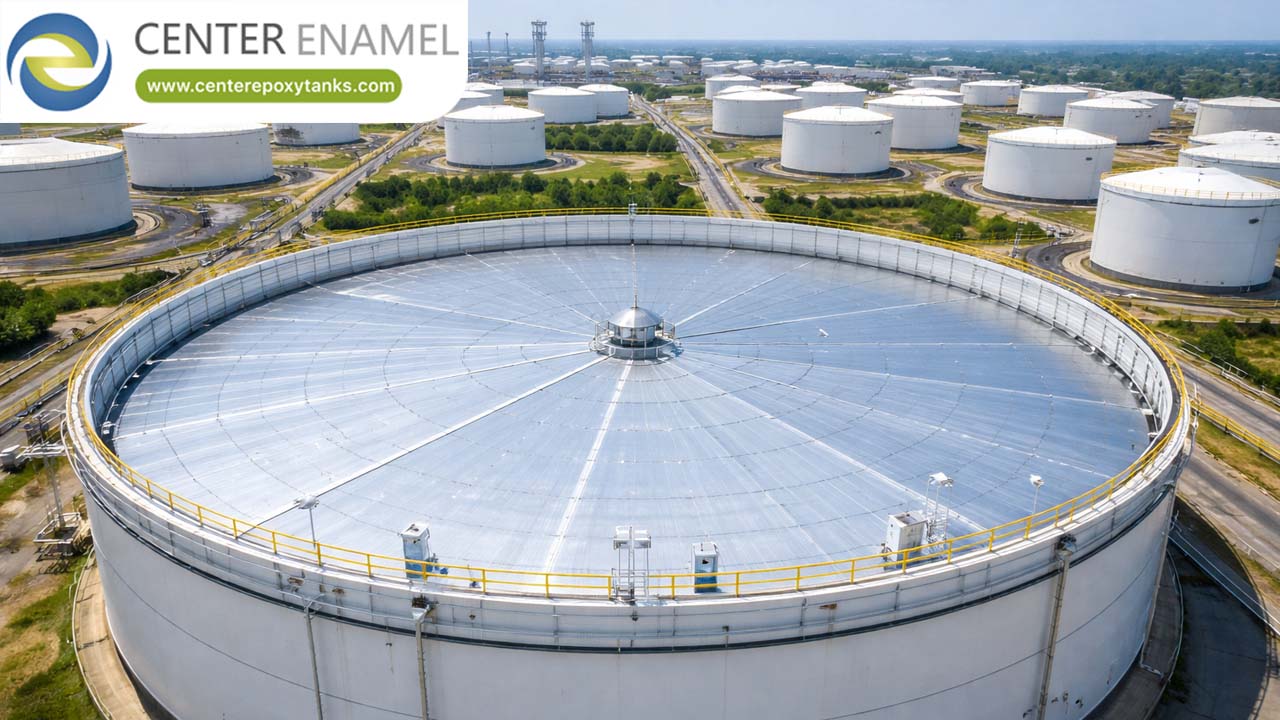
Floating Roofs for Fuel Storage Tanks: Engineering, Emission Control, and Operational Safety
In the global oil and gas sector, storing volatile hydrocarbon fuels—such as crude oil, gasoline, aviation jet fuel, and diesel—presents severe environmental, safety, and economic challenges. When a liquid is stored in a traditional fixed-roof tank, a vapor space (known as "ullage") forms between the liquid surface and the roof. As ambient temperatures fluctuate, this vapor expands and escapes through tank vents, leading to massive product loss, severe environmental pollution, and dangerous fire hazards.
The industry-standard engineering solution to eliminate this vapor headspace is the installation of floating roofs for fuel storage tanks. By resting directly on the liquid surface, a floating roof moves up and down with fluid level changes, virtually eliminating the vapor space and mitigating volatile organic compound (VOC) emissions by up to 98%.
Core Types of Floating Roofs in Petroleum Storage
Depending on climate, tank geometry, and environmental regulations, storage facilities deploy two primary configurations of floating roofs:
Internal Floating Roofs (IFRs): Installed inside a fixed-roof tank (often cylindrical steel or bolted tanks), IFRs combine the weather protection of a fixed roof with the emission control of a floating deck. The fixed outer roof shields the floating deck from rain, snow, and wind, while the internal deck suppresses vapor generation. This design is highly favored for refined products, chemicals, and aviation fuel terminals.
External Floating Roofs (EFRs): Designed for open-top vertical cylindrical tanks, EFRs are directly exposed to the atmosphere. The deck features built-in pontoon compartments for buoyancy and is engineered with specialized drainage systems (such as roof drains and rolling ladders) to safely channel rainwater off the deck surface while maintaining a seal against the tank wall.
Critical Engineering Components and Sealing Technologies
The operational performance of a floating roof relies heavily on advanced peripheral sealing systems and structural design:
Rim Seal Systems: The annular gap between the floating deck and the tank shell is sealed using high-performance primary and secondary seals. Mechanical shoe seals, liquid-filled seals, and resilient wiper gaskets maintain continuous contact with the tank wall during dynamic filling and emptying cycles, preventing fugitive gas leaks.
Compartmentalized Buoyancy: Premium decks utilize compartmentalized pontoon structures. Even if an individual chamber or seal is breached, multiple independent buoyancy compartments ensure the roof remains stable and afloat.
Anti-Rotation and Guidance Systems: Guide poles and cable-stabilization systems prevent the roof from rotating or tilting during rapid liquid level fluctuations, protecting internal equipment like floating suction lines and level gauges.
Data Table: Comprehensive Comparison of Fuel Storage Roof Technologies
Technical Parameter | Internal Floating Roofs (IFRs) | External Floating Roofs (EFRs) | Standard Fixed Roofs (No Floating Deck) |
Emission Control Efficiency | Elite (95% to 98% VOC reduction via sealed headspace) | High (90% to 95% VOC reduction; minor wind-induced evaporation) | Poor (Constant breathing losses and heavy vapor generation) |
Weather Exposure | Sheltered by outer fixed roof (protected from rain and snow) | Fully exposed to precipitation; requires active roof drainage systems | Fully exposed fixed roof with constant internal vapor pressure |
Maintenance & Inspection | Moderate; internal components inspected during scheduled tank shutdowns | Accessible from above; routine checks required for rim seals and roof drains | Low structural maintenance, but high product loss overhead |
Primary Applications | Refined fuels, petrochemicals, and aviation turbine fuel (Jet A1) | Large crude oil storage farms and bulk marine terminals | Water, heavy residual oils, and asphalt storage |
Frequently Asked Questions (FAQ)
Q: What is the primary purpose of floating roofs for fuel storage tanks?
A: Floating roofs eliminate the vapor space (ullage) inside fuel tanks, drastically reducing volatile organic compound (VOC) emissions, preventing product loss from evaporation, and mitigating fire hazards.
Q: What is the difference between an internal and external floating roof?
A: An internal floating roof operates inside a closed fixed-roof tank, shielding the deck from weather elements. An external floating roof operates in an open-top tank directly exposed to the atmosphere and includes specialized drainage systems for rainwater.
Q: How do floating roofs prevent fuel from escaping around the edges?
A: They utilize high-performance primary and secondary rim seals (such as mechanical shoes or resilient wiper gaskets) that maintain continuous, flexible contact with the interior wall of the tank as the roof moves up and down.
Q: Can a floating roof be retrofitted into an existing fixed-roof fuel tank?
A: Yes. Many facilities upgrade existing fixed-roof tanks by installing modular internal floating roofs (such as aluminum panel IFRs) to comply with stricter environmental emission regulations without building entirely new containment infrastructure.


