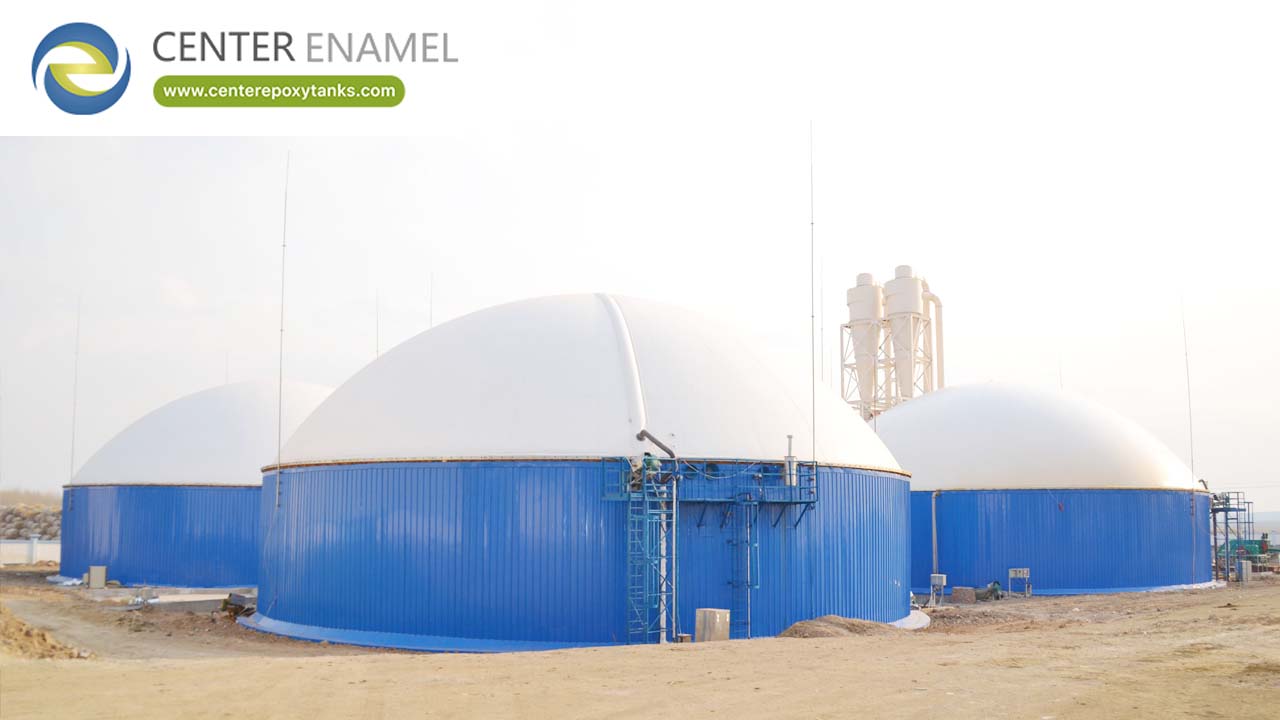
Flexible Double Membrane Gas Holders: An Integrated Cover Solution for Animal Waste Biogas Digesters
For biogas facilities processing high-solids feedstock like animal manure, the primary engineering challenge is managing the aggressive, highly corrosive headspace environment. A Flexible Double Membrane Gas Holder (DMGH) is an advanced, integrated cover system that replaces static, fixed roofs. By combining gas storage and structural protection into one dynamic unit, these systems mitigate hydrogen sulfide (H2S) degradation, optimize facility footprints, and ensure a stable, constant-pressure biogas supply for energy recovery systems.
1. The Engineering Challenge: Manure Digestion
Animal waste (manure) digesters are notorious for producing high concentrations of hydrogen sulfide (H2S). When H2S comes into contact with moisture, it forms biogenic sulfuric acid, which rapidly degrades traditional concrete covers and unprotected steel roofs.
A Double Membrane Gas Holder addresses this by utilizing:
● Inert Barrier Materials: High-tenacity polyester fabrics coated with advanced polymers (like PVDF or specialized PVC) that are chemically impervious to H2S and ammonia.
● Integrated Pressure Regulation: Unlike fixed roofs, these systems actively manage pressure, preventing the "vacuum collapse" or "over-pressure" scenarios that occur in poorly managed digester headspace.
2. Structural Mechanism: The "Dual-Lung" System
The effectiveness of a double membrane roof lies in its separation of gas storage from external environmental forces.
● Inner Membrane (The Gas Store): Acts as the containment vessel for the biogas. It expands and contracts dynamically as gas is produced or consumed by downstream engines, eliminating the need for separate external storage bags.
● Outer Membrane (The Protective Shield): Inflated by a specialized blower system, this membrane maintains a constant shape and protective cushion. It shields the inner membrane from rain, snow, and UV radiation.
● The Air Buffer: The space between the two membranes is pressurized with air. This constant pressure ensures that the inner membrane remains under optimal tension, maintaining a steady gas flow to your CHP (Combined Heat and Power) units regardless of biological production fluctuations.
3. Comparative Advantage for Animal Waste Projects
Engineering Factor | Traditional Fixed Roof | Double Membrane Gas Holder |
H2S Corrosion | High (Degrades concrete/steel) | Low (Chemically inert) |
Storage Capacity | Zero (Requires external bag) | Integrated (Dynamic volume) |
Space Utilization | High (Separate storage footprint) | Compact (Vertical integration) |
Pressure Stability | Passive (Variable) | Active (Constant) |
Installation Speed | Slow (Curing/Welding time) | Rapid (Modular assembly) |
4. Synergy with Glass-Fused-to-Steel (GFS) Tanks
When processing animal waste, the synergy between the digester wall and the roof is critical. Integrating a double membrane roof with a Glass-Fused-to-Steel (GFS) tank creates a "total containment" system:
1. Uniform Durability: GFS panels provide an acid-resistant floor-to-rim barrier, and the double membrane roof continues this protection through the headspace. This eliminates the "corrosion weak points" typically found at the tank-to-roof interface.
2. Seismic and Load Adaptability: Modern double membrane systems are engineered to accommodate the thermal expansion and contraction cycles of large-diameter GFS digesters, ensuring the seal remains airtight over decades of operation.
3. Rapid Commissioning: Both the GFS tank and the membrane roof are modular, prefabricated systems. They can be shipped to the farm or industrial site and erected in weeks, drastically reducing the time between ground-breaking and first power generation.
5. Frequently Asked Questions (FAQ)
Q: How does the membrane handle the high odor potential of manure?
The double membrane system is a hermetically sealed unit. Unlike porous covers, high-frequency welding of the membrane seams prevents methane and associated odor-causing compounds from escaping, which is a major advantage for farms located near residential areas.
Q: Can it withstand extreme weather?
Yes. The outer membrane's dome shape is aerodynamic, and the active blower system can be tuned to increase inter-membrane pressure during high-wind events to prevent "flapping" or mechanical fatigue.
Q: What happens if the blower system fails?
Systems are equipped with automated backup controllers and pressure relief valves. In a total power loss, the roof is designed to safely deflate without structural damage, ensuring that biogas can still be safely managed through venting or flare systems.
Engineering Consultation for Biogas Infrastructure
Is your animal waste biogas project facing challenges with structural corrosion or gas storage limitations? Transitioning to a double membrane system may significantly reduce your OPEX and extend the life of your facility.
Our team provides full design reviews, chemical compatibility assessments, and structural integration plans for upgrading your digester to a high-performance double membrane system.
If you are in the planning stages, we can also provide CAD/BIM assets to help you integrate these roof systems into your site-specific layout.


