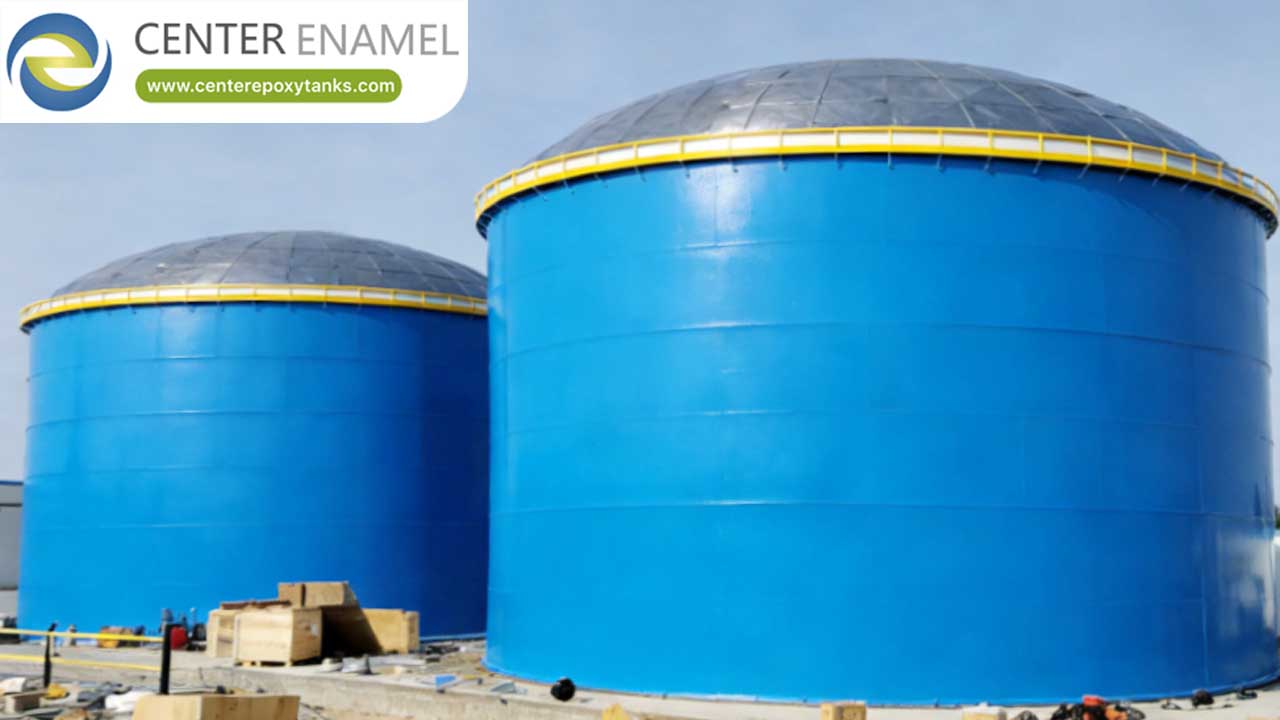
Flat-Bottom Welded Carbon Steel Tanks: The Backbone of Industrial Storage
For large-scale liquid containment, the Flat-Bottom Welded Carbon Steel Tank remains the industry standard. These vessels are the preferred solution for bulk storage in the petrochemical, water treatment, and food processing industries, offering unmatched structural resilience for high-capacity projects. Engineered to sit directly on a prepared foundation, these tanks provide a stable, cost-effective, and permanent solution for liquid storage.
The Engineering Advantage of Flat-Bottom Welded Design
Flat-bottom tanks are designed for massive volumes where the foundation carries the weight of the liquid, rather than the tank shell itself.
1. Structural Monolithic Integrity
Unlike bolted tanks, which rely on thousands of gaskets and fasteners, welded carbon steel tanks are monolithic. The shell and the flat-bottom plates are fused using high-strength welding processes (such as Submerged Arc Welding). This creates a singular, seamless structure that is inherently leak-proof and ideal for storing hazardous liquids or volatile chemical products.
2. High-Capacity Scalability
Because the load is transferred to a engineered concrete or compacted-sand foundation, flat-bottom tanks can be built to massive diameters. This makes them the primary choice for "tank farms" and terminal storage where land utilization and storage volume density are critical business objectives.
3. Compliance and Safety (API 650)
Modern flat-bottom welded tanks are manufactured in accordance with API 650 or API 620 standards. These global benchmarks mandate strict requirements for steel thickness, welding procedures, and seismic calculations, ensuring the tank can withstand environmental stresses and internal pressures without risk of fatigue or failure.
Performance Matrix: Tank Selection
Feature | Flat-Bottom Welded Steel | Bolted Steel Tanks | Concrete Tanks |
Leak Prevention | Superior (Monolithic) | Moderate (Gasket-dependent) | Low (Crack prone) |
Capacity Potential | Extremely High | Limited | Moderate |
Foundation Requirement | Engineered Load-Bearing | Engineered Load-Bearing | Heavy Foundation |
Maintenance | Minimal (Coating upkeep) | Moderate (Seal checks) | High (Structural repairs) |
Best Application | Crude Oil, Fuel, Large Water | Medium/Small Storage | Water/Solid Storage |
Technical Considerations for Procurement
When specifying a flat-bottom welded carbon steel tank, engineers focus on three critical operational requirements:
Foundation Design: Since the tank sits flat on the base, the foundation must be perfectly leveled and designed to distribute the static weight of the stored liquid evenly.
Coating and Protection: Carbon steel is susceptible to oxidation. We utilize advanced external coating systems and internal liners (if required) to prevent corrosion, ensuring the tank structure lasts for decades.
Weld Quality Assurance: Given the tank's size, all critical seams undergo rigorous Non-Destructive Testing (NDT), including X-ray, ultrasonic, and vacuum box testing, to guarantee that every weld is structurally flawless.
Frequently Asked Questions (FAQ)
Q: Why choose a flat-bottom welded design over a bolted tank?
A: Welded tanks provide a seamless, gasket-free structure that is superior for storing hazardous or volatile liquids. Their ability to handle high-capacity loads at massive diameters makes them the only choice for large-scale terminal operations.
Q: What design codes are typically used for these tanks?
A: Most industrial flat-bottom tanks are designed to API 650 (for atmospheric liquids) or API 620 (for tanks with higher internal pressures). These codes ensure rigorous safety standards for steel grades, design, and fabrication.
Q: Do flat-bottom welded tanks require special maintenance?
A: Maintenance is primarily focused on the protective coating system. Provided the exterior is properly maintained and the foundation remains stable, welded steel tanks have an exceptionally long operational lifespan.
Q: Can these tanks be used to store chemicals?
A: Yes. When paired with the correct internal lining (such as epoxy, phenolic, or specialized chemical-resistant polymers), welded steel tanks are excellent for storing a wide range of industrial chemicals, fuel additives, and process liquids.
Q: What is the benefit of a flat bottom versus a cone bottom?
A: A flat bottom is designed for maximum storage volume per footprint. Cone bottoms are typically used when the tank must be completely drained or when the stored product is highly viscous and requires gravity-assisted discharge.
Are you currently engineering a new storage terminal or looking to replace aging infrastructure with high-capacity welded carbon steel solutions? [Contact our engineering team] today for a technical consultation or a custom design proposal tailored to your liquid storage needs.
Expert Follow-Up Question: Are you planning a high-volume bulk storage terminal for petrochemicals, or are you looking for a process water storage solution for an industrial plant?


