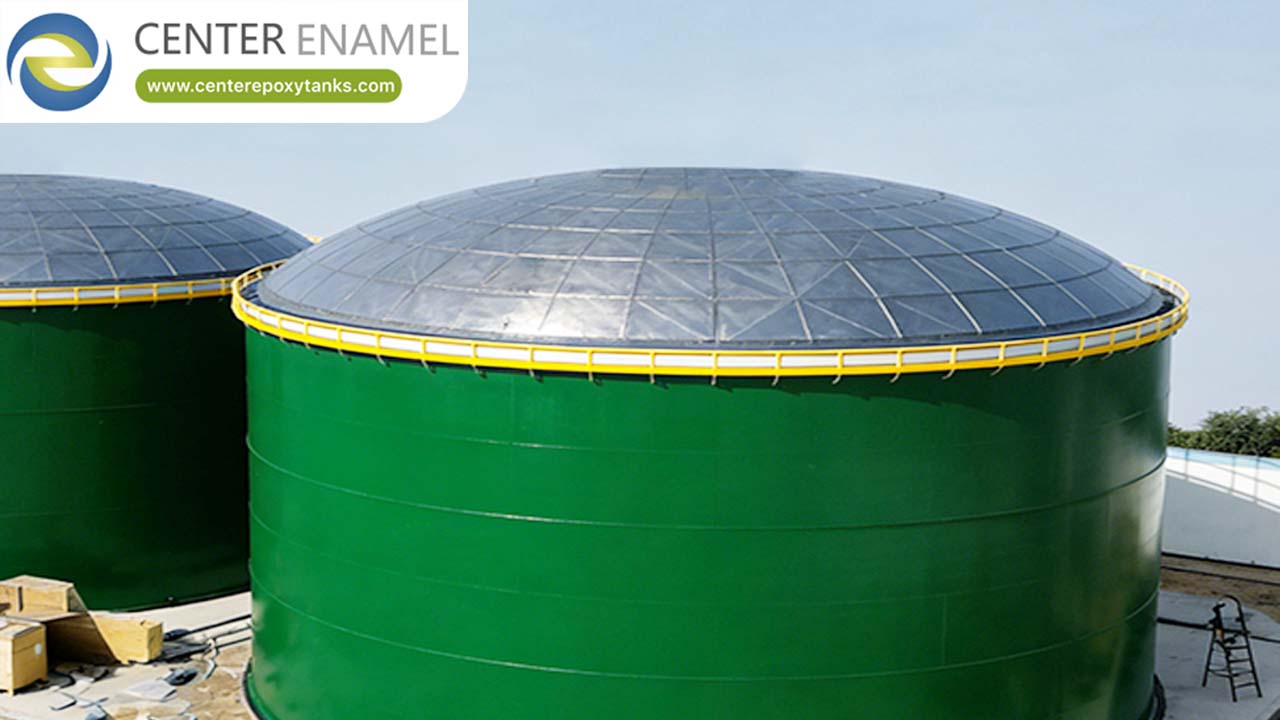
Finished Fuel Storage Tanks: Engineering & Procurement Guide
Finished fuel storage—comprising gasoline, diesel, aviation turbine fuel (Jet A-1), and specialty distillates—requires the highest tier of structural integrity, chemical compatibility, and particulate control. Unlike raw water or crude storage, finished fuels are highly susceptible to contamination and volatility, necessitating advanced tank engineering. China’s manufacturing sector, utilizing robotic fabrication and stringent quality-control protocols, is now a global leader in delivering API 650 and UL 142-compliant storage infrastructure that meets the rigorous demands of international oil and gas terminals.
1. Structural Engineering and Regulatory Benchmarks
A tank is only as reliable as the standard to which it is engineered. When sourcing finished fuel storage systems, manufacturers must demonstrate expertise in two primary global standards:
API 650: Vertical Aboveground Storage
For bulk fuel terminals and refinery tank farms, the API 650 standard is non-negotiable. It defines the rules for welded steel tanks to handle atmospheric pressure and moderate internal pressure.
● Hydrostatic Load Math: Calculations must account for the specific gravity of the fuel to determine shell plate thickness and reinforcement requirements.
● Seismic & Wind Uplift: Designs must be validated against the specific wind speeds and seismic acceleration factors of the installation site.
UL 142 / EN 12285: Horizontal Shop-Built Tanks
For commercial refueling, generator supply, and chemical processing facilities, shop-fabricated tanks must comply with UL 142 or EN 12285-1. These standards mandate:
● Double-Wall Construction: Primary and secondary steel shells with an interstitial monitoring space to ensure zero-leak integrity.
● Pressure Testing: Every unit must undergo multi-stage hydrostatic and air-pressure testing to ensure weld integrity before leaving the factory.
2. Purity Protection & Internal Coating Systems (ISO 12944)
Finished fuels are extremely sensitive to particulate matter (rust flakes, weld slag). Particulates can trigger filtration failures and engine damage.
To prevent internal corrosion, top-tier manufacturers apply advanced internal lining systems compliant with ISO 12944:
Component | Technical Standard | Purpose |
Surface Prep | ISO 8501-1 Sa 2.5 | White-metal blast cleaning to remove all mill scale and surface oxides. |
Lining Material | Novolac/Phenolic Epoxy | High-build, chemically inert barrier resisting fuel-borne water and acids. |
Thickness (DFT) | 300--400m | Ensures an impermeable barrier against microbial-induced corrosion (MIC). |
3. Emission Control & Safety Technology
Finished fuels are volatile. Preventing vapor loss (VOCs) is both an environmental necessity and a financial priority.
● Floating Roofs: Internal Floating Roofs (IFR) or External Floating Roofs (EFR) are mandatory for high-volatility fuels like gasoline. They minimize the vapor space, reducing VOC emissions by up to 99%.
● Seal Technology: Modern tanks utilize dual-seal systems:
○ Primary: Mechanical shoe seals or liquid-mounted seals.
○ Secondary: Wiper seals to capture fugitive vapors that bypass the primary seal.
● Floating Suction: To prevent the withdrawal of settled water or bottom-sediment contaminants, fuel must be skimmed from the top. Articulated floating suction arms are a critical mechanical component of finished fuel storage, ensuring only the cleanest product is pumped to downstream pipelines.
4. Manufacturing Excellence: The China Advantage
The Chinese manufacturing landscape for finished fuel storage has shifted toward high-automation, reducing human error in critical weld zones.
● Robotic GMAW/TIG Welding: Reduces heat-affected zones (HAZ) and ensures consistent, deep-penetration weld profiles.
● NDT (Non-Destructive Testing): Professional manufacturers subject 100% of vertical shell seams to Radiographic Testing (RT) and Ultrasonic Testing (UT).
● Vacuum Box Testing: A critical final step for tank floor plates to ensure absolute leak-proof integrity across all welded laps.
5. Procurement Vetting Matrix
When evaluating manufacturers, ensure your technical team uses this matrix to differentiate high-end fabrication from commodity steel supply:
Vetting Criteria | Top-Tier Manufacturer | Standard Commodity Supplier |
Design Compliance | Valid API 650/UL 142 Stamps | "API-compliant" (but no formal certification) |
Weld Quality | 100% RT/UT tested seams | Visual inspection only |
Lining Application | Climate-controlled factory lines | Manual on-site or open-shop painting |
Documentation | Full Mill Certificates & NDT Reports | Basic commercial invoice |
Equipment | CNC/Robotic Welding/Rolling | Manual fabrication |
6. Frequently Asked Questions (FAQ)
Q: Can Chinese manufacturers provide tanks suitable for Jet A-1 aviation fuel?
A: Yes. Jet A-1 requires the strictest levels of particulate cleanliness and lining integrity. Manufacturers with ISO 9001 and API certifications can provide tanks with dedicated internal linings, floating suction units, and specialized filtration interfaces designed for aviation protocols.
Q: Is it cost-effective to ship these tanks internationally?
A: Yes. Finished fuel tanks can be shipped as "knock-down kits." Components are cut, beveled, and coated in the factory, then containerized. This "flat-pack" approach minimizes shipping volume and allows local teams to assemble the tank using bolted or field-welded methods, ensuring local content requirements are met.
Q: Why specify a "Cone-Down" bottom for fuel tanks?
A: Finished fuels naturally contain entrained water. A cone-down bottom with a central sump forces water and sediment to one point, allowing for easy, routine drainage before contaminants can enter the product distribution line.
Sourcing finished fuel storage tanks is an exercise in risk management. By centering your procurement strategy on API 650 structural compliance, ISO 12944-grade internal coatings, and proven robotic fabrication, you ensure the integrity of your fuel supply chain. Leading Chinese manufacturers are well-equipped to act as strategic partners in your energy infrastructure, provided your RFP emphasizes quality, testing, and material traceability.
Are you currently specifying a storage project, and do you require structural load analysis or chemical compatibility documentation for specific fuel additives (e.g., ethanol-blended gasoline)?


