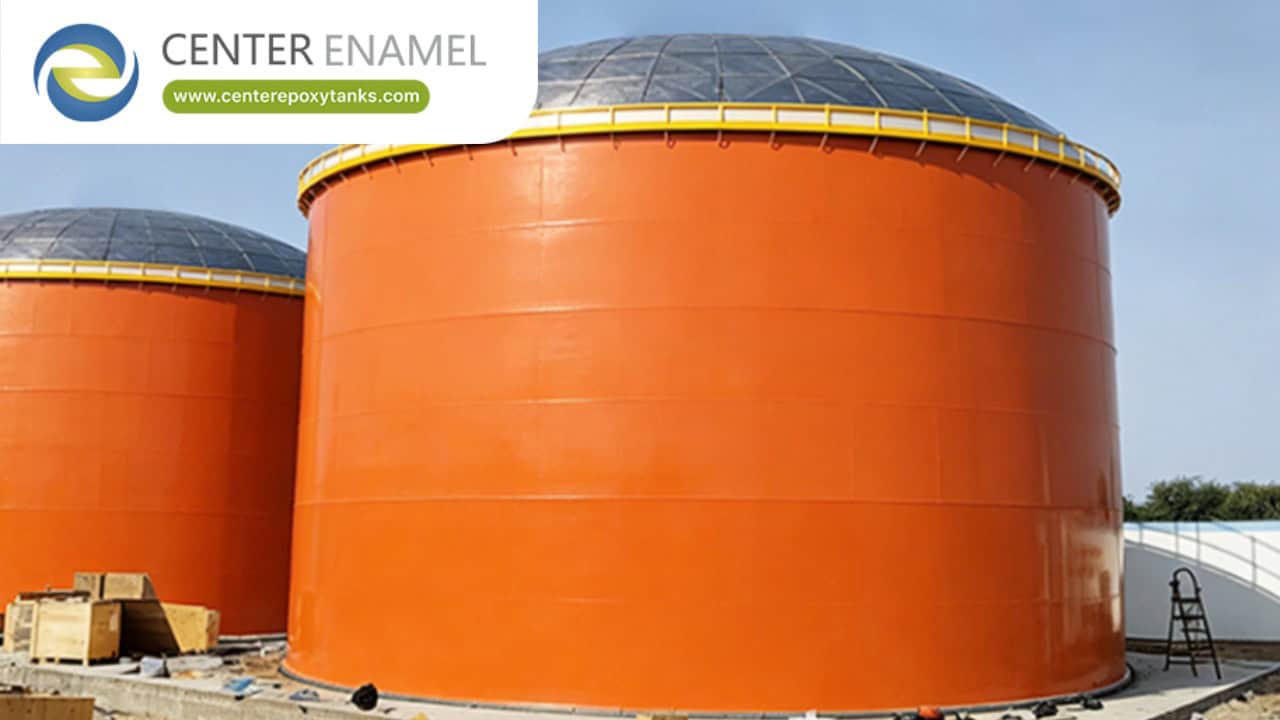
FBE vs. Stainless Steel Tanks: An Engineering Comparison
In the industrial storage sector, Fusion-Bonded Epoxy (FBE) and Stainless Steel are both top-tier containment solutions. However, they serve different operational and financial priorities. While Stainless Steel is often perceived as the "ultimate" material due to its elemental resistance, FBE technology has evolved to provide equivalent performance in most industrial and municipal applications at a fraction of the cost. This comparison breaks down the technical and economic trade-offs to help you select the optimal asset for your facility.
1. Comparative Analysis: Key Technical Differences
Fusion-Bonded Epoxy (FBE)
FBE tanks are engineered using high-strength carbon steel panels that are grit-blasted and then coated with a thermoset polymer powder. The panels are heat-cured, creating a monolithic, chemically inert, and highly dense barrier that is bolted together on-site.
● Primary Strength: Unbeatable performance-to-cost ratio. It provides industrial-grade corrosion resistance for modular, rapid-deploy projects.
● Engineering Edge: The factory-controlled curing process eliminates the variable of field-weld quality, ensuring the coating is consistent across every panel.
Stainless Steel (304/316)
Stainless steel tanks rely on the natural chromium-oxide layer for corrosion resistance. They are typically site-welded (though bolted stainless exists, it carries a significant cost premium).
● Primary Strength: Elemental chemical inertness. It is the gold standard for high-purity applications, such as pharmaceuticals, food processing, or specific high-temperature/high-acidity chemical storage.
● Engineering Risk: Stainless steel is susceptible to Chloride Stress Corrosion Cracking (CSCC), a condition where chlorides in the water or environment can cause sudden, catastrophic cracking in the metal lattice, especially in marine environments.
2. Decision Matrix: FBE vs. Stainless Steel
Feature | Fusion-Bonded Epoxy (FBE) | Stainless Steel (304/316) |
Initial Cost | Highly Competitive | Very High |
Corrosion Resistance | Excellent (Barrier-based) | Exceptional (Elemental-based) |
Installation Speed | Fast (Modular/Bolted) | Slow (Site-Welded) |
Chloride Tolerance | High | Low (Susceptible to CSCC) |
Repairability | Simple (Panel replacement/Touch-up) | Complex (Requires specialized welding) |
Ideal Use Case | Municipal Water, Wastewater, Biogas | High-Purity Chemical, Pharma, Food |
3. The "Hidden" Cost of Stainless Steel
When comparing these two technologies, procurement teams often focus on material cost, but overlook the Total Installed Cost (TIC):
● Fabrication & Welding: Stainless steel requires certified, specialized welders. The cost of labor, specialized shielding gases, and non-destructive testing (NDT) for welds can inflate the total project cost by 30–50% compared to a modular FBE installation.
● Site Constraints: Because stainless steel tanks are often welded on-site, the project timeline is dictated by weather, welder availability, and site access. FBE tanks arrive pre-fabricated, allowing for assembly regardless of the season or local site limitations.
4. Frequently Asked Questions (FAQ)
Q: Which tank is better for a coastal/high-salt environment?
A: Surprisingly, FBE is often superior. Stainless steel (especially 304) is highly susceptible to "pitting" and stress corrosion cracking in high-chloride, marine environments. An FBE-coated tank, with its chemically inert, non-metallic barrier, is completely immune to chloride-induced cracking.
Q: Can I use FBE for food-grade storage?
A: FBE is widely used for potable water (NSF/ANSI 61 certified) and many agricultural storage applications. However, if your process requires "ultra-high purity" (e.g., medical-grade liquids or specific high-acidity food ingredients), stainless steel is the industry standard for those niches.
Q: Is the lifespan comparable?
A: Yes. Both materials are engineered for 30+ year lifespans. The primary difference is how they reach that goal: FBE achieves it through a high-performance barrier coating, while stainless steel achieves it through elemental metallurgy.
Q: Why would I choose Stainless Steel over FBE?
A: You should choose stainless steel if your process involves liquids that would chemically degrade an epoxy coating (e.g., strong solvents, certain concentrated acids) or if your process requires an absolutely inorganic, metallic contact surface for product purity.
Engineering Certainty for Your Procurement Strategy
The decision between FBE and Stainless Steel should be based on your process requirements, not just the material "prestige." For most industrial and municipal storage needs, FBE provides the required longevity and reliability with significant capital expenditure savings. If your storage requirements are highly specialized, Center Enamel can analyze your media profile to determine if a transition to stainless steel is genuinely required or if FBE provides the same functional result at a lower cost.
Are you currently evaluating containment options for a specific chemical profile, or would you like a detailed lifecycle cost comparison for an upcoming project?


