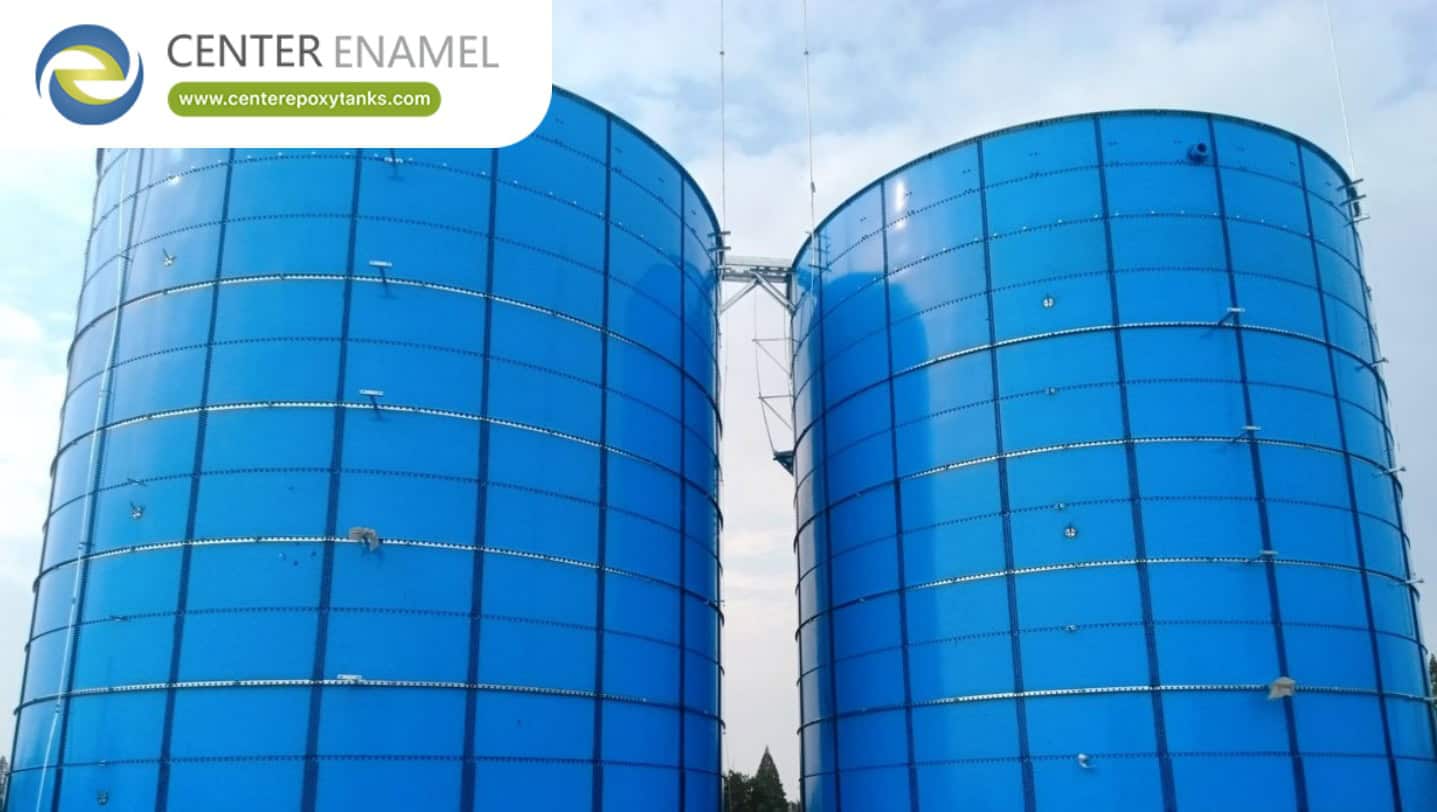
Exploring the Benefits of Fusion Bonded Epoxy (FBE) Tanks: Engineering & Performance Guide
Fusion Bonded Epoxy (FBE) tanks utilize a high-performance, thermosetting powder coating that is applied electrostatically and fused to the steel substrate through a high-temperature curing process. Unlike liquid-applied epoxies that rely on mechanical bonding, FBE forms a chemically cross-linked, monolithic barrier that offers superior adhesion, extreme chemical resistance, and high impact tolerance. This engineering approach eliminates pinholes and surface imperfections, making FBE tanks the preferred choice for municipal water, wastewater treatment, and aggressive industrial chemical storage where long-term structural integrity and corrosion prevention are non-negotiable.
The Engineering Mechanics: Why FBE Excels
In industrial storage, the "weak link" is usually the interface between the steel shell and the internal coating. Traditional coatings often fail due to osmotic blistering, mechanical debonding, or inconsistent thickness. FBE solves these issues through superior material science:
Molecular Fusion: Because the powder is fused to the metal at temperatures typically exceeding $200^circtext{C}$, the coating becomes an integral part of the tank wall. This creates a bond strength that is exponentially higher than standard air-cured coatings.
Thermoset Stability: Once cured, FBE is a thermoset plastic. It does not re-melt at elevated ambient temperatures, maintaining its integrity even in extreme climates or hot-process storage applications.
Dielectric Strength: FBE provides exceptional electrical insulation, which is a critical factor in cathodic protection compatibility, ensuring that the tank remains protected even if the coating is locally breached.
Comparative Performance Overview
Procurement teams must evaluate coating systems based on their long-term operational impact, not just initial installation costs.
Feature | Fusion Bonded Epoxy (FBE) | Liquid Epoxy Coating | Glass-Fused-to-Steel (GFS) |
Bonding Type | Chemical Fusion | Mechanical/Adhesive | Molecular/Mechanical |
Curing Process | Heat-Cured (Factory) | Air-Cured (Often field) | High-Temp Firing |
Durability | High | Moderate | Very High |
Impact Resistance | Excellent | Moderate | Moderate (Brittle) |
Coating Consistency | Uniform (Factory Controlled) | Variable (Human Error) | Uniform (Factory Controlled) |
Maintenance | Minimal | Moderate (Frequent) | Minimal |
Key Performance Advantages for Industrial Applications
Chemical Inertness: FBE is highly resistant to a broad spectrum of pH levels, making it ideal for the diverse and often acidic nature of industrial wastewater or municipal sewage storage.
Extended Service Life: By eliminating the risk of delamination, FBE tanks significantly extend the asset's lifecycle. A well-specified FBE tank can provide decades of service with minimal requirement for recoating or internal repairs.
Factory-Controlled QA/QC: Because FBE is applied in a controlled factory environment—unlike field-applied coatings—the thickness, cure temperature, and coverage are subject to rigorous inspection (e.g., holiday testing). This eliminates the risks of "thin spots" or inadequate curing that often plague field-erected tanks.
Operational Uptime: Reduced maintenance needs mean fewer shutdowns. For facilities where storage is critical to the process flow, the "set and forget" nature of FBE is a major operational advantage.
Frequently Asked Questions (FAQ)
Q: Is FBE suitable for potable water storage?
A: Yes. When specified with NSF/ANSI-61 certified powder formulations, FBE tanks are safe and compliant for the storage of drinking water, providing a clean, hygienic, and corrosion-resistant environment.
Q: How does FBE compare to Glass-Fused-to-Steel (GFS)?
A: GFS offers the highest possible corrosion resistance and is chemically inert, but it can be brittle under high mechanical impact. FBE offers a "best of both worlds" balance—it provides excellent chemical resistance while maintaining a degree of flexibility and impact resistance that GFS cannot match.
Q: Can FBE tanks be repaired in the field?
A: While the primary coating is factory-applied, minor field repairs can be executed using compatible high-performance touch-up kits. However, the integrity of an FBE tank is specifically engineered to minimize the need for such repairs in the first place.
Partnering for Reliable Infrastructure
Choosing an FBE tank is a commitment to structural quality and operational efficiency. By leveraging factory-applied, fusion-bonded technology, you remove the variability of on-site coating application and secure a storage asset designed to endure.
Are you currently designing a storage facility and need a material performance analysis?
[Contact our technical engineering team] to request a comparative analysis of FBE versus other coating technologies for your specific product pH, temperature, and volume requirements.


