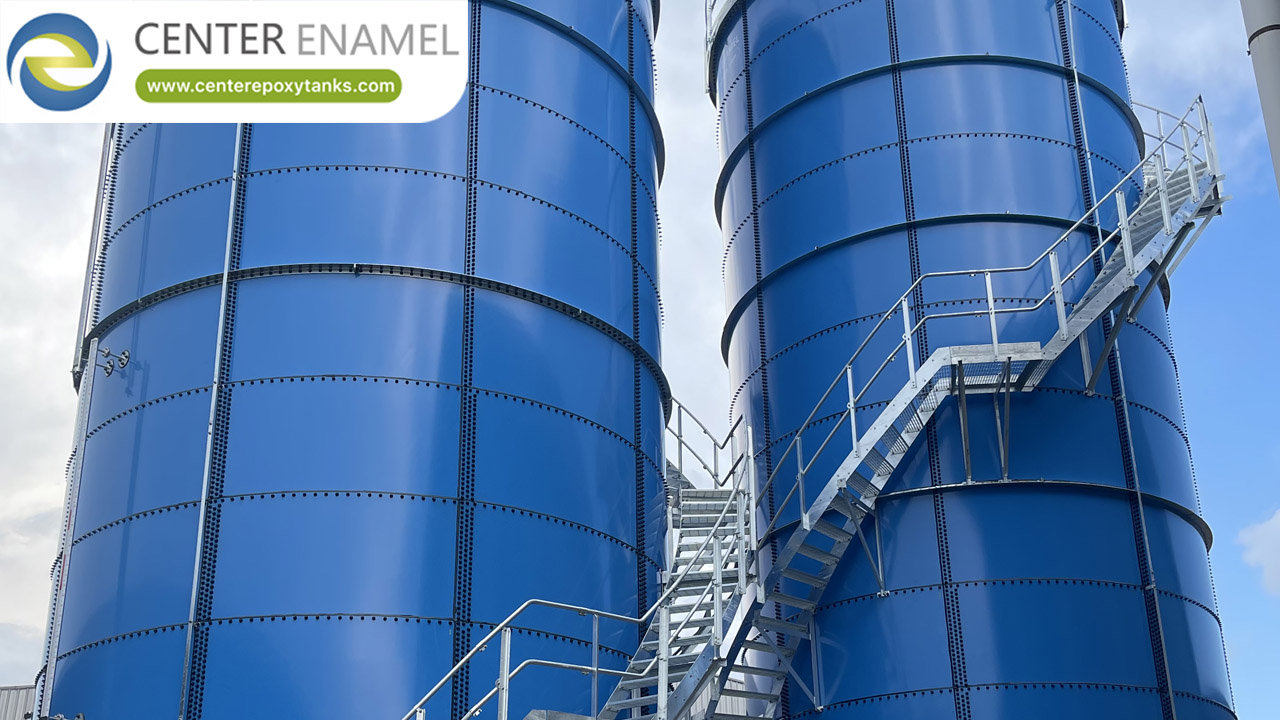
Epoxy Coated Tanks in the Food & Beverage Industry
The food and beverage processing sector operates under some of the most rigorous hygiene, safety, and quality standards in global manufacturing. Whether handling raw ingredients, processing water, liquid sweeteners, edible oils, or beverage concentrates, facilities require storage infrastructure that guarantees absolute chemical inertness, zero product contamination, and seamless cleanability. Traditional storage options—such as unlined carbon steel or deteriorating concrete—risk product spoilage, bacterial proliferation, and regulatory audit failures.
To eliminate these vulnerabilities while optimizing capital expenditure, modern food processing plants rely on epoxy coated tanks built with modular bolted steel architecture and advanced factory-applied Fusion-Bonded Epoxy (FBE) linings. These specialized systems deliver the pristine interior finish required for sanitary food-grade containment.
The Science of Food-Grade Fusion-Bonded Epoxy (FBE)
Maintaining product integrity requires advanced polymer chemistry that withstands aggressive organic ingredients and intensive sanitation cycles:
High Cross-Linking Density: Premium food-grade epoxy systems utilize thermosetting polymers formed by reacting epoxy resins with precise polyamine hardeners. This creates a dense molecular cross-linking matrix that produces a completely non-porous surface.
Biofilm and Microbial Resistance: By eliminating microscopic surface pores, the dense epoxy lining prevents bacterial attachment, stopping harmful pathogens like Salmonella or Listeria from forming biofilms.
Zero Taste and Odor Migration: Compliant with strict regulatory guidelines, fully cured food-grade epoxy coatings exhibit zero volatile organic compound (VOC) emissions during service and do not alter the taste, color, or aroma of stored consumables.
Technical Performance Matrix: Food & Beverage Storage Technologies
Technical Parameter | Fusion-Bonded Epoxy Bolted Steel Tanks | Industrial Stainless Steel Tanks | Unlined Carbon Steel Tanks |
Sanitation & Regulatory Compliance | Fully compliant with FDA 21 CFR 175.300 and sanitary guidelines | Exceptional; industry baseline for hygienic food contact | Low; highly vulnerable to rust flaking and product contamination |
Chemical & CIP Resistance | Excellent; withstands frequent caustic (NaOH) and acidic washdowns | Excellent; highly resistant to standard chemical sanitization | Poor; reacts with cleaning agents and organic food acids |
Capital & Installation Cost | Highly cost-effective for large-capacity bulk liquid storage | Extremely high material and fabrication cost at large scales | Low initial cost, but high long-term maintenance and replacement cost |
Modular Scalability | High; bolted panel construction allows future capacity expansion | Rigid structure; difficult to modify or expand post-construction | Rigid structure; requires extensive on-site cutting and welding |
Core Food & Beverage Applications
1. Edible Oil and Lipid Processing
Vegetable oils, palm oil, and animal fats degrade over time if exposed to reactive metal surfaces. Epoxy-coated tanks provide an inert, smooth barrier that prevents oxidation, rancidity, and sludge buildup.
2. Beverage Production and Liquid Sweeteners
Soft drink syrups, fruit juice concentrates, and brewing process waters require contamination-free storage. The non-stick, smooth surface of FBE linings facilitates rapid drainage and complete product recovery during batch processing.
Frequently Asked Questions (FAQ)
Q: Are epoxy coated tanks safe for direct food and beverage contact?
A: Yes. High-quality food-grade epoxy coatings comply strictly with FDA 21 CFR 175.300 regulations for resin and polymer coatings used in food contact applications, ensuring complete safety and zero chemical leaching.
Q: Can epoxy coated tanks withstand aggressive Clean-In-Place (CIP) sanitization?
A: Absolutely. Fully cured fusion-bonded epoxy linings withstand harsh daily washdown protocols, including high-pressure sprays and chemical solutions like sodium hydroxide ($text{NaOH}$) and phosphoric acid.
Q: How do epoxy linings prevent bacterial growth in food storage tanks?
A: High-functionality epoxies feature a high density of molecular cross-linking, creating an ultra-smooth, non-porous surface that inhibits biofilm formation and makes routine sanitization highly effective.
Q: Can a food processing plant expand its bulk storage capacity using bolted steel tanks?
A: Yes. One of the primary operational advantages of modular bolted steel tanks is scalability—facilities can easily add extra panel rings to increase storage volume as production demands grow.


