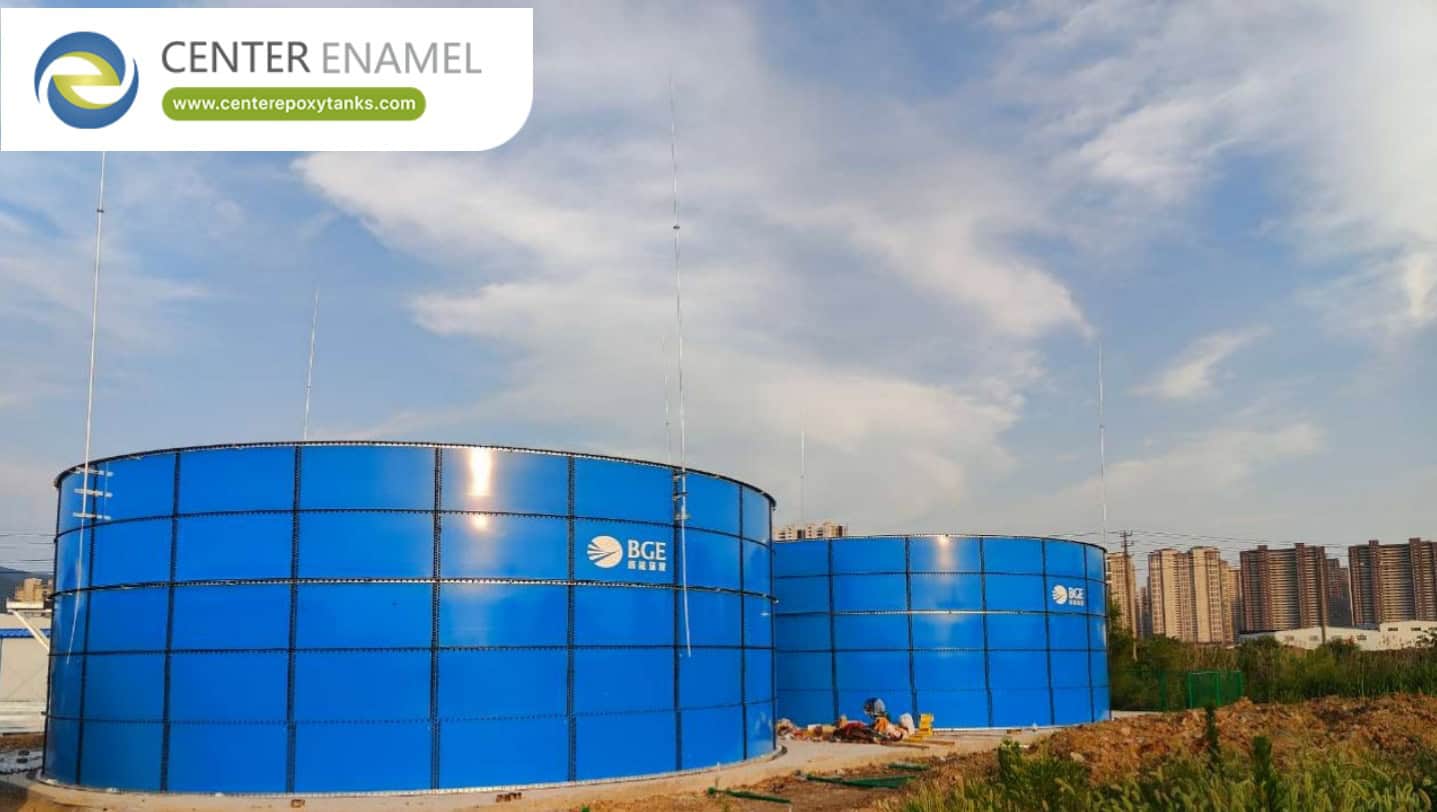
Epoxy Coated Tanks for Municipal Water Storage
Municipalities face a continuous challenge in managing, treating, and storing clean drinking water for growing urban populations. Whether supplying daily residential water distribution networks, maintaining strategic emergency fire reserves, or holding treated water at municipal treatment plants, cities require storage reservoirs that guarantee absolute public health safety, structural resilience, and long-term economic efficiency. Traditional storage methods—such as aging cast-in-place concrete basins or unlined field-welded steel tanks—frequently suffer from structural cracking, concrete carbonation, interior wall corrosion, and lengthy construction timelines.
To eliminate these vulnerabilities, epoxy coated tanks for municipal water storage have become the premier infrastructure standard worldwide. By combining high-strength structural steel panels with advanced factory-applied fusion-bonded epoxy (FBE), these modular systems deliver certified potable water safety, exceptional corrosion resistance, and decades of reliable service.
The Engineering Superiority of Fusion-Bonded Epoxy for Potable Water
Municipal drinking water storage demands zero risk of chemical leaching, microbial growth, or structural contamination. Factory-controlled Fusion-Bonded Epoxy technology fulfills these strict requirements through advanced material science:
Thermal Molecular Cross-Linking: High-grade steel panels undergo abrasive grit-blasting before thermosetting epoxy powder is electrostatically applied and thermally cured in high-temperature factory ovens. This melts the polymer, fusing it permanently to the steel substrate to create a seamless, impenetrable barrier.
Certified Public Health Safety (NSF/ANSI 61): High-performance municipal water tanks utilize coatings certified strictly to NSF/ANSI Standard 61 and FDA guidelines, ensuring that the interior lining is non-toxic and leaves drinking water completely free of taste, odor, or chemical contaminants.
Biofilm and Sediment Resistance: The ultra-smooth, non-porous interior finish prevents microscopic crevices where bacteria, algae, and organic sediments can accumulate, ensuring that routine municipal sanitization protocols remain highly effective.
Technical Performance Matrix: Municipal Water Storage Solutions
Technical Parameter | Fusion-Bonded Epoxy Bolted Steel Tanks | Cast-in-Place Concrete Reservoirs | Field-Welded Carbon Steel Tanks |
Potable Water Certifications | Certified NSF/ANSI 61 smooth interior barrier preventing contamination | Requires specialized food-grade epoxy liners to prevent concrete leaching | Variable depending on field-applied paint quality |
Construction Velocity | Rapid modular assembly; erected in days or weeks using local crews | Extremely slow; intensive civil formwork, rebar tying, and multi-week curing | Slow; demands extensive plate rolling, field welding, and X-ray testing |
Corrosion & Crack Resistance | Superior; inert FBE barrier resists water treatment chemicals and ground shifts | Moderate; prone to concrete carbonation, structural cracking, and water seepage | Low; highly vulnerable to internal pitting and wall oxidation |
Modular Scalability | High; modular bolted panels allow seamless future capacity expansion | Permanent structure; impossible to modify or expand once poured | Rigid structure; difficult to alter or expand post-construction |
Core Municipal Applications
1. Treated Potable Water Distribution Reservoirs
Cities rely on ground-level storage tanks to balance daily water demand fluctuations. Epoxy-coated bolted steel tanks provide pristine storage environments that maintain water quality from the treatment plant to consumer taps.
2. Emergency and Fire Suppression Water Reserves
Municipalities must maintain dedicated water volumes for firefighting and emergency contingencies. Bolted steel tanks provide reliable, high-capacity storage that meets local fire codes and withstands severe seismic events without catastrophic failure.
Frequently Asked Questions (FAQ)
Q: Are epoxy coated tanks safe for municipal drinking water storage?
A: Yes. High-performance municipal water tanks utilize epoxy coatings certified to NSF/ANSI 61 standards, ensuring the interior lining is entirely non-toxic, chemically inert, and safe for public consumption.
Q: How do epoxy coated bolted tanks compare to concrete reservoirs for municipal use?
A: Epoxy-coated bolted steel tanks offer significantly faster installation times, immunity to concrete cracking and water seepage, lower long-term maintenance costs, and the unique ability to expand tank capacity later as municipal populations grow.
Q: Will an epoxy tank lining alter the taste or odor of municipal drinking water?
A: No. Fully cured fusion-bonded epoxy creates a neutral, non-porous barrier that prevents any chemical leaching, ensuring that treated drinking water retains its original purity, taste, and freshness.
Q: What is the expected service life of a municipal epoxy-coated water tank?
A: When engineered, manufactured, and maintained in accordance with international standards (such as AWWA D103, ISO 28765, and ISO 9001), high-quality epoxy-coated bolted steel tanks deliver a reliable operational lifespan exceeding 30 years.


