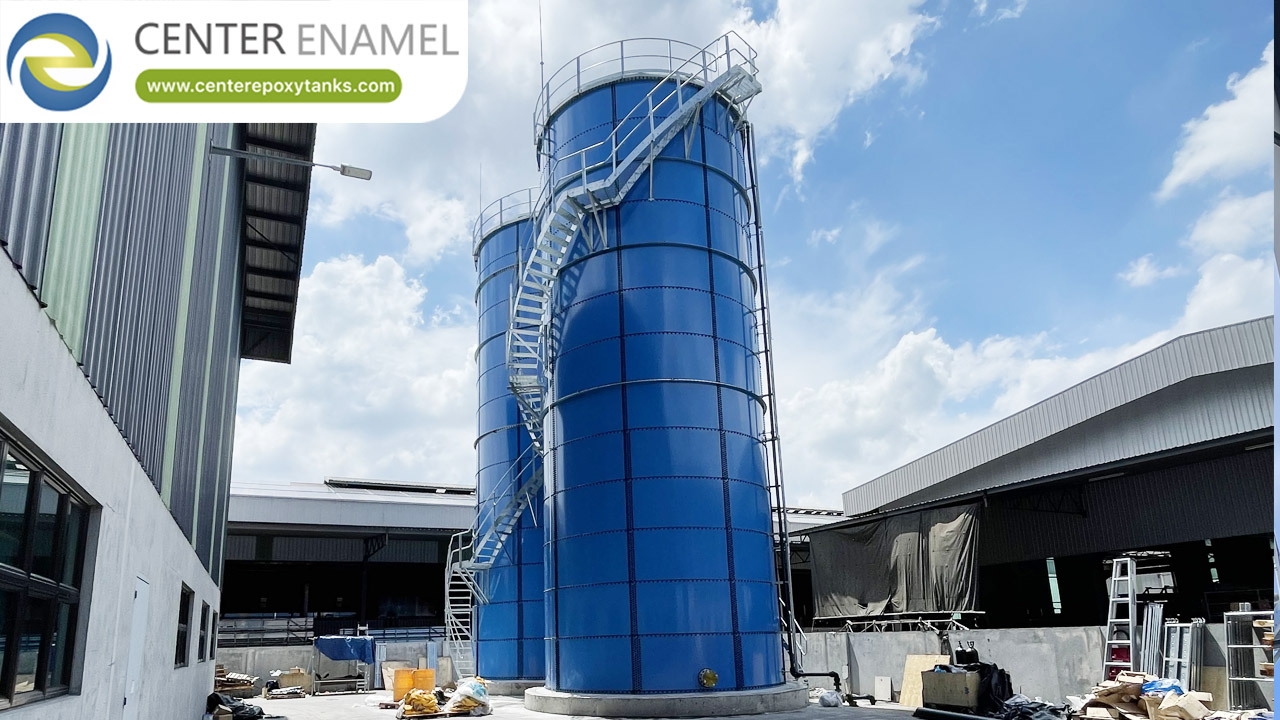
Epoxy Coated Tanks for Industrial Water Storage: Engineering Corrosion Defense and Structural Longevity
In modern industrial processing plants, municipal water treatment facilities, and large-scale manufacturing complexes, maintaining a secure, hygienic, and uninterrupted water supply is critical. Whether storing raw process water, fire suppression reserves, demineralized water, or cooling tower make-up fluids, liquid containment infrastructure must endure aggressive operating environments without degrading.
Unprotected carbon steel tanks are highly vulnerable to oxidation, internal pitting, and structural thinning when exposed to continuous moisture and industrial chemicals. To eliminate these vulnerabilities, modern engineers and project developers increasingly standardize on epoxy coated tanks for industrial water storage. Utilizing advanced Fusion Bonded Epoxy (FBE) coating technologies applied under strict factory conditions, these tanks deliver exceptional corrosion resistance, mechanical durability, and multi-decade structural integrity.
Core Engineering Principles and Fusion Bonded Epoxy (FBE) Technology
The superior performance of modern epoxy-coated tanks stems from advanced surface preparation and thermosetting polymer application processes:
Rigorous Substrate Preparation: High-tensile steel plates undergo automated abrasive grit-blasting to achieve a precise surface anchor profile, ensuring optimal mechanical bonding between the steel and the protective polymer coating.
Electrostatic Powder Spraying: Specially formulated thermoset epoxy resin powder is uniformly applied across both sides of the steel panels using automated electrostatic spray systems, guaranteeing consistent mil-thickness across edges, bolt holes, and corners.
Thermal Curing and Cross-Linking: Coated panels are baked in high-temperature industrial ovens, triggering an irreversible chemical cross-linking reaction that fuses the epoxy powder into a hard, non-porous, chemically inert barrier.
Rigorous Quality Verification: Every panel undergoes high-voltage pinhole and holiday testing to detect microscopic coating flaws before shipping, ensuring absolute impermeability upon on-site assembly.
Technical Performance Matrix: Industrial Water Storage Options
Technical Parameter | AWWA D103 Epoxy-Coated Bolted Tanks | Field-Welded Carbon Steel Tanks | Cast-in-Place Concrete Reservoirs |
Coating Application & Curing | Factory-applied Fusion Bonded Epoxy (FBE); thermally cured under precise shop conditions | Field-applied liquid epoxy systems subject to ambient weather and humidity fluctuations | Minimal interior waterproofing membranes or bare, porous concrete surfaces |
Installation Velocity & Modularity | Rapid bolted modular assembly; erected in weeks without heavy wet trades or curing delays | Slow, labor-intensive timeline requiring extensive field welding and inspection | Extremely slow construction timeline requiring multi-week concrete formwork and curing |
Maintenance & Longevity Profile | Low ongoing maintenance; smooth, inert surface resists scaling, microbial growth, and corrosion | High ongoing maintenance overhead for periodic repainting and weld seam corrosion checks | Moderate to high remediation costs if structural micro-cracking or concrete spalling occurs |
Volumetric Expansion Flexibility | Highly modular; easily expanded in the future by unbolting panels and adding vertical rings | Difficult and labor-intensive; requires cutting, welding, and structural requalification | Permanent monolithic structure; impossible to expand without major structural demolition |
Frequently Asked Questions (FAQ)
Q: What makes epoxy-coated tanks superior to standard painted steel tanks for industrial water storage?
A: Unlike field-applied paints that dry via solvent evaporation and are vulnerable to weather flaws, factory-applied Fusion Bonded Epoxy (FBE) is thermally cured at high temperatures. This creates a cross-linked, chemically bonded barrier that offers vastly superior hardness, adhesion, and resistance to continuous water immersion.
Q: Do epoxy-coated water storage tanks comply with potable and industrial drinking water safety standards?
A: Yes. High-grade interior epoxy linings formulated for water storage comply strictly with health and safety standards such as NSF/ANSI 61, ensuring that stored water remains free of toxic chemical leaching, heavy metals, or taste alteration.
Q: What governing standards regulate epoxy-coated steel tanks?
A: Quality industrial storage tanks are designed, fabricated, and coated in strict accordance with international engineering benchmarks, including AWWA D103 (bolted steel water storage tanks), AWWA D102 (coating systems), and ISO 28765.
Q: Can epoxy-coated industrial water tanks be disassembled and relocated if plant layouts change?
A: Yes. Because they feature a modular bolted panel architecture rather than welded monolithic shells, these tanks can be systematically unbolted, transported, and re-erected at a new facility site with minimal material waste.


