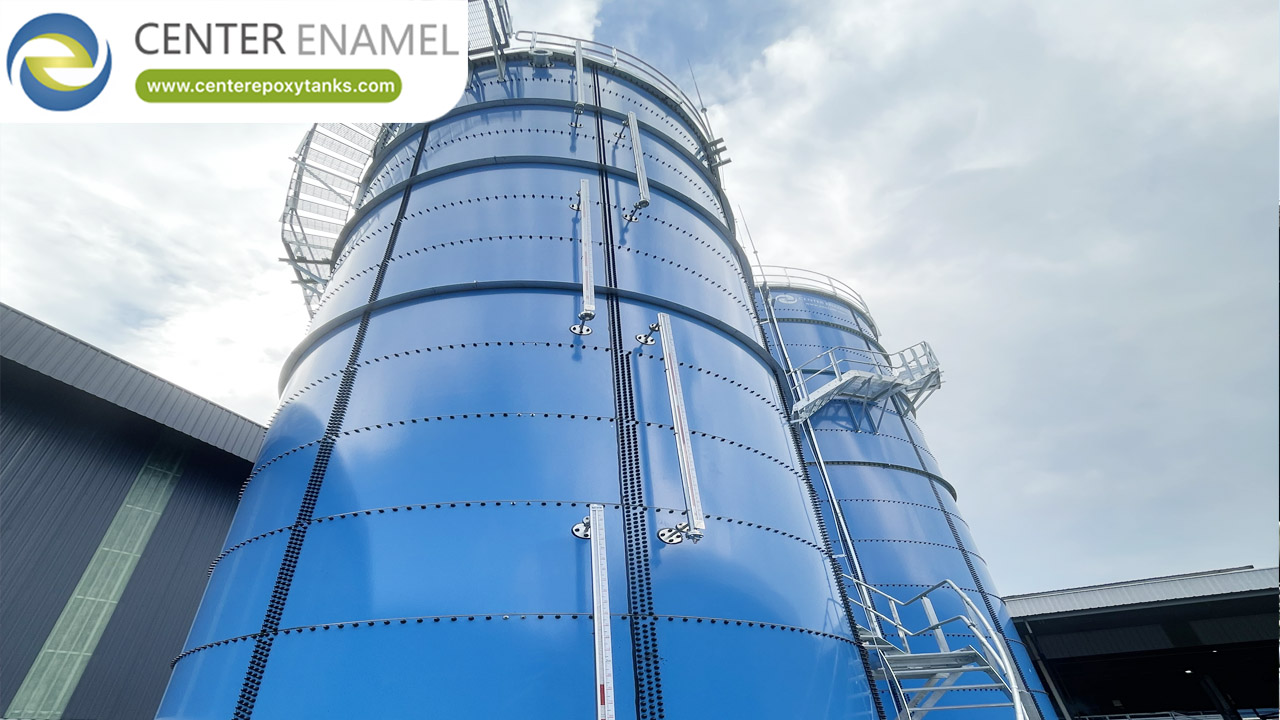
Epoxy Coated Tanks for Industrial Wastewater Storage: A Technical Overview
The Role of Epoxy Coated Tanks in Wastewater Management
Epoxy coated tanks—specifically those utilizing factory-applied Fusion Bonded Epoxy (FBE)—provide an impermeable barrier against the aggressive chemical and environmental factors found in industrial wastewater treatment [1.1.1, 1.1.2]. By utilizing a thermally cured, cross-linked polymer coating, these tanks offer a robust, long-term containment solution that outperforms traditional, site-applied painted systems and porous concrete structures [1.1.2].
Core Advantages for Industrial Applications
Chemical Compatibility: FBE coatings are highly robust, generally rated for a pH range of 2–13, making them suitable for a wide variety of industrial effluents [1.1.2].
Corrosion Resistance: Unlike uncoated or field-painted steel, factory-applied epoxy coatings provide a uniform, pinhole-free barrier that resists rust and oxidation, extending equipment lifespan by up to 20% compared to untreated alternatives [1.1.1, 1.1.2].
Operational Efficiency: The smooth, non-stick surface of epoxy coatings prevents the buildup of sludge and biological films, simplifying the cleaning process and reducing maintenance downtime [1.1.2].
Asset Agility: The modular, bolted design of these tanks allows for rapid, "hot-work-free" installation and offers the flexibility to expand capacity or relocate the tank if operational needs change—a feat impossible with poured-in-place concrete or permanently welded structures [1.1.2].
Performance Matrix: Wastewater Storage Solutions
Feature | Epoxy Coated Steel (FBE) | Reinforced Concrete | Welded Steel (Field-Painted) |
Coating Integrity | High (Factory-cured) | Low (Requires liners) | Variable (Field-applied) |
Installation Speed | Fast (Bolted/Modular) | Slow (Pour & Cure) | Moderate (Welding) |
Chemical Tolerance | High (pH 2–13) | Variable | Low (Corrosion-prone) |
Maintenance | Minimal (Field touch-up) | High (Structural repair) | High (Repainting) |
Frequently Asked Questions (FAQ)
Q: Can epoxy coated tanks be used for acidic industrial wastewater?
A: Yes. Factory-applied Fusion Bonded Epoxy (FBE) coatings are highly robust and generally rated for a wide pH range of 2–13, making them suitable for most industrial effluent streams [1.1.2].
Q: Why are epoxy coated tanks superior to concrete for wastewater?
A: Concrete is naturally porous, allowing wastewater to infiltrate and corrode internal reinforcement (rebar), eventually leading to structural failure. Epoxy coated steel tanks are non-porous, chemically inert, and provide a modular, ready-to-use solution that avoids long curing times [1.1.2].
Q: How does factory-applied FBE differ from standard field-applied paint?
A: Standard paint is a liquid-applied, air-dried coating prone to human error and environmental contamination during application. In contrast, FBE is a powder-based, thermally cured system fused to the steel at high temperatures, creating a chemical bond that is exponentially more durable [1.1.2].
Q: What is the expected service life and maintenance requirement?
A: Epoxy coated tanks are designed for high durability and minimal maintenance. While the service life can vary based on the specific effluent composition, these tanks can last up to 20% longer than uncoated tanks, with routine inspections being the primary maintenance requirement [1.1.1, 1.1.2].


