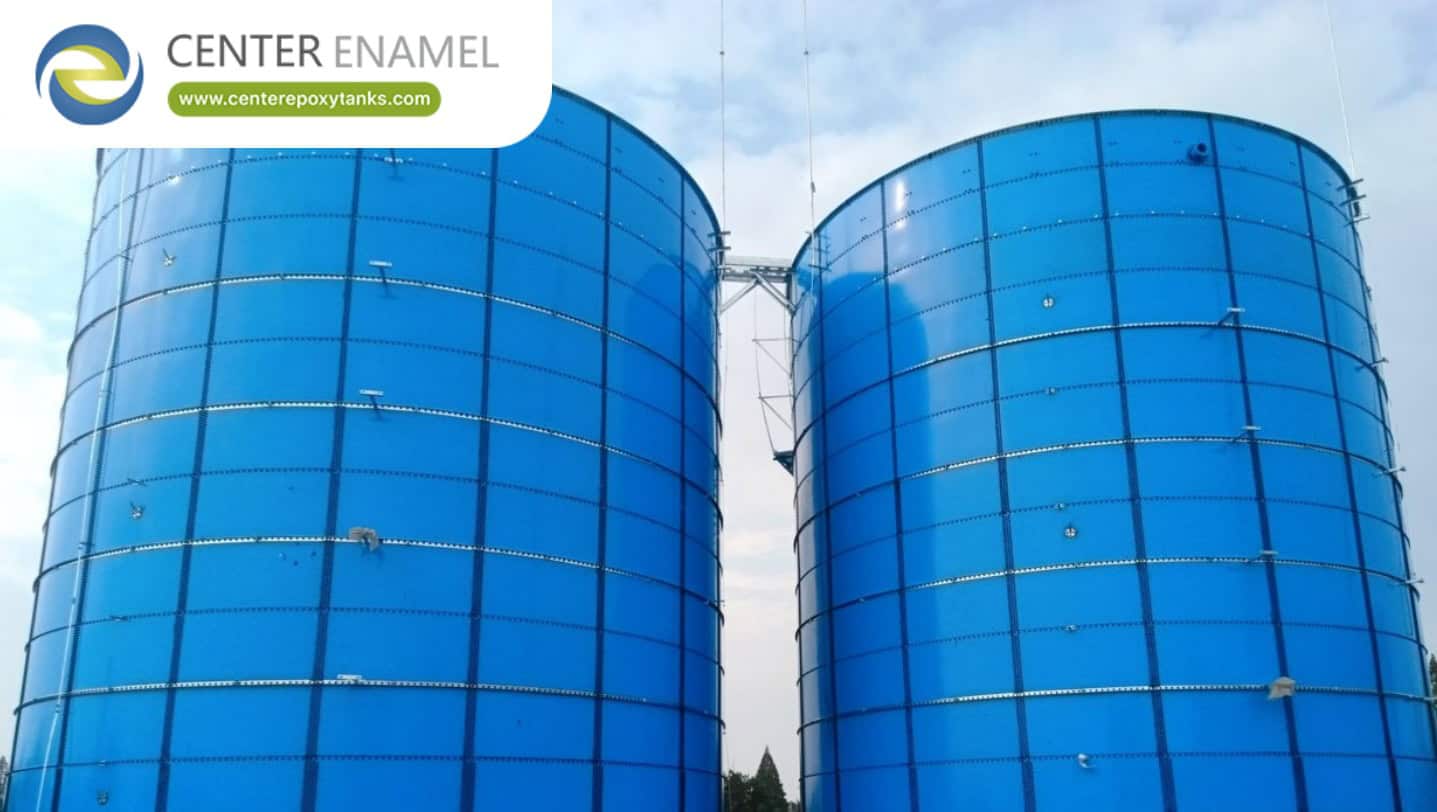
Epoxy Coated Tanks for Fire-Fighting Water Storage: Engineering & Compliance Guide
For industrial facilities and municipal infrastructure, the fire-fighting water storage tank is a mission-critical asset that must remain reliable for decades. Because fire-protection water often sits stagnant, it creates an aggressive environment for standard steel tanks, leading to rapid corrosion, tuberculation, and potential leakage. Epoxy-coated bolted steel tanks have become the industry standard for fire-fighting water storage, offering a balance of structural durability, rapid deployment, and long-term compliance with international safety standards like NFPA 22.
1. The Engineering Challenge: Why Fire Water Storage is High-Risk
Fire water is typically left sitting in the tank for long periods. Unlike process water, which circulates, fire-fighting water does not move, which leads to three primary engineering challenges:
● Oxygen Concentration Cells: Stagnant water allows oxygen to create localized corrosion cells on interior steel walls.
● Microbial Growth: Without circulation, water can become a breeding ground for bacteria, which accelerates under-deposit corrosion.
● Coating Degradation: In field-applied tanks, inconsistent coating thickness leads to "holiday" (pinhole) formation, where corrosion can penetrate the steel shell over time.
2. The Epoxy Coated Advantage (Factory-Applied)
The shift from field-welded tanks to factory-coated, bolted steel tanks has revolutionized the fire protection industry. The primary advantage lies in the controlled environment of a manufacturing facility.
● "Holiday-Free" Integrity: In our manufacturing facility, the epoxy coating is applied using automated lines, ensuring uniform thickness and 100% surface coverage. High-voltage spark testing (Holiday testing) is performed on every panel to ensure zero pinholes.
● Chemical Inertness: Specialized epoxy formulations are designed to be chemically inert, meaning they will not react with the water or leach chemicals, ensuring that the water quality remains consistent and non-corrosive to the tank structure itself.
● Rapid Installation: Because the panels are coated in the factory, the tank is ready for assembly immediately upon arrival at the site. This avoids the weather-related delays and quality risks associated with field-blasting and painting.
3. Compliance: NFPA 22 Standards
Any tank selected for fire-fighting must meet the requirements of NFPA 22 (Standard for Water Tanks for Private Fire Protection). Our epoxy-coated tanks are engineered to meet these rigorous criteria:
● Structural Integrity: Designed to withstand local seismic and wind loads (ASCE 7 standards) while maintaining the structural capacity to support required internal equipment.
● Design Life: Factory-applied epoxy systems, when maintained according to manufacturer specifications, are designed for a 30+ year service life, far exceeding the lifespan of standard painted alternatives.
● Fittings & Appurtenances: All nozzles, overflow pipes, and vortex plates are integrated with standardized, corrosion-resistant materials to ensure the entire system remains NFPA-compliant.
4. Comparative Analysis: Fire Protection Materials
Feature | Epoxy Coated Bolted Steel | Concrete Reservoirs | Stainless Steel Tanks |
Corrosion Resistance | Excellent (Holiday-free) | Variable (Crack-prone) | Superior |
Installation Speed | Fast (Modular) | Slow (Weeks/Months) | Moderate |
Lifecycle Cost | Low | High (Maintenance) | High (Material cost) |
Seismic Resilience | High (Bolted flexibility) | Low (Rigid/Cracking) | High |
Water Quality | Safe | Can leach lime/minerals | Safe |
5. Frequently Asked Questions (FAQ)
Q: Can epoxy-coated tanks be used for both fire-fighting and potable water?
A: Yes, provided the epoxy coating used is certified to NSF/ANSI 61 standards. This dual-purpose configuration is common in industrial complexes to optimize site space and capital expenditure.
Q: Why is "bolted" better than "welded" for fire protection?
A: Bolted construction allows for standardized factory coating. Field-welded tanks require the coating to be applied after the tank is built, which is highly susceptible to weather (humidity/temperature) and human error. Bolting ensures the coating is applied under strict, laboratory-controlled conditions.
Q: How often does the interior need inspection?
A: Under NFPA 22, tanks should be inspected annually. With a high-quality factory-applied epoxy coating, these inspections are primarily visual to ensure no heavy debris or sediment has accumulated, as the coating itself is designed for extreme durability.
Selecting the correct tank for fire protection is a decision rooted in long-term reliability. By utilizing factory-applied epoxy coated bolted tanks, facility managers can bypass the risks of field-applied coatings and the structural brittleness of concrete, ensuring that when the water is needed, the system is 100% ready to perform.
Are you currently tendering a fire-protection project and would you like to review our structural calculation methodologies for seismic compliance (ASCE 7) or receive a technical datasheet for our NSF/ANSI 61 certified coatings?


