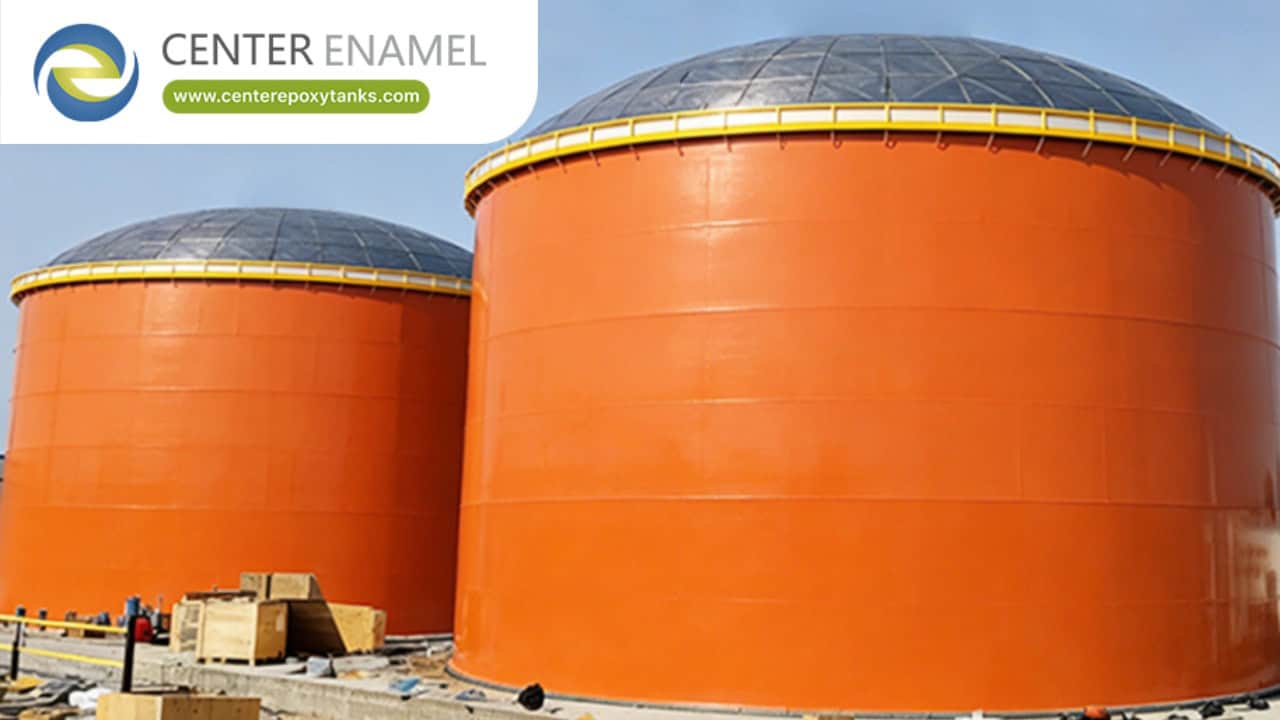
Epoxy Coated Storage Tanks for Water Treatment Facilities with High Corrosion Resistance
Municipal and industrial water treatment facilities operate in some of the most chemically aggressive environments on earth. From potable drinking water clarification and wastewater aeration to chemical dosing, sludge dewatering, and brine storage, containment vessels are constantly exposed to corrosive elements, disinfecting agents, fluctuating pH levels, and abrasive solids. Traditional storage structures—such as unlined carbon steel tanks and degrading concrete basins—frequently succumb to rapid oxidation, structural concrete carbonation, and costly maintenance failures.
To eliminate these vulnerabilities and ensure uninterrupted municipal operations, engineering specifiers increasingly rely on epoxy coated storage tanks engineered for high corrosion resistance. By combining high-strength structural steel panels with advanced factory-applied fusion-bonded epoxy (FBE), these systems deliver exceptional chemical inertness, structural reliability, and a multi-decade operational lifespan.
The Engineering Superiority of Fusion-Bonded Epoxy in Water Treatment
Water treatment processes require containment vessels that can withstand aggressive chemical exposure without breaking down or contaminating the water supply. Factory-applied Fusion-Bonded Epoxy provides elite defense through advanced material science:
Thermal Molecular Cross-Linking: Specialized epoxy powder is electrostatically sprayed onto grit-blasted steel panels and thermally cured in high-temperature factory ovens. This process melts the polymer and fuses it permanently to the steel substrate, creating a seamless, non-porous barrier.
Broad Chemical Compatibility: The dense epoxy lining withstands a wide pH range and resists corrosive treatment chemicals—including sodium hypochlorite, ferric chloride, alum, and polymers—preventing interior pitting and wall thinning.
Certified Potable Water Safety: High-performance municipal tanks utilize coatings certified to NSF/ANSI 61 and FDA standards, ensuring zero chemical leaching and absolute safety for public drinking water distribution.
Technical Performance Matrix: Water Treatment Storage Options
Technical Parameter | Fusion-Bonded Epoxy Bolted Steel Tanks | Unlined Cast-in-Place Concrete Basins | Field-Welded Carbon Steel Tanks |
Corrosion & Chemical Resistance | Superior; inert FBE barrier resists harsh municipal chemicals and wastewater effluents | Moderate; vulnerable to concrete carbonation, acid attack, and chemical leaching | Low; highly susceptible to internal vapor-space pitting and weld decay |
Compliance Standards | Engineered strictly to AWWA D103, NSF/ANSI 61, and ISO 28765 | Local civil batch-pour and ACI structural design codes | API 650 or AWWA D100 frameworks |
Construction Velocity | Rapid modular bolting; erected in days or weeks with minimal heavy equipment | Extremely slow; intensive civil formwork, rebar tying, and multi-week curing | Slow; demands extensive plate rolling, field welding, and X-ray testing |
Lifecycle & Scalability | Service life exceeding 30 years; modular panels allow future capacity expansion | Permanent structure; difficult to repair, modify, or expand once cracked | Rigid structure; difficult to alter post-construction |
Core Applications Across the Water Treatment Cycle
1. Potable Water Clarification and Storage
Municipal water plants require pristine storage reservoirs for treated drinking water. Epoxy-coated bolted tanks provide smooth, biofilm-resistant interior walls that prevent bacterial proliferation and maintain water purity in compliance with stringent health regulations.
2. Wastewater Effluent and Sludge Containment
Biological wastewater treatment generates aggressive secondary effluents and anaerobic sludge rich in hydrogen sulfide ($H_2S$) and organic acids. Epoxy-coated tanks protect structural walls from acid attack in clarifiers, equalization tanks, and sludge storage basins.
Frequently Asked Questions (FAQ)
Q: Why are epoxy coated storage tanks ideal for water treatment facilities?
A: They offer superior corrosion resistance against harsh treatment chemicals, rapid modular installation, certified potable water safety (NSF/ANSI 61), and a long operational lifespan that outperforms traditional concrete and unlined steel tanks.
Q: Can epoxy coated tanks withstand aggressive water treatment chemicals like chlorine and alum?
| A: Yes. High-performance fusion-bonded epoxy linings provide exceptional chemical inertness, protecting the underlying steel substrate from corrosive coagulants, disinfectants, and fluctuating pH levels.
Q: Do these tanks comply with international municipal engineering standards?
A: Absolutely. Premium epoxy-coated bolted steel tanks are engineered and manufactured in strict compliance with AWWA D103, NSF/ANSI 61, ISO 28765, and ISO 9001 quality management standards.
Q: Can a water treatment plant expand its storage capacity using bolted steel tanks?
A: Yes. One of the primary advantages of modular bolted construction is scalability—water utilities can easily add additional steel rings or panels to increase tank volume as municipal demand grows.


