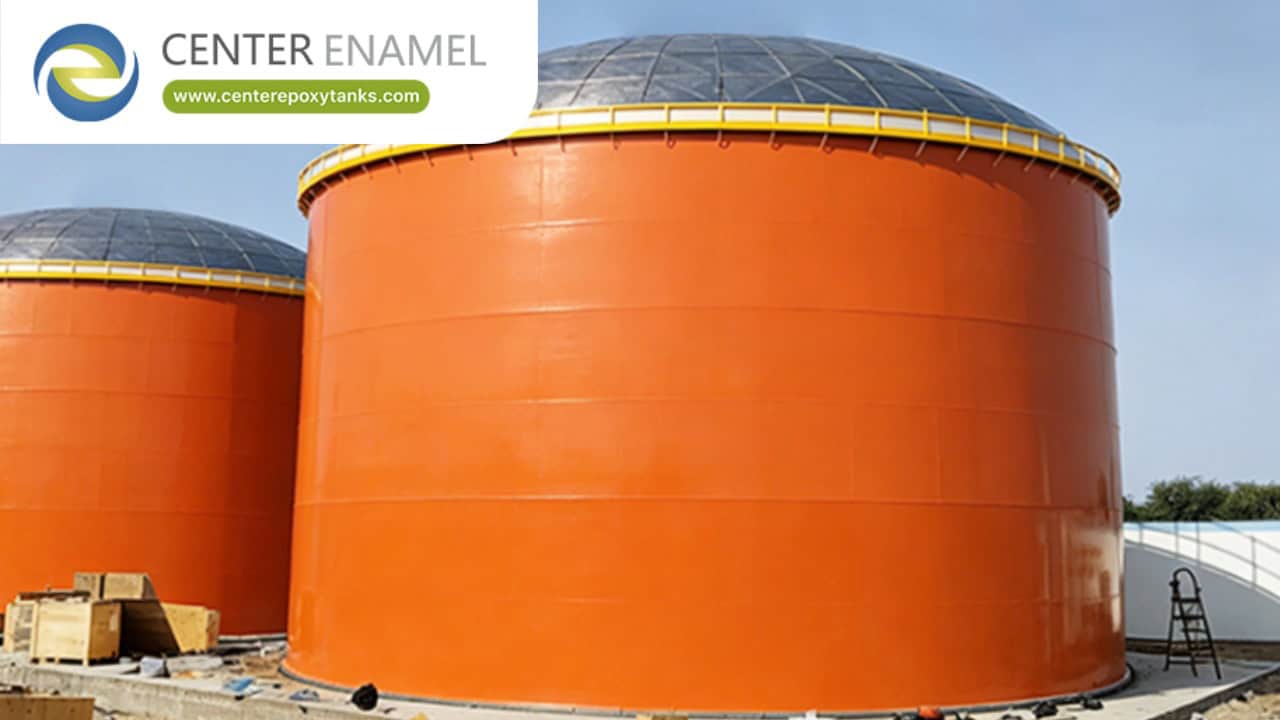
Epoxy Coated Steel Tanks: Efficient Solutions for Industrial Raw Material Storage
Epoxy coated steel tanks (often referred to as Fusion Bonded Epoxy or FBE tanks) serve as a high-performance, cost-effective standard for industrial raw material storage. Engineered through factory-applied electrostatic bonding and high-temperature curing, these tanks provide a durable, chemically inert interior surface that prevents corrosion and contamination. Their modular, bolted design enables rapid site installation, offering a significant CAPEX advantage over stainless steel or field-welded concrete while maintaining high structural integrity for liquids, slurries, and granular bulk materials.
The Industrial Requirement: Why Material Storage Matters
In industrial supply chains, raw material storage is not just a passive necessity; it is a critical operational buffer. Whether storing liquid chemicals, raw feedstocks, or abrasive granular solids, the storage vessel must ensure three things:
Zero Cross-Contamination: The tank lining must remain stable and non-reactive with the stored material.
Structural Reliability: The tank must withstand the physical load of the material and environmental stressors (wind, seismic activity).
Cost Efficiency: The storage solution must balance initial investment with the total cost of ownership (maintenance, labor, and downtime).
Epoxy coated steel has emerged as the definitive "middle-ground" solution, offering better performance than carbon steel and better value than stainless steel.
Key Technical Advantages of Fusion Bonded Epoxy (FBE)
"Epoxy coated" is a broad term. For industrial-grade storage, the industry standard is Fusion Bonded Epoxy (FBE). Unlike field-painted coatings, FBE is applied in a controlled factory environment.
Factory-Controlled Quality: Coating panels in a factory allows for precise thickness, uniform application, and rigorous quality control testing (such as holiday detection and adhesion testing) that is impossible to achieve in field-welded tank environments.
Chemical Versatility: The epoxy layer creates a slick, impermeable barrier. This makes the tanks suitable for a wide range of industrial raw materials, from aggressive chemical slurries to non-potable process waters and dry agricultural feedstocks.
Mechanical Integrity: The high-strength steel substrate provides the structural backbone, while the epoxy provides the chemical shield. This synergy results in a tank that can handle both the weight of high-density materials and the corrosive nature of the chemicals themselves.
Comparative Overview: Choosing Your Storage Material
Material | Initial Cost (CAPEX) | Installation Time | Maintenance | Versatility |
Epoxy Coated Steel | Economical | Fast (Bolted) | Low | High |
Stainless Steel | Very High | Moderate | Very Low | Moderate |
Carbon Steel (Bare) | Lowest | Slow (Welded) | Very High | Low |
Concrete (RCC) | Moderate/High | Slow | High | Low |
Strategic Benefits for Procurement & Facility Managers
1. Modular Scalability
Industrial demand fluctuates. Because epoxy coated steel tanks are modular and bolted, they are inherently scalable. If your storage requirements double, these tanks are often designed to allow for expansion or can be relocated with significantly less difficulty than fixed-in-place concrete or welded tanks.
2. Reduced "Time-to-Operation"
In a competitive industrial environment, downtime is revenue lost. Bolted epoxy steel tanks are pre-fabricated and flat-packed for shipping. Site erection is a mechanical assembly process rather than a construction process, which can shave weeks or even months off the project schedule compared to traditional on-site welding or concrete pouring.
3. Reduced Total Cost of Ownership (TCO)
When assessing the lifecycle of the tank, the epoxy coating prevents the recurring costs associated with rust removal and repainting required by bare steel. By extending the maintenance intervals, these tanks maximize operational uptime.
Frequently Asked Questions (FAQ)
Q: Are epoxy coated tanks suitable for aggressive chemical storage?
A: Yes, for many industrial raw materials. However, chemical compatibility is specific. We recommend conducting a review of the stored substance's pH level and chemical properties against our coating data sheets to ensure the optimal resin formulation is used.
Q: How are the bolted seams protected?
A: This is a common concern. High-quality manufacturers use NSF/ANSI-61 or chemically resistant, high-grade mastic sealants applied during assembly. These sealants are flexible and designed to maintain a seal under the pressure and expansion cycles of the tank.
Q: Can these tanks store dry bulk materials as well as liquids?
A: Absolutely. Epoxy coated steel is excellent for dry bulk materials because the smooth, glass-like finish of the epoxy improves "flow-out" performance, preventing materials from sticking to the tank walls, which is a common issue in bare steel or concrete silos.
Partnering for Industrial Excellence
Selecting the right storage partner means looking for a manufacturer that controls the entire value chain—from steel fabrication and coating application to the structural engineering of the bolted design.
Are you currently evaluating storage options for a new production line or looking to replace an aging storage vessel?
Contact our engineering team to discuss your raw material specifications and receive a site-specific proposal today.


