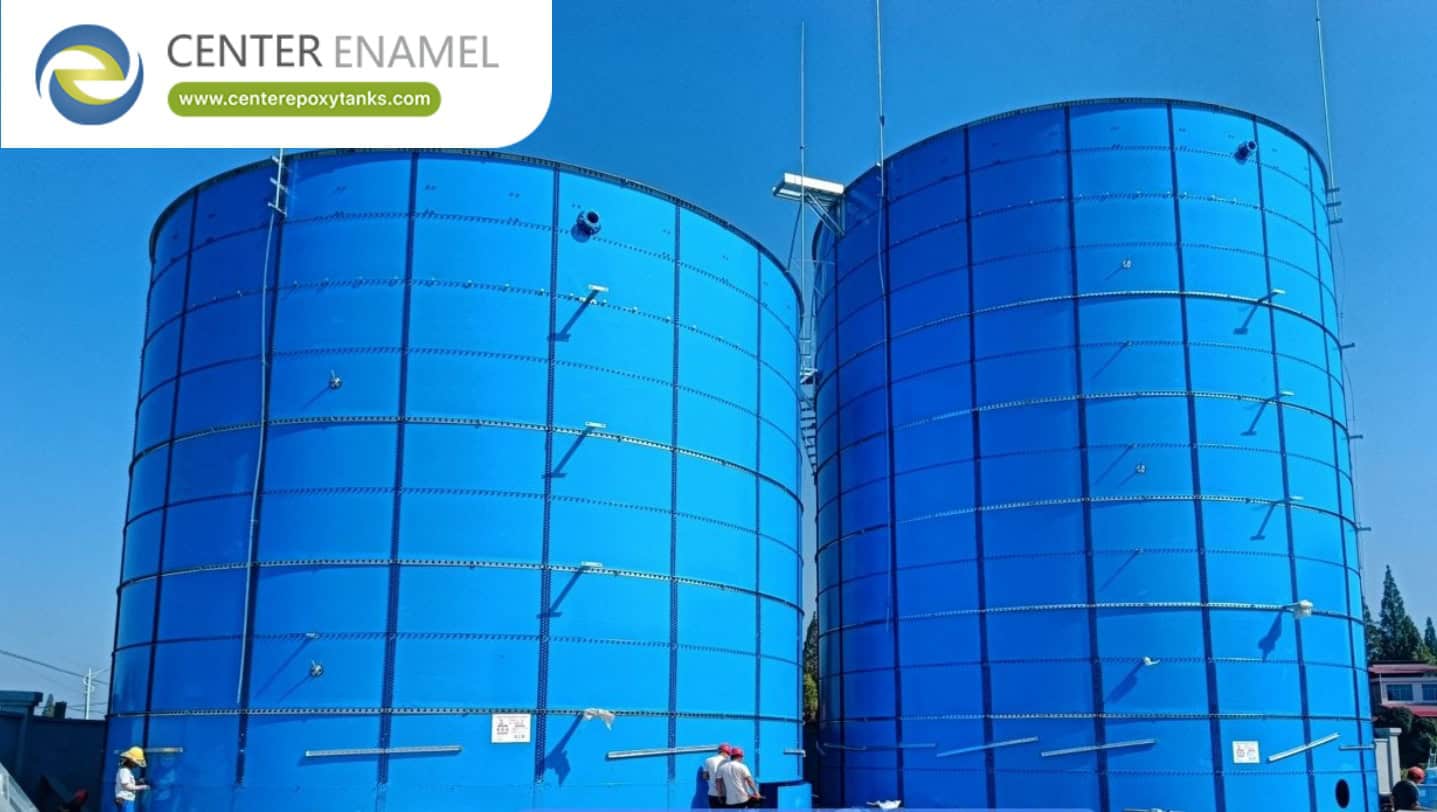
Epoxy Coated Steel Cooking Oil Collection Tanks: Engineering & Procurement Guide
As the global biodiesel and renewable energy markets expand, the aggregation and storage of Used Cooking Oil (UCO) have become critical logistical operations. UCO is naturally acidic due to the presence of free fatty acids, making standard steel tanks prone to rapid internal corrosion. Epoxy-coated bolted steel tanks have emerged as the industry-standard solution for efficient collection and storage. By combining the structural strength of carbon steel with the chemical resistance of factory-applied epoxy, these tanks offer a durable, modular, and cost-effective infrastructure for waste oil feedstock management.
1. The Engineering Challenge: Storing Aggressive Feedstocks
Cooking oil—particularly when collected from restaurants and commercial kitchens—is a complex chemical environment.
● Acidity & Corrosion: UCO contains high levels of free fatty acids (FFAs) and moisture. When stored in untreated carbon steel, these substances cause pitting and structural degradation.
● Contamination Control: Collection tanks must prevent external water ingress and biological contamination, which can degrade the oil quality and render it unsuitable for biodiesel conversion.
● Scalability: Biodiesel feedstock aggregation often requires rapid deployment across various collection points. Modular, bolted storage is significantly more practical than field-welded alternatives.
2. The Epoxy Coated Bolted Steel Advantage
Factory-applied epoxy coating on bolted steel panels is the premier choice for modern collection networks. Unlike field-applied coatings which are subject to weather-related quality failures, factory coating ensures consistency and longevity.
● Factory-Controlled Precision: Every panel is grit-blasted to SSPC-SP10 (Near-White Metal) standards and coated in a controlled environment, eliminating "holidays" (pinholes) where corrosion can take root.
● Chemical Barrier: High-grade industrial epoxy provides a chemically inert, non-porous interior surface that is impervious to the fatty acids found in cooking oil.
● Modular Logistics: Because the tanks are composed of panels, they are flat-packed into standard shipping containers. This drastically reduces ocean freight costs for international projects, allowing for massive storage capacity to be shipped anywhere in the world.
3. Procurement Matrix: Why Choose a Chinese Manufacturer?
Sourcing from high-capacity Chinese manufacturers provides a distinct advantage in scale and production speed. When vetting suppliers, use this criteria to ensure your investment meets international project requirements.
Evaluation Metric | The "Trusted Manufacturer" Standard | The Low-Quality Alternative |
Coating Consistency | Automated line application (uniform thickness). | Manual spray (inconsistent thickness). |
Material Quality | Certified high-strength steel (Q235B/Q345B). | Recycled or low-grade steel. |
Documentation | Full Mill Test Reports (MTRs) provided. | Missing or falsified material data. |
Installation | Comprehensive 3D assembly blueprints. | Vague, outdated instructions. |
Export Experience | Proven history in 100+ countries. | Domestic-only focus. |
4. Key Performance Indicators (KPIs) for UCO Tanks
When specifying your tank requirements, focus on these three engineering pillars to guarantee operational success:
1. Thermal Management: If collecting in cold climates, the oil may solidify. Specify optional external insulation panels and heat-tracing systems to maintain pumpable temperatures during winter collection cycles.
2. Structural Loadings: Ensure the tank is engineered for local wind and snow loads. Modern bolted tanks use finite element analysis (FEA) to maximize structural rigidity while minimizing steel weight.
3. Appurtenance Integration: Every collection tank should be equipped with standard oil-industry fittings, including anti-vortex intakes, secure level-gauge ports, and integrated manways for periodic desludging.
5. Frequently Asked Questions (FAQ)
Q: Are epoxy-coated tanks safe for human-grade cooking oil?
A: Yes, provided the manufacturer specifies an epoxy system that is certified to food-grade standards (such as NSF/ANSI 61). Always confirm the certification of the coating system if your project involves edible-grade oil rather than waste feedstock.
Q: How do bolted joints affect leakage risk in oil storage?
A: Modern bolted tank technology uses high-performance, oil-resistant sealants and gaskets that are clamped under high pressure between panels. When installed correctly, this system provides a superior, flexible, and leak-proof seal that actually outperforms rigid welded seams in areas with seismic activity.
Q: What is the expected maintenance cycle?
A: Epoxy-coated steel tanks are exceptionally low-maintenance. Routine inspections involve checking the tank exterior and ensuring the sealants remain intact. Unlike concrete (which cracks) or raw steel (which rusts), high-quality factory-coated epoxy is designed to perform for 30+ years with minimal intervention.
Investing in epoxy-coated bolted steel tanks is a strategic decision for any operator in the biodiesel or cooking oil collection sector. By leveraging the modularity, chemical resistance, and cost-efficiency of factory-coated panels, you create an infrastructure that is both scalable and incredibly reliable.
Are you planning a UCO collection network expansion, and would you like to review the load-bearing requirements for your planned storage volume or receive a technical datasheet for our high-chemical-resistance epoxy coatings?


