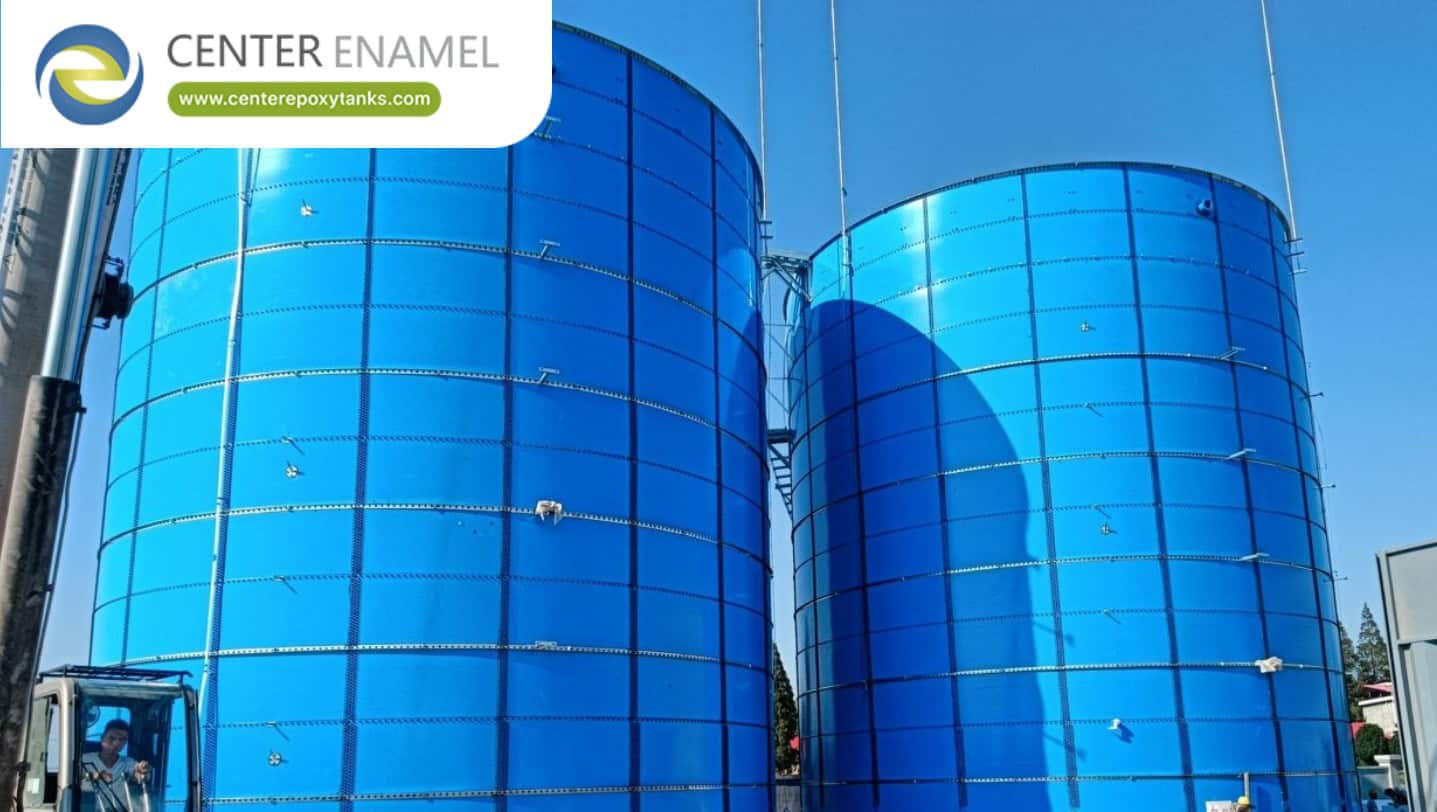
Epoxy Coated Bolted Tanks for Fire Protection Water Storage
In the critical seconds of a fire emergency, the reliability of your water reserve is the single most important factor. Fire suppression systems rely on a consistent, debris-free, and pressurized water supply. Epoxy Coated Bolted Tanks have become the industry-standard choice for modern fire protection, offering a sophisticated alternative to traditional concrete pits or field-welded steel tanks.
Engineered for durability and rapid deployment, these tanks combine the structural strength of high-grade steel with the chemical inertness of factory-applied Fusion Bonded Epoxy (FBE). By adhering to strict NFPA 22 (National Fire Protection Association) standards, these systems ensure that your water supply remains uncontaminated and ready for immediate discharge.
Why Fire Protection Systems Require Specialized Tank Technology
Standard water storage solutions often struggle to meet the long-term demands of fire protection. Common failure points in traditional tanks include internal corrosion (rust nodules), coating delamination, and structural leaks.
Center Enamel’s epoxy-coated bolted tanks address these hazards through advanced manufacturing:
Holiday-Free Surfaces: Every panel undergoes 1500V dielectric "holiday testing" at the factory. This ensures a 100% pinhole-free surface, preventing the corrosion that causes rust to clog sprinkler heads or fire pumps during an emergency.
Factory-Controlled Quality: Unlike field-applied paints that are subject to weather, humidity, and human error, our epoxy is thermally cured in a climate-controlled environment. This creates a molecular bond that resists blistering, peeling, and cracking for 30+ years.
NFPA 22 Compliance: Our designs incorporate essential fire protection accessories, including anti-vortex plates, dedicated access hatches, and thermal insulation jackets, ensuring full regulatory compliance.
Technical Comparison: Why Bolted Epoxy Leads the Market
Feature | Epoxy Coated Bolted Steel | Field-Welded Steel | Reinforced Concrete |
Coating Consistency | Factory-Fused (High) | Field-Applied (Variable) | N/A (Liner Required) |
Installation Time | Rapid (Modular) | Slow (Weeks of Welding) | Very Slow (Months) |
Maintenance | Minimal (No Repainting) | High (Periodic Recoating) | High (Crack Sealing) |
Seismic Resilience | Excellent (Engineered) | Moderate | Moderate (Requires Rebar) |
Relocatability | Yes | No | No |
Key Features for Fire Water Infrastructure
Hydraulic Efficiency: We integrate NFPA-compliant vortex inhibitors. During rapid discharge, these prevent the "whirlpool" effect that pulls air into fire pumps, ensuring the tank can be drained to its lowest functional level without loss of prime.
Climate Adaptability: In cold-weather regions, our tanks can be equipped with polyisocyanurate (PIR) insulation and immersion heaters, maintaining water temperatures above 42°F (5.6°C) to prevent freezing, as mandated by NFPA 22.
Modular Scalability: Whether your facility requires 50,000 gallons or 4 million gallons, the modular bolted system allows for precise capacity matching. Should your fire suppression requirements grow, the tank can be expanded by adding additional panel rings.
Frequently Asked Questions (FAQ)
1. Are your tanks NFPA 22 compliant?
Yes. Center Enamel’s epoxy-coated bolted tanks are specifically engineered to meet and exceed NFPA 22 and AWWA D103 standards. We incorporate required fire protection appurtenances, such as anti-vortex fittings, roof vents, and access hatches, as part of our standard design package.
2. How does the epoxy coating prevent pump clogging?
Traditional steel tanks often rust, shedding "nodules" that can travel through pipes and clog sprinkler nozzles or fire pump impellers. Our Fusion Bonded Epoxy creates a smooth, non-porous, and chemically inert barrier that completely prevents the steel from oxidizing, keeping the water supply pristine.
3. How long does installation take compared to a welded tank?
Bolted tanks typically reduce on-site construction time by up to 60–70% compared to welded steel. Because the panels are pre-fabricated and coated at the factory, we eliminate the need for on-site sandblasting, painting, and lengthy curing times.
4. Can these tanks be used in cold climates?
Absolutely. We provide integrated heating and insulation solutions designed to keep your fire water reserves from freezing. These systems are automated and highly energy-efficient, ensuring your fire suppression system remains operational even in extreme sub-zero temperatures.
5. What happens if the tank coating is damaged?
While our factory-applied FBE is incredibly durable, mechanical damage is possible during severe site accidents. Unlike glass-fused tanks, FBE coatings are easily field-repairable using specialized epoxy touch-up kits. This allows for quick, localized restoration without requiring a full tank drain or professional-grade equipment.


