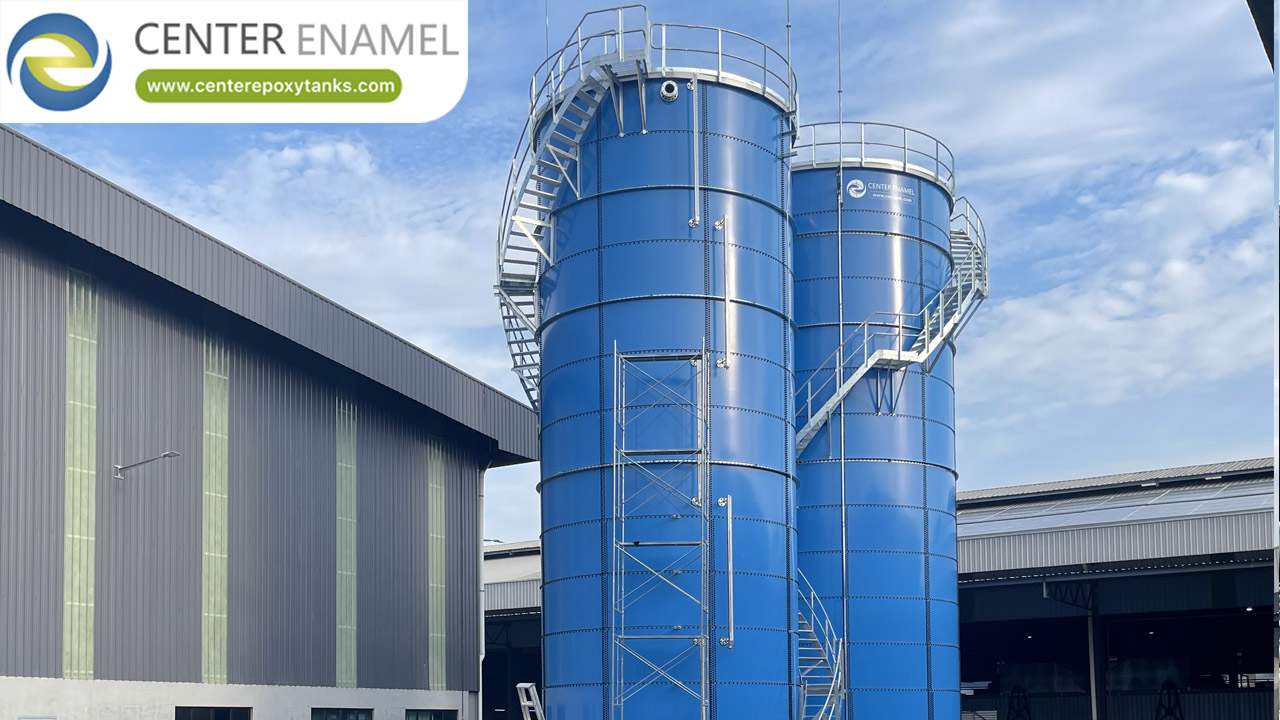
Epoxy Coated Bolted Tanks for Fire-Fighting Water Storage
In industrial complexes, commercial distribution centers, municipal facilities, and agricultural operations, maintaining a reliable and immediate fire suppression water reserve is a critical life-safety requirement. When an emergency strikes, fire protection systems depend on high-volume, uninterrupted water delivery. Traditional storage methods—such as aging concrete basins or field-welded carbon steel tanks—often suffer from long construction lead times, structural wall cracking, and high maintenance overhead due to interior oxidation.
To guarantee absolute operational reliability, facility managers and fire protection engineers increasingly specify epoxy coated bolted tanks for fire-fighting water storage. Combining the high tensile strength of modular steel panels with factory-applied fusion-bonded epoxy (FBE), these systems deliver exceptional corrosion resistance, structural resilience against seismic loads, and full compliance with strict global fire safety standards.
The Engineering Superiority of Fusion-Bonded Epoxy for Fire Suppression
Unlike conventional field-applied paints that degrade or peel when exposed to stagnant water, high-performance fire protection tanks utilize factory-controlled Fusion-Bonded Epoxy technology:
Molecular-Level Cross-Linking: Epoxy powder is electrostatically sprayed onto grit-blasted steel panels and thermally cured in high-temperature ovens. This process fuses the polymer permanently to the steel substrate, establishing an impenetrable barrier.
Uncompromising Corrosion Defense: Stagnant water stored for emergency fire suppression can accelerate rust and wall thinning in unlined carbon steel tanks. The inert epoxy barrier prevents moisture from contacting the steel, preserving structural integrity for decades.
Modular Precision and Rapid Erection: Factory-fabricated panels arrive on-site ready for rapid bolting, eliminating the hazardous hot work (welding and grinding) and lengthy concrete curing delays associated with traditional construction.
Technical Performance Matrix: Fire-Fighting Storage Solutions
Technical Parameter | Fusion-Bonded Epoxy Bolted Steel Tanks | Reinforced Concrete Reservoirs | Field-Welded Carbon Steel Tanks |
Compliance Standards | Engineered strictly to NFPA 22 and AWWA D103 guidelines | Local civil codes and ACI design rules | API 650 or AWWA D100 frameworks |
Construction Velocity | Rapid modular assembly; erected in weeks without heavy on-site welding | Extremely slow; intensive civil formwork, rebar, and multi-week curing | Slow; demands extensive plate rolling, field welding, and X-ray testing |
Corrosion Resistance | Superior; chemically inert FBE barrier resists oxidation and water stagnation | Moderate; prone to concrete carbonation, cracking, and rebar rust | Low; highly vulnerable to interior pitting and requires recurring repainting |
Seismic Resilience & Flexibility | High structural flexibility accommodates ground shifts and seismic forces | Low; rigid and brittle structures prone to cracking under extreme stress | Moderate structural rigidity |
Crucial Compliance Standards: Meeting NFPA 22 Requirements
To ensure fire protection assets perform flawlessly during an emergency, fire suppression tanks must adhere strictly to established codes:
NFPA 22 Compliance: Governs the design, construction, installation, and appurtenance requirements for private fire protection water tanks, ensuring structural stability under hydrostatic, wind, snow, and seismic loads.
Essential Fire Appurtenances: Compliant fire tanks incorporate critical safety accessories, including anti-vortex plates (preventing pump cavitation per NFPA 22 Chapter 14), secure roof venting with corrosion-resistant screens, water level indicators, and freeze-protection heating systems for cold climates.
Frequently Asked Questions (FAQ)
Q: Why are epoxy coated bolted tanks preferred for fire-fighting water storage?
A: Epoxy-coated bolted tanks offer superior corrosion resistance, rapid modular installation that avoids hot work, high seismic resilience, and full compliance with NFPA 22 and AWWA D103 standards.
Q: Do epoxy coated fire water tanks comply with NFPA 22 standards?
A: Yes. When properly engineered and equipped with required appurtenances such as anti-vortex assemblies, level indicators, and proper venting, these tanks fully meet or exceed NFPA 22 requirements for private fire protection.
Q: How do bolted fire protection tanks handle freezing winter climates?
A: For cold geographic regions, fire protection tanks can be equipped with NFPA 22-compliant freeze protection systems, including internal immersion heaters, thermal insulation packages, or water circulation systems to maintain water above freezing temperatures.
Q: Can a fire water storage tank be expanded if facility capacity increases?
A: Yes. Because they feature a modular bolted design, these tanks offer unique scalability—allowing facility managers to add additional steel rings or panels to increase storage volume as fire suppression demands grow.


