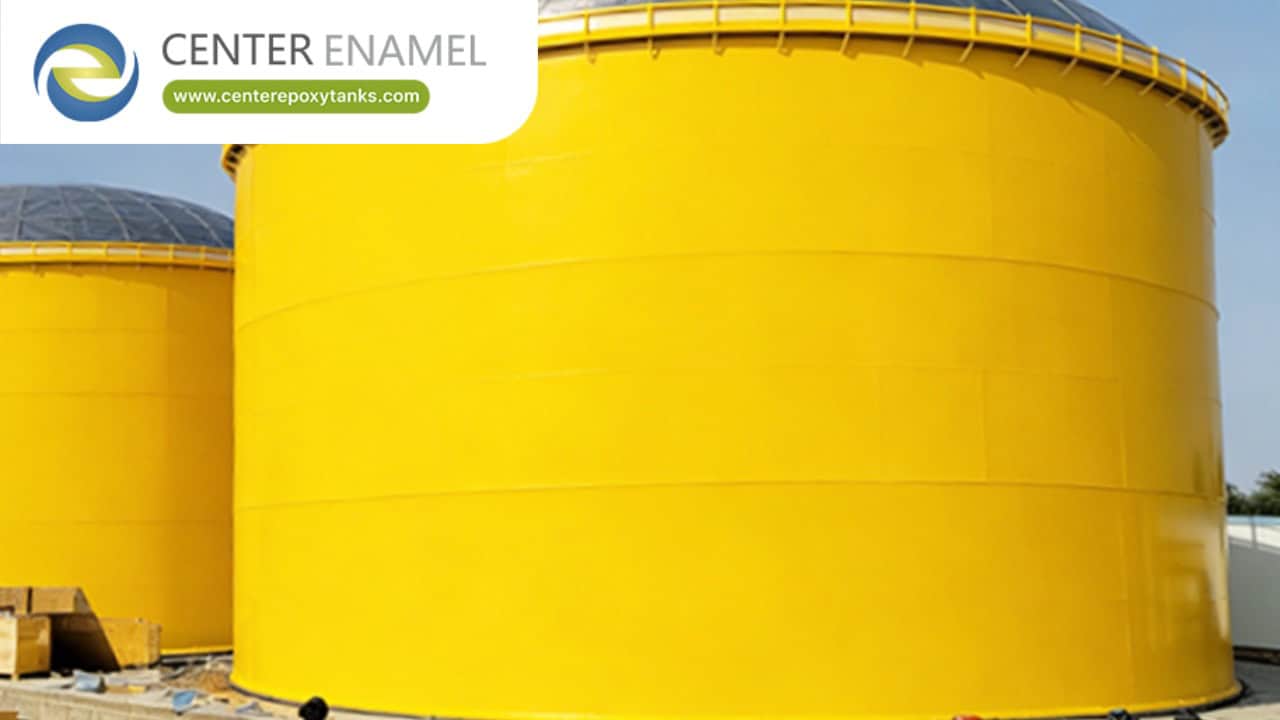
Epoxy Coated Bolted Tanks for Anaerobic Fermentation: Engineering & Procurement Guide
Anaerobic fermentation (the basis of biogas and waste-to-energy projects) creates an aggressive chemical environment characterized by organic acids, fluctuating temperatures, and the need for strict methane containment. Epoxy-coated bolted tanks provide a high-performance, modular infrastructure solution. By combining the structural reliability of steel with chemically inert epoxy polymer coatings, these tanks offer a cost-effective alternative to cast-in-place concrete or glass-fused-to-steel (GFS) structures for medium-to-large-scale fermentation facilities.
1. The Engineering Logic: Why Epoxy-Bolted?
Fermentation tanks act as bioreactors. The internal surface must not only contain the liquid waste but also withstand the gaseous byproducts of the digestion process.
Key Engineering Parameters
Successful anaerobic digestion relies on maintaining specific biological conditions, which the tank design must support:
● Volumetric Organic Loading Rate : Engineers size these tanks based on the organic load per cubic meter of the tank volume. The formula for the loading capacity is defined as:
● Corrosion Resistance: Fermentation produces volatile fatty acids that can drop the pH of the sludge. Epoxy coatings provide a thick, flexible barrier that resists chemical attack far better than standard paint, preventing the acidic slurry from reaching the steel substrate.
● Gas-Tightness: Since these tanks serve as biogas digesters, the bolted joints must be sealed with industrial-grade, gas-impermeable gaskets (e.g., EPDM or Butyl) to prevent methane leakage.
2. Comparative Performance Matrix
When selecting fermentation infrastructure, performance is measured by longevity, chemical compatibility, and installation speed.
Engineering Attribute | Epoxy-Coated Bolted | Glass-Fused-to-Steel (GFS) | Poured-in-Place Concrete |
Chemical Resistance | High (Polymer-based) | Superior (Glass-based) | Moderate (Needs liner) |
Installation Speed | Fast (Modular) | Fast | Slow (Curing required) |
Flexibility | Moderate | Low (Brittleness risk) | None |
Maintenance | Low (Touch-ups easy) | Minimal | High (Crack injection) |
Lifecycle Cost | Economical | Premium | High |
3. Procurement Vetting Matrix
Sourcing high-quality fermentation tanks requires vetting the manufacturer's coating process as much as their steel fabrication. Use this framework to audit potential suppliers:
● Holiday Testing: This is the "gold standard" for tank quality. Ensure the manufacturer performs High-Voltage Holiday Detection (ASTM G62) on 100% of the internal panel surface. Any detected pinhole in the coating must be repaired before shipment.
● Coating Thickness: Industrial-grade epoxy for fermentation should typically have a dry film thickness (DFT) exceeding 250--350 um. Verify the manufacturer's data sheet.
● Gasket Compatibility: The gaskets used at the bolted seams must be rated for contact with methane, hydrogen sulfide (H2S), and organic solvents. Inferior rubber will degrade, leading to gas leaks.
● Assembly Supervision: Because the structural integrity depends on the bolting torque and sealing sequence, mandate that the manufacturer provides a certified on-site supervisor for the erection phase.
4. Frequently Asked Questions (FAQ)
Q: Are epoxy coatings safe for biological digestion?
A: Yes. Once fully cured, high-quality industrial epoxy coatings are chemically inert and will not inhibit the microbial activity essential for anaerobic digestion. They are widely used in both wastewater treatment and industrial biogas production.
Q: Can I use these tanks for high-temperature thermophilic digestion?
A: Yes, but you must ensure the epoxy formulation is rated for the operating temperature. Some epoxies soften at high heat; always verify the temperature limit (e.g., up to 60C+) with the manufacturer's technical documentation.
Q: Why choose epoxy-coated over glass-fused-to-steel?
A: Epoxy-coated steel is generally more impact-resistant than GFS. While GFS has a harder surface, it can be prone to "fish-scaling" or chipping if impacted during transport or maintenance. Epoxy coatings provide a more flexible, impact-tolerant surface.
Are you currently in the site-planning phase for a new biogas or wastewater treatment facility, or are you looking to retrofit existing tanks for anaerobic fermentation capacity?


