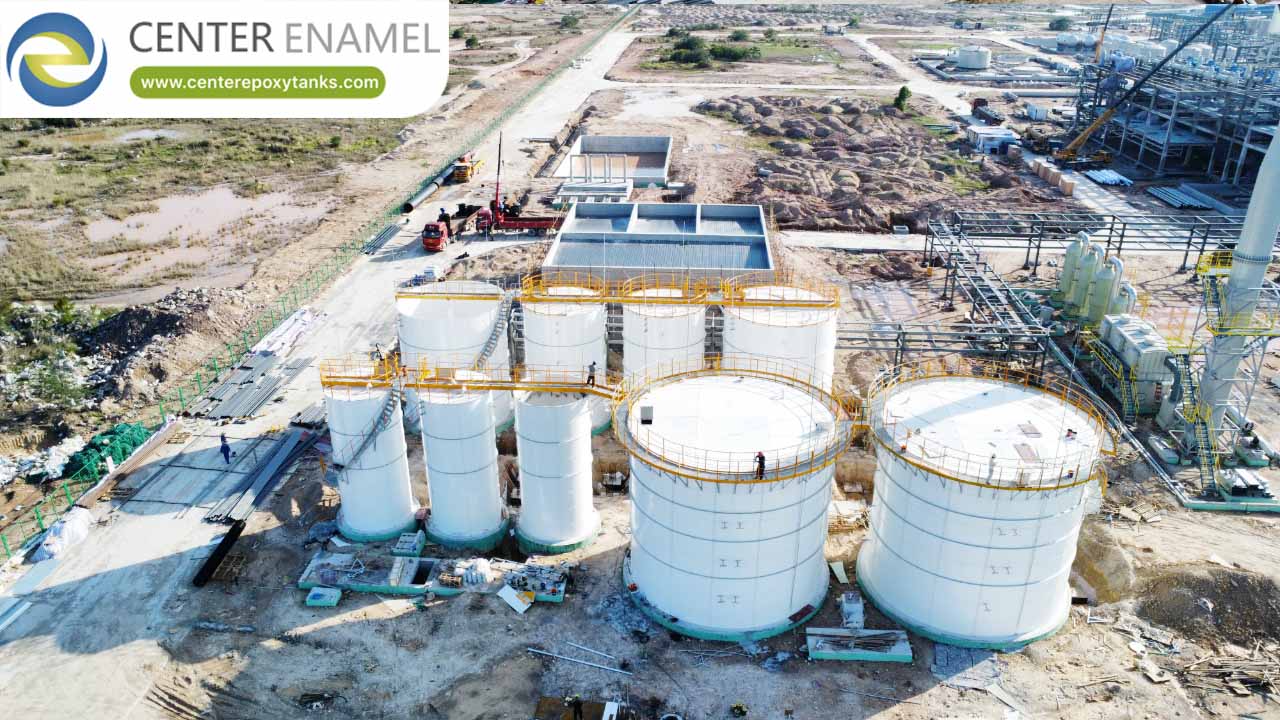
Engineering Guide: Epoxy Coated Tanks for Fire-Fighting Water Storage
Reliable water storage is the foundation of any fire suppression system. When a fire emergency strikes, the storage tank must perform flawlessly. Epoxy-coated bolted steel tanks have emerged as the industry workhorse for fire-fighting water storage, balancing structural reliability with long-term cost efficiency.
1. Compliance and Engineering Standards
The design of a fire-fighting tank is governed by stringent codes. Engineers must ensure the tank is compliant with the following:
● NFPA 22: The primary standard regulating water tanks for private fire protection. It covers design, construction, installation, and inspection.
● AWWA D103: Frequently utilized for the structural design of factory-coated bolted steel tanks, ensuring the shell thickness, bolt patterns, and assembly methods are sufficient for seismic and wind loads.
● Seismic Design: Because fire tanks are often large and top-heavy when full, engineers must verify compliance with local seismic building codes to prevent catastrophic structural failure during an earthquake.
2. Advantages of Epoxy-Coated Steel
Epoxy coatings for fire water storage are typically applied in factory environments, which provides several technical advantages over field-applied coatings.
Controlled Application
Factory application ensures consistent coating thickness, proper surface preparation (grit blasting), and controlled curing conditions. This eliminates the "human error" inherent in field-painting, resulting in a coating that is free of pinholes and bonded securely to the steel.
Impact and Structural Flexibility
Unlike glass-fused-to-steel, which is rigid and ceramic-like, epoxy is a thermoset resin that retains a degree of flexibility. This makes the tank surface more forgiving during the minor structural "flexing" that occurs during filling, emptying, or seismic events.
Speed of Deployment
Bolted steel tanks are prefabricated and shipped to the site as a kit. They can be erected in weeks rather than months, significantly shortening the timeline for commissioning a new fire protection system.
3. Comparison of Fire Storage Tank Technologies
Feature | Epoxy Coated Steel | Glass-Fused-to-Steel | Concrete |
Coating Flexibility | High | Low | N/A |
Speed of Erection | Fast | Fast | Very Slow |
Maintenance | Low (with Anodes) | Very Low | Moderate |
Cost Efficiency | High | Moderate | Low (High CAPEX) |
Best Application | General Fire Suppression | Highly Aggressive Water | Massive Capacity |
4. Operational Requirements
Fire suppression tanks have a unique operational profile: they remain static for the vast majority of their life. This makes corrosion management the single most critical operational task.
Cathodic Protection (The "Insurance Policy")
Even the best epoxy coating will eventually develop microscopic flaws. Cathodic protection (CP) is the industry standard for fire tanks to prevent localized corrosion at these points.
● Sacrificial Anodes: Magnesium or zinc anodes are suspended inside the tank. They corrode at a controlled rate, sacrificing themselves to protect the steel shell from rust.
● Monitoring: These anodes must be inspected annually and replaced once they reach 50-70% consumption.
Water Quality and Sediment
Fire tanks are often replenished by local water supplies, which may introduce sediment. Because fire pumps draw from the bottom of the tank, sediment accumulation can clog pump intakes or destroy pump impellers. Periodic flushing and cleaning (every 3–5 years) are essential to ensure the stored water remains clear and the tank interior is free of sludge.
5. Frequently Asked Questions (FAQ)
What is the required frequency for fire tank inspection?
NFPA 22 mandates regular inspections. Visual inspections of the exterior and structural integrity are typically annual, while internal inspections (often involving a diver or remote-operated vehicle) are required every 3–5 years to check the epoxy lining and cathodic protection.
Can I use an epoxy tank for both fire and potable water?
Yes, but the coating must be certified under NSF/ANSI 61. You must specify this to the manufacturer during the design phase, as potable-grade epoxy is different from standard industrial-grade fire tank epoxy.
How does the epoxy perform in sub-zero temperatures?
Properly formulated industrial epoxy coatings are designed to maintain integrity across a wide range of ambient temperatures. However, the tank itself may require insulation or internal heating coils to prevent the water from freezing, depending on the local climate and NFPA 22 requirements.
Why choose epoxy over glass-fused-to-steel for fire protection?
Epoxy is often more cost-effective for large-capacity tanks and offers superior impact resistance during assembly, reducing the risk of "chipping" during the installation process.


