Durable Oil Storage Vessel: Lifecycle and Maintenance
Environmental protection turns an oil tank from a hazard into a controlled asset: secondary containment, odor control, and leak detection keep product out of soil and air. For durable oil storage vessel the containment and venting design is the core of compliance.
What Is Durable Oil Storage Vessel?
An environmentally protected oil tank is a storage vessel engineered so that leaks, spills, and vapors are captured and managed rather than released. It combines secondary containment (a dike, double wall, or interstitial space), controlled vents, and often monitoring to meet spill-prevention rules.
How Does It Work?
Primary containment holds the oil; a secondary barrier catches any leak. For underground tanks, cathodic protection and tight-interval monitoring detect early failure. Above ground, a bund or concrete dike sized to the tank volume contains a full release. Vents carry vapors to carbon or recovery rather than free release.
Key Types, Components, and Features
· Double-wall tank:interstitial space catches leaks, often with sensor.
· Bunded AST:concrete or earth dike sized to tank volume.
· Underground (UST):cathodic protection + leak detection.
· Odor-controlled waste-oil tank:sealed vent with carbon or thermal treatment.
Applications
· Refineries, terminals, and fuel depots
· Waste-oil collection and used-oil storage
· Food-grade and bonded vegetable oil warehouses
· Indoor and basement oil rooms
Technical Considerations
· Containment:bund volume typically equals 100-110% of the largest tank; double wall adds interstitial capture.
· Monitoring:level sensors in interstitial or annular space for early leak alarm.
· Vents:pressure/vacuum vents, flame arresters, and carbon units for odor.
· Standards:SPCC-style spill rules, UST leak-detection codes, local environmental permits.
Key Engineering Parameters
Design Parameter | Typical Value / Range | Why It Matters |
Secondary containment | 100-110% of largest tank | Spill capture |
Double wall | Interstitial + sensor | Leak detection |
Cathodic protection | UST required | Corrosion control |
Leak detection | Interstitial / annular | Early warning |
Vent | PV vent + carbon | Odor / emission |
Bund | Concrete / earth, impermeable | Containment |
Standards | SPCC / UST codes | Compliance |
Monitoring | Level sensors | Reliability |
Project Case Study
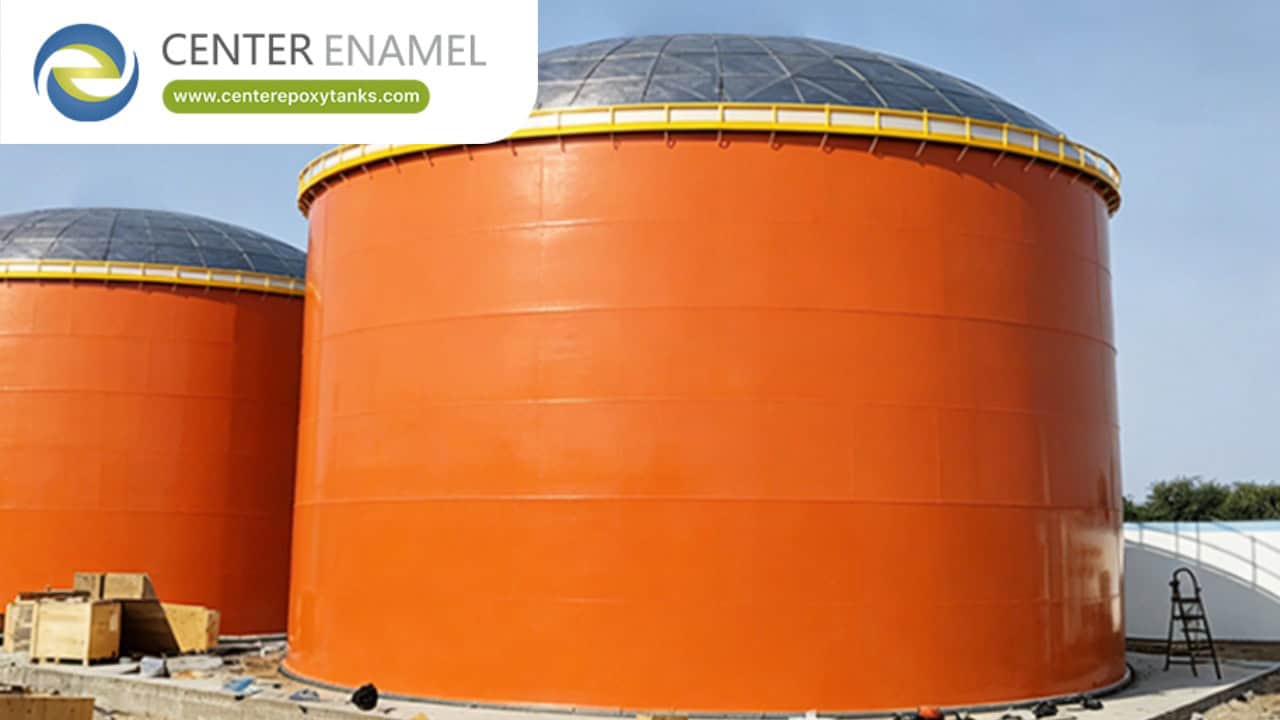
The following verified installation demonstrates the containment engineering discipline behind durable oil storage vessel. (Application shown is the tank's actual delivered service; the same bolted, coated, or stainless engineering underlies oil-storage designs discussed here.)
Project Information | Details |
Location | China |
Year | 2023 |
Industry / Application | Industrial wastewater treatment |
Product / Tank type | GFS bolted |
Configuration | 6 tanks, φ 9.94 × 22.8 m and φ 11.85 × 25.2 m |
Capacity | 14,655 m³ |
Standards | ISO 28765 / AWWA D103-09 |
Status | Completed |
This reference is cited for its documented liquid-containment and corrosion-control engineering; it is not represented as an oil tank where it was a water or wastewater installation.
Advantages and Limitations
Advantages
· Captures leaks before they reach soil or groundwater
· Supports regulatory and insurance compliance
· Odor and vapor controlled at the source
· Monitoring gives early warning, lowering cleanup cost
Limitations
· Secondary containment adds footprint and cost
· Monitoring systems need maintenance to stay reliable
· Cold-climate bund design must handle freezing
Comparison
Feature | Double Wall | Bunded AST | Standard AST |
Leak capture | Interstitial | Dike volume | None |
Footprint | Compact | Larger | Smallest |
Monitoring | Built-in | Separate | None |
Cost | High | Medium | Low |
Best for | UST, critical | Depots | Low-risk |
How to Select the Right Solution
· Size secondary containment to the largest tank
· Pick double wall vs bund by space and risk
· Add leak detection where rules require it
· Route vents to carbon or recovery for odor
· Confirm local SPCC / UST compliance
durable oil storage vessel succeed when containment, monitoring, and venting are designed together. The tank then meets both operation and environmental duty.
Frequently Asked Questions (FAQ)
What is secondary containment?
A second barrier — a double wall or a bund — that captures leaks so oil cannot reach soil or groundwater.
How big should a bund be?
Typically 100-110% of the largest tank's volume, built of concrete or engineered earth with a impermeable liner.
How are underground leaks found?
Cathodic protection plus tight-interval monitoring or interstitial sensors give early leak warning.
How is odor controlled?
Sealed vents with activated carbon or thermal treatment capture the vapor instead of releasing it.
What rules apply?
SPCC-style spill prevention and UST leak-detection codes, plus local environmental permits.
Does containment add cost?
Yes, in footprint and capital, but it lowers cleanup cost and supports compliance and insurance.
For durable oil storage vessel, share your product, capacity, vapor pressure, corrosivity, and site loads with an engineering team to receive a specification and quotation aligned to API 650, EN 14015, ISO 28765, or AWWA D103-09.


