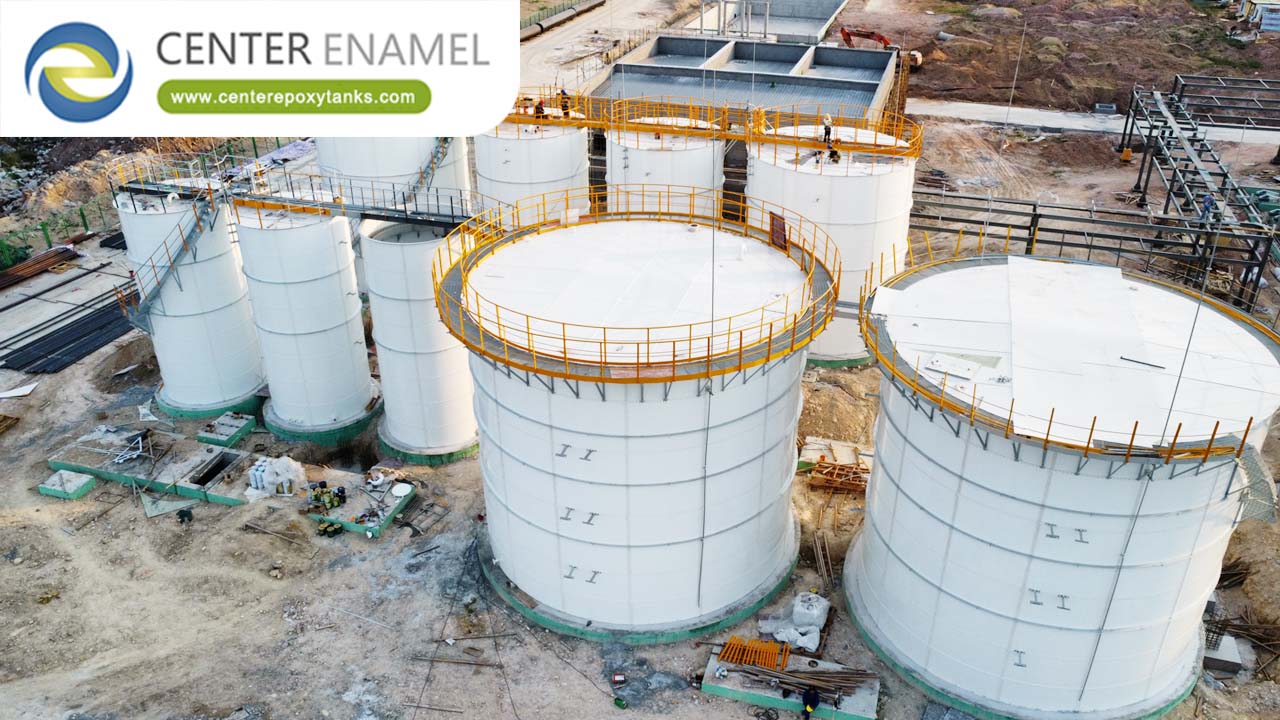
Durable Epoxy Coated Steel Tanks for Reliable Agriculture Irrigation Water Storage
In modern agriculture, water security is the foundation of farm productivity. Whether you are managing large-scale pivot irrigation, drip systems for greenhouses, or livestock water supply, relying on inconsistent groundwater or seasonal rainfall creates operational risk.
Center Enamel provides high-performance epoxy coated steel tanks engineered to withstand the demanding conditions of agricultural environments. Combining the structural integrity of high-grade steel with the chemical inertness of Fusion Bonded Epoxy (FBE), our tanks offer a superior alternative to traditional concrete or plastic storage.
Why Epoxy Coated Steel is the Standard for Modern Farms
Agricultural water often contains nitrates, phosphates, or mineral deposits that can accelerate corrosion in standard steel tanks. Our epoxy coating process creates a non-porous, protective barrier that ensures your storage solution remains a long-term asset rather than a maintenance burden.
1. Superior Corrosion Resistance
Our tanks utilize Fusion Bonded Epoxy (FBE) technology. Unlike liquid-applied paints that can chip or peel, the epoxy resin is thermally fused to the steel at high temperatures, creating a molecular bond. This results in a hard, chemically inert surface that resists rust, even when storing water with high salinity or varying pH levels.
2. Modular & Scalable Design
Farms grow, and your water infrastructure should grow with you. Our bolted, panel-based design allows for:
Rapid Assembly: Construction takes a fraction of the time compared to concrete pouring, minimizing disruption to your fields.
Expansion Potential: Need more capacity? Our modular design often allows for the addition of height rings to existing tanks as your irrigation needs increase.
3. Structural Durability
Unlike plastic or fiberglass tanks that can warp under extreme heat or become brittle in cold climates, steel maintains its shape and strength. This ensures that your tank remains leak-free and stable, protecting your investment for 20–30+ years.
Comparison: Why Steel Outperforms Alternatives
Feature | Epoxy Coated Steel | Concrete Tanks | Plastic/Poly Tanks |
Lifespan | 25+ Years | Moderate (Prone to cracking) | 10–15 Years |
Installation Time | Fast (Bolted) | Very Slow | Fast |
Durability | High (Impact Resistant) | High (But heavy/cracks) | Low (Degrades under UV) |
Relocatability | Possible | No | Yes |
Maintenance | Minimal | High (Requires sealing) | Moderate |
Technical Excellence for Agriculture
At Center Enamel, we understand that farm environments are harsh. Our tanks are engineered to handle the specific challenges of rural infrastructure:
High-Voltage Holiday Testing: Every panel undergoes rigorous testing to ensure 100% coating coverage, preventing pinhole corrosion before it starts.
UV Stability: The exterior coating is formulated to withstand intense solar radiation, preventing the degradation commonly seen in plastic alternatives.
Hygienic Storage: The smooth, low-friction interior prevents the buildup of biofilm and mineral scaling, ensuring the water remains clean and clear for irrigation or livestock.
Frequently Asked Questions (FAQ)
1. Can these tanks be used for both irrigation and livestock water?
Yes. Because our epoxy coatings are chemically inert and highly durable, they provide a clean storage environment suitable for livestock, poultry, and dairy operations, as well as high-efficiency drip or pivot irrigation.
2. How do epoxy coated tanks handle extreme weather conditions?
Steel tanks are structurally robust and designed to withstand significant wind and snow loads. The factory-applied FBE coating is also UV-stabilized, meaning it will not peel or chalk under the harsh sun, making it ideal for open-field installations.
3. Does the tank require heavy construction machinery for installation?
No. One of the primary advantages of our bolted, modular design is that it can be assembled on-site using standard tools and light lifting equipment. This is particularly beneficial for remote farm locations where heavy cranes or concrete trucks cannot easily maneuver.
4. How does the cost compare to plastic tanks?
While plastic tanks may have a lower initial price, their short service life and vulnerability to UV damage often lead to higher "Total Cost of Ownership." Epoxy coated steel tanks are a long-term investment that provides decades of service with minimal repair or replacement costs.
5. Can I harvest rainwater with these tanks?
Absolutely. These tanks are an excellent choice for rainwater harvesting systems. Their large-capacity design and corrosion-resistant interior allow you to collect and store significant volumes of water during the rainy season for use during dry months, reducing your dependency on groundwater.


