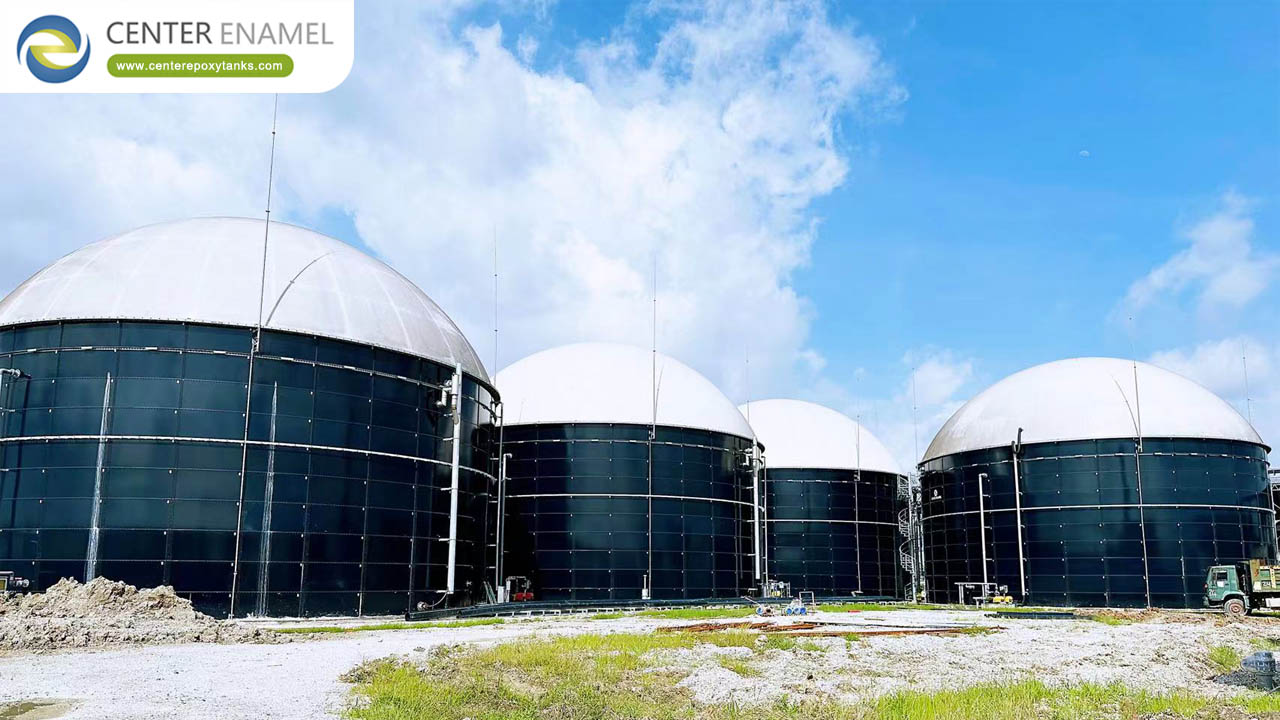
Durable Double Membrane Roofs for Biogas Storage Tanks
In the global transition toward renewable energy, the anaerobic digestion process has become a cornerstone of sustainable waste management. However, the efficiency of a biogas plant is only as strong as its containment system. Shijiazhuang Zhengzhong Technology Co., Ltd. (Center Enamel) specializes in durable, high-performance double membrane roofs designed to maximize biogas recovery, ensure structural longevity, and provide superior safety in even the most aggressive chemical environments.
Unlike traditional rigid covers that are prone to corrosion and gas leakage, our double membrane systems act as dynamic, active storage vessels, allowing facilities to capture and utilize methane gas with maximum efficiency.
Why Choose Double Membrane Technology?
Biogas plants deal with complex organic waste that produces hydrogen sulfide ($H_2S$) and other corrosive compounds. Center Enamel’s double membrane systems are engineered to thrive in these conditions while providing measurable operational benefits.
1. Superior Corrosion Resistance
Biogas is inherently corrosive to conventional steel and concrete. Our membranes are crafted from advanced, biogas-resistant polyester fabrics coated with high-grade PVDF or PVC. These materials are chemically inert, ensuring they remain unaffected by exposure to $H_2S$ and moisture, effectively eliminating the "roof rot" common in traditional designs.
2. Active Gas Storage and Pressure Regulation
The double membrane system is not just a roof; it is a gas holder. The inner membrane expands and contracts based on gas production, while the air-inflated outer membrane maintains constant, regulated pressure. This constant pressure allows for a steady flow of biogas to engines or turbines without the need for additional, high-maintenance gas compressors.
3. Structural Longevity and Weather Protection
The outer membrane forms a pressurized dome that sheds rain, snow, and debris, providing a robust barrier against extreme weather. Because the system is flexible and lightweight, it exerts minimal stress on the tank walls, making it an excellent choice for both new projects and the retrofitting of aging digester tanks.
Comparative Analysis: Membrane vs. Rigid Roofs
When evaluating infrastructure for a biogas facility, the performance gap between membrane covers and traditional rigid roofs is significant.
Engineering Factor | Double Membrane Roof | Fixed Roof (Concrete/Steel) |
Gas Storage | Integrated (Active Storage) | None (Requires external bags) |
Chemical Resistance | High (Inert polymers) | Low (Prone to corrosion) |
Maintenance | Minimal (Maintenance-free) | High (Structural repairs/coating) |
Installation Speed | Rapid (Modular/Bolted) | Slow (Heavy construction) |
Pressure Control | Dynamic (Constant pressure) | Passive (Relief valves) |
Engineering Quality & Compliance
Center Enamel integrates decades of experience in steel storage with advanced membrane technology to ensure a hermetic environment critical for anaerobic digestion.
Precision Manufacturing: Our membranes are fabricated in a state-of-the-art facility using large-scale hot-press equipment to ensure gas-tight seams.
Safety Integration: Each system is equipped with over/under-pressure protection, level indicators, and high-strength stainless steel clamping profiles to ensure maximum operational safety.
Modular Versatility: Whether you are upgrading an existing concrete digester or installing a new Glass-Fused-to-Steel (GFS) tank, our membrane systems are custom-engineered to fit your specific diameter and structural requirements.
Frequently Asked Questions (FAQ)
1. How long does the double membrane roof typically last?
With proper installation and minimal maintenance, our double membrane roofs are engineered for a service life exceeding 15–20 years. The materials are specifically formulated to resist UV radiation, chemical exposure, and mechanical fatigue in harsh outdoor environments.
2. Can this system be retrofitted to my existing digester?
Yes. One of the primary advantages of our membrane roofs is their modularity. We can design custom mounting systems to secure the dome to existing concrete or steel tank walls, making it an ideal upgrade for plants experiencing leaks or needing increased gas storage capacity.
3. Does the system require a constant power source?
The system uses a low-pressure, energy-efficient blower to maintain the outer membrane’s shape. These blowers are smart-controlled and only operate as needed to maintain internal pressure, ensuring the system remains energy-efficient and reliable during power fluctuations.
4. How does the system handle high wind or snow loads?
The outer membrane is kept taut by the air-cushion pressure between the two membranes. This provides the structure with high wind resistance and allows snow to slide off the curved surface, preventing accumulation that would be a risk for traditional flat roofs.
5. Are there odor control benefits?
Yes. Because the double membrane system is a fully sealed, gas-tight containment solution, it is exceptionally effective at trapping odorous emissions. This makes it an essential component for facilities located near residential areas or those requiring strict compliance with environmental air quality regulations.


