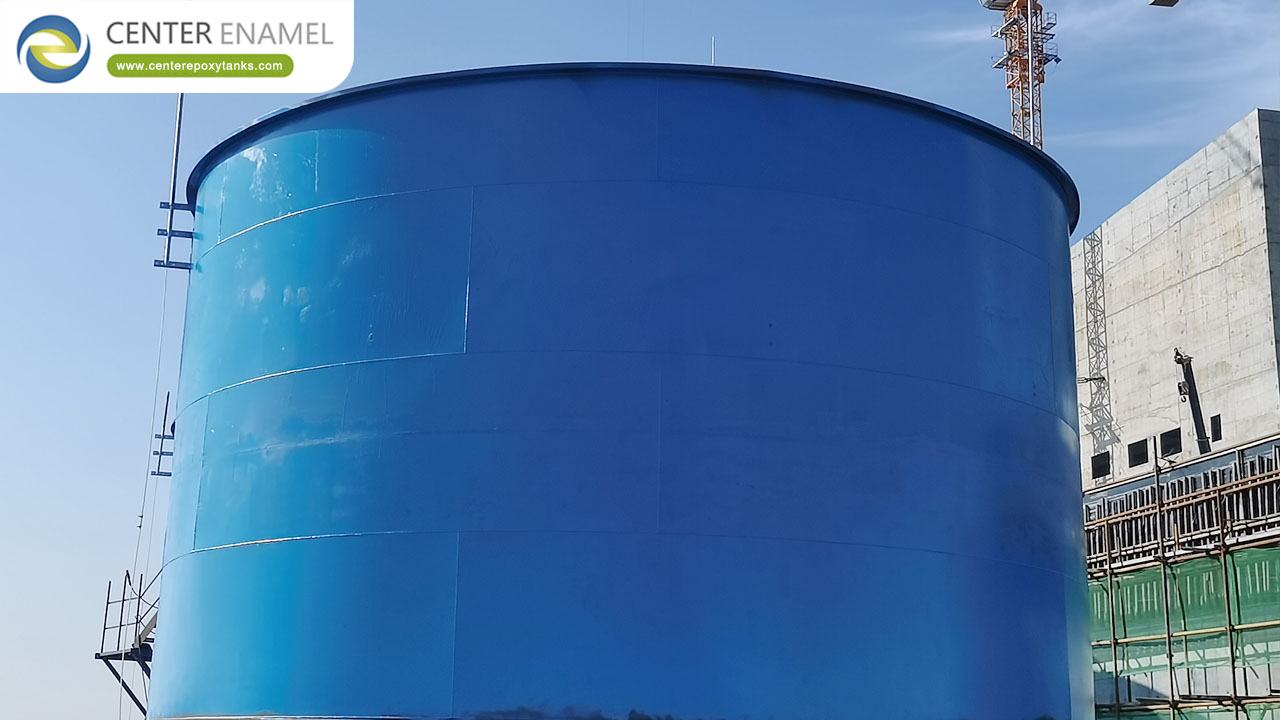
Double Wall Diesel Fuel Storage Tanks: Engineering Resilience in Mission-Critical Containment
How do advanced double-wall steel tanks eliminate the need for external concrete dikes while providing 24/7 interstitial monitoring for mission-critical diesel reserves? For facilities relying on standby power—such as data centers, hospitals, and industrial hubs—the integrity of the diesel fuel supply is non-negotiable. Traditional single-wall tanks require extensive secondary containment infrastructure and are vulnerable to undetected internal leaks that can lead to catastrophic environmental liabilities.
Shijiazhuang Zhengzhong Technology Co., Ltd (Center Enamel) is a premier manufacturer of UL 142-compliant Double Wall Diesel Storage Tanks. Engineered for "zero-leak" performance and rapid site deployment, our tanks provide a compact, secondary-containment solution for over 100 countries.
1. The Engineering of Redundancy: "Tank-in-a-Tank" Design
A double-wall diesel tank is a specialized vessel-within-a-vessel system designed to provide inherent secondary containment:
● Primary Steel Shell: The inner tank holds the fuel, manufactured from high-tensile carbon steel and often treated with phenolic or epoxy internal linings to resist the corrosive moisture found in modern Ultra-Low Sulfur Diesel (ULSD).
● Secondary Containment Shell: The outer tank wraps around the primary shell, creating a sealed 360-degree barrier. This shell is designed to hold 110% of the primary tank's volume, satisfying EPA and SPCC (Spill Prevention, Control, and Countermeasure) requirements.
● The Interstitial Space: The "gap" between the two walls is the critical safety zone. This space is either vacuum-sealed or monitored with sensors to detect a breach in either shell before a spill can reach the environment.
2. Strategic Advantages of Double-Wall Construction
For 2026 infrastructure projects, double-wall systems provide a superior Total Cost of Ownership (TCO) compared to traditional dike-enclosed tanks:
● Elimination of Concrete Dikes: Because the secondary containment is integrated into the tank structure, there is no need to construct expensive, space-consuming concrete basins. This reduces the project's physical footprint by up to 50%.
● Advanced Leak Detection: Interstitial monitoring systems provide immediate alerts if fluid enters the gap. This "early warning" allows for repairs while the fuel remains safely contained within the secondary shell.
● Corrosion & Water Management: Center Enamel tanks feature precision-engineered sloped bottoms and low-point sumps. This allows for the easy removal of water and sludge—the primary causes of microbial growth (diesel bug) and internal corrosion.
3. Comparison: Double-Wall Steel vs. Single-Wall with Dike
Feature | Single-Wall + Concrete Dike | Center Enamel Double-Wall |
Space Efficiency | Poor (Requires large area) | High (Compact "Plug-and-Play") |
Leak Detection | Visual only (Delayed) | Electronic Interstitial Monitoring |
Installation Speed | Slow (Construction heavy) | Rapid (Factory Prefabricated) |
Maintenance | High (Dike cleaning/drainage) | Minimal (Self-Contained) |
Compliance | Site-built / Variable | UL 142 / NFPA 30 Certified |
4. Application Across the Critical Value Chain
Center Enamel’s Double Wall Diesel Tanks are the preferred choice for sectors where downtime is not an option:
● Data Centers: Providing high-volume, leak-proof fuel reserves for multi-megawatt emergency generator sets.
● Hospitals & Medical Hubs: Ensuring NFPA-compliant fuel storage for life-safety systems.
● Remote Mining & Logistics: Delivering secure, portable refueling stations in remote environments where environmental protection is strictly regulated.
● Industrial Microgrids: Managing backup fuel for hybrid energy systems and peak-shaving operations.
5. Why Partner with Center Enamel?
As a global leader in industrial containment, Center Enamel offers a unique synergy of manufacturing scale and engineering depth:
● UL 142 & API 650 Standards: Every fuel tank is designed and fabricated to meet the world’s most stringent safety and pressure codes.
● Custom FEA Engineering: We utilize Finite Element Analysis (FEA) to ensure structural stability under seismic loads and extreme wind conditions.
● Verified Project Success: From massive fire water projects in India (12,261 m3) to industrial storage in Uzbekistan, our steel structures are trusted by global engineering firms for their reliability.
● Global Logistics: Our modular and horizontal tank designs are optimized for efficient international shipping and rapid on-site commissioning.


