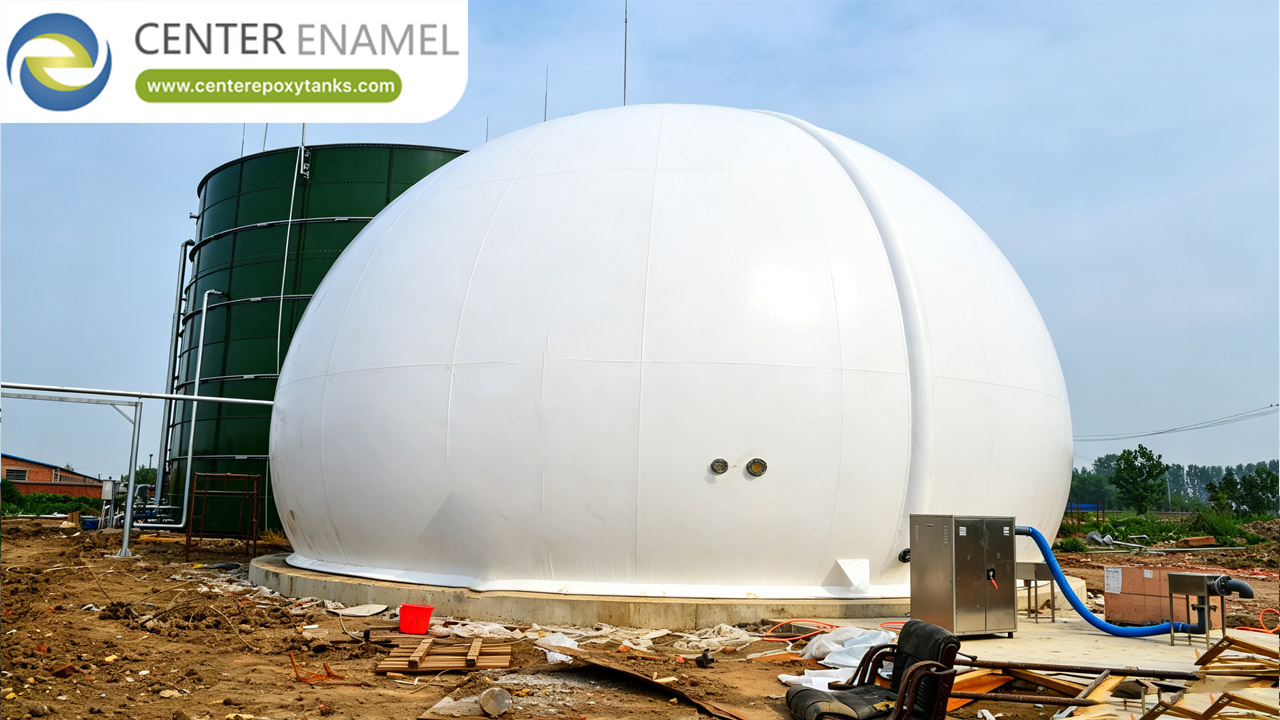
Double Membrane Roofs Built to European Biogas Standards
The European renewable energy sector maintains some of the most rigorous engineering, structural safety, and environmental compliance frameworks in the world. As biogas and biomethane production scale up to meet ambitious decarbonization targets, anaerobic digestion infrastructure—particularly tank-mounted and ground-mounted gasholders—must withstand severe climatic loads, strict emissions limits, and demanding safety audits.
In this highly regulated environment, standard or uncertified gasholders frequently fall short. To guarantee structural longevity, fail-safe operation, and complete regulatory clearance, renewable energy facilities must utilize double membrane roofs built to strict European biogas standards.
The Rigorous Regulatory Landscape of European Biogas Engineering
Designing gas storage infrastructure for the European market requires adherence to multidisciplinary standards that govern structural mechanics, material flammability, electrical grounding, and pressure safety:
EN 1991 (Eurocode 1) Environmental Load Calculations: European standards mandate precise calculation models for regional wind actions, unbalanced snow accumulations, and thermal variations. Double-membrane roofs must be engineered to handle localized wind uplift and heavy snow sliding without risking structural collapse or membrane tearing.
EN 13501 Fire Behavior and Material Safety: Membrane fabrics must meet strict classification criteria for flame retardancy, preventing rapid fire spread in the event of an industrial accident or electrical fault.
ATEX Directive Compliance: Because biogas contains flammable methane mixtures, all electrical components, blowers, pressure sensors, and grounding connections must comply with ATEX equipment categories for explosive atmospheres.
Technical Performance Matrix: Biogas Membrane Standards Compliance
Technical Parameter | European Standard Compliant Double Membrane Roofs | Standard Non-Certified Gasholders | Traditional Steel Gas Holders | Concrete Gas Vaults |
Primary Regulatory Alignment | Strict compliance with EN 1991 (Eurocode 1), ATEX, and EN 13501 | Complies with basic local codes only; lacks comprehensive structural cross-checking | ASME or localized pressure vessel codes | Local civil batch-pour specifications |
Wind & Snow Load Engineering | Engineered via Finite Element Analysis (FEA) for regional Eurocode snow/wind zones | Generic load ratings with limited safety margins | High mass resistance, but vulnerable to heavy corrosion | High mass resistance, but poor seismic joint flexibility |
Material Traceability & Testing | Fully certified high-tenacity PES fabrics with documented tensile strength and UV ratings | Inconsistent fabric sourcing with minimal batch verification | Mill test reports required for structural steel plates | Dependent on local batch pours and site curing tests |
Fire Retardancy & Safety Rating | High-grade flame-retardant coatings meeting strict European fire safety classes | Basic or uncertified flame resistance | Non-combustible steel, but vulnerable to external fire heat buckling | Non-combustible concrete structure |
Key Design Features of European-Standard Membrane Roofs
1. Advanced High-Frequency (HF) Seam Welded Architecture
To pass stringent European quality audits, membrane panels are fused using advanced high-frequency welding machines. This molecular-level fusion ensures that joint tensile strength exceeds the base fabric, eliminating weak spots prone to micro-leakage under continuous internal pressure.
2. Intelligent Pressure Regulation and Safety Systems
European-standard systems integrate redundant safety and monitoring equipment, including:
Continuous dual-air blowers with automatic switchover capability.
Calibrated mechanical and liquid safety relief valves to prevent overpressurization.
Integrated lightning protection grounding braids compliant with international safety codes.
Frequently Asked Questions (FAQ)
Q: Why are double membrane roofs built to European standards crucial for biogas plants?
A: European standards (such as EN 1991 Eurocodes and ATEX directives) ensure that gasholders can safely withstand regional wind uplift, heavy snow loads, and explosive atmospheres, protecting capital investments and ensuring full legal compliance.
Q: How do European-compliant double-membrane roofs manage heavy snow loads?
A: They are engineered with optimized dome geometries and high-pressure outer membrane parameters that promote natural snow sliding. FEA modeling ensures the structure resists unbalanced snow accumulations without deforming.
Q: Are all components of an EN-compliant gasholder certified for explosive atmospheres?
A: Yes. All electrical devices, including support blowers, pressure sensors, and control cabinets, comply with strict ATEX directives for safe operation in potentially explosive methane environments.
Q: Can European-standard double membrane roofs be retrofitted onto existing anaerobic digester tanks?
A: Yes. They are modularly engineered and can be custom-fitted onto existing concrete, steel, or Glass-Fused-to-Steel (GFS) anaerobic digesters to upgrade safety and compliance standards.


