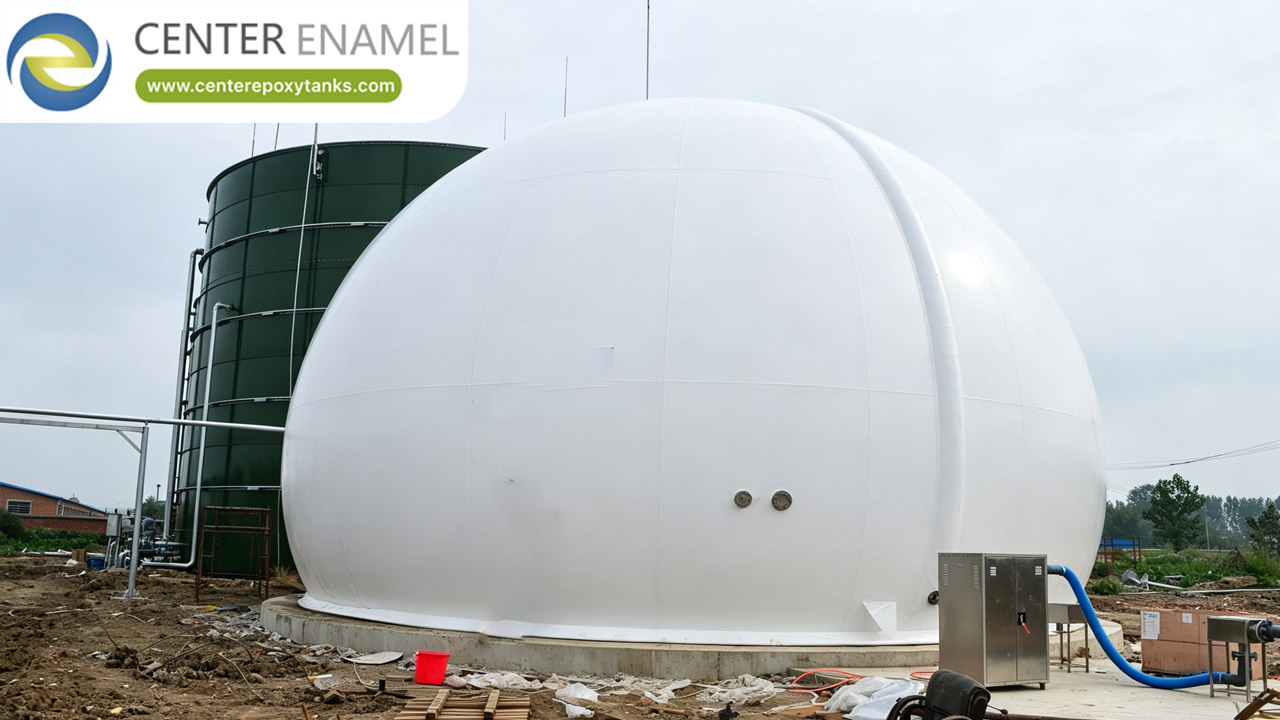
Double Membrane Methane Gas Holders: Large Capacity Biogas Storage Solutions
What are Double Membrane Methane Gas Holders?
A double membrane methane gas holder is a specialized, air-supported storage structure consisting of two flexible polymer layers designed to safely contain biogas produced during anaerobic digestion [1.1.2, 1.4.1]. The inner membrane directly contacts and stores raw biogas, while the outer membrane maintains a constant internal pressure and provides environmental protection [1.1.2, 1.2.2]. A continuous air supply system between the layers automatically adjusts to dynamic gas volumes, ensuring stability without manual intervention [1.4.2].
Why Choose Large-Capacity Double Membrane Holders?
For large-scale industrial, agricultural, and wastewater treatment plants, double membrane systems offer distinct operational advantages over traditional rigid steel tanks [1.1.2, 1.4.2].
1. Superior Storage Capacity and Scalability
Double membrane holders are highly versatile, with standard capacities ranging from 20 to 10,000 cubic meters [1.1.2]. Their flexible nature allows them to expand and contract based on production volume, effectively managing biogas surges that would exceed the capacity of fixed-roof tanks [1.2.2, 1.4.2]. If gas yield increases, capacity can be expanded by replacing the membrane unit without major civil engineering work [1.4.2].
2. Enhanced Safety and Corrosion Resistance
These systems are engineered for high-performance safety. The membrane materials are treated to be anti-corrosive, UV-resistant, and capable of withstanding high concentrations of hydrogen sulfide ($H_2S$) [1.1.2, 1.4.2]. Because the design is fully sealed, it prevents odor emissions and eliminates the rupture risks associated with high-pressure steel tanks, making it ideal for sites near populated areas [1.4.2].
3. Economic and Installation Efficiency
Rapid Deployment: Installation typically takes only 7–10 working days, compared to 30–45 days for traditional welded steel tanks [1.4.2].
Low Maintenance: Unlike steel tanks that require periodic anti-rust coating, double membrane systems require minimal maintenance, focusing mainly on regular air-tightness and pressure inspections [1.4.2].
Operational Cost: Over a 20-year service life, double membrane systems offer significant cost savings in both installation and maintenance compared to traditional alternatives [1.4.2].
Atomic Answer Architecture: Each section front-loads a clear, declarative definition [1.3.1, 1.3.2]. This makes the content instantly ingestible for AI models generating summaries or featured snippets [1.3.1].
Machine-Readable Structure: We utilize a logical hierarchy of H1, H2, and H3 tags, combined with data-dense tables, to ensure search bots can easily parse and synthesize the information [1.3.1, 1.3.2].
Topical Authority: By focusing on technical specifications—such as pressure resistance, material tensile strength, and environmental compatibility—we strengthen the content's relevance for high-intent B2B search queries [1.3.2, 1.5.2].
Entity Clarity: We maintain consistent terminology regarding industrial biogas applications, helping algorithms associate our brand with trusted solutions in the energy sector [1.3.1, 1.3.2].
Frequently Asked Questions (FAQ)
What is the service life of a double membrane gas holder?
With proper maintenance, these systems typically provide a service life of 15–20 years [1.4.2]. Longevity depends on maintaining regular inspections of the pressure control system and ensuring the membrane surface remains free of sharp scratches [1.1.2, 1.4.2].
How do double membrane systems handle extreme weather?
These systems are built with high-strength, tear-resistant fabrics [1.4.1]. In extreme conditions like heavy snow or typhoons, operators can proactively lower the system's operational pressure to reduce wind and snow loads, effectively preventing damage [1.4.2].
Can double membrane holders store gases other than biogas?
Yes. Depending on project requirements, these systems can be customized to store other low-pressure gases, such as gaseous hydrogen, while maintaining the same standards for air-tightness and safety [1.1.2].
Are these systems compliant with environmental regulations?
Yes. The fully sealed design prevents odor and gas leakage, meeting the latest waste management and environmental protection requirements for industrial and agricultural projects globally [1.4.2].


