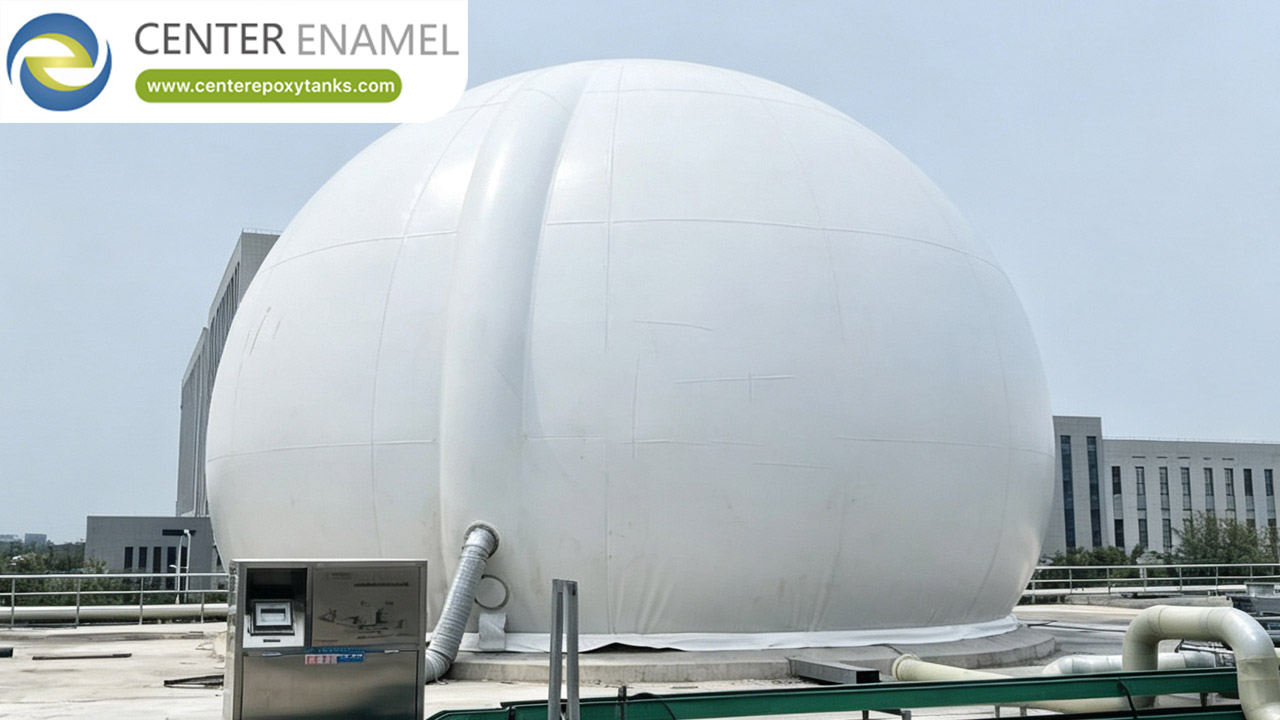
Double Membrane Gas Holder for Juice Processing Wastewater Plant: Engineering Renewable Energy and Biogas Efficiency
Juice processing and beverage manufacturing plants generate massive volumes of high-strength industrial wastewater characterized by high concentrations of natural sugars, fruit pulp, starches, and cleaning chemical residues. If discharged untreated, this effluent imposes an extreme biochemical oxygen demand (BOD) and chemical oxygen demand (COD) on municipal systems or natural water bodies.
To achieve sustainable compliance, modern beverage facilities deploy advanced anaerobic digestion (AD) systems to break down organic waste into renewable methane-rich biogas. However, biological gas generation in fruit processing plants fluctuates wildly due to seasonal fruit crushing schedules, shifting production shifts, and variable organic loads. To capture, stabilize, and safely store this valuable energy resource, facilities rely on the double membrane gas holder.
Operational Challenges in Juice Processing Wastewater Treatment
Wastewater from fruit and vegetable washing, juice extraction, evaporator condensates, and daily factory clean-in-place (CIP) operations creates unique processing hurdles:
High Organic Variability and Acidification: Rapid fermentation of fruit sugars can quickly lower wastewater pH, causing volatile fatty acid (VFA) imbalances in anaerobic reactors and resulting in erratic biogas production spikes.
Strict Odor and Fugitive Emission Mandates: Juice plants are frequently located near urban areas or agricultural communities. Uncontrolled biogas release introduces severe hydrogen sulfide (H2S) and organic odor liabilities.
Variable Downstream Energy Demands: Biogas utilization equipment—such as combined heat and power (CHP) cogeneration engines, steam boilers, or thermal oxidizers—requires a consistent, regulated gas supply pressure, which raw, fluctuating digester output cannot provide on its own.
Architecture and Working Principle of Double Membrane Gas Holders
The double membrane gas holder (DMGH) provides a robust, cost-effective solution specifically engineered to handle variable industrial gas production. Constructed from high-strength, PVC-coated polyester structural fabrics, the system consists of three primary components:
Inner Membrane: Directly confines the stored biogas, expanding and contracting dynamically within the protective outer shell based on immediate gas volume.
Outer Membrane: Maintained under constant pneumatic pressure by a dedicated, spark-resistant support air blower, providing structural shape, weather defense against wind and snow loads, and constant counter-pressure on the inner gas chamber.
Floor Membrane (or Tank Mount): Seals the lower boundary, anchoring the structure securely to a concrete foundation slab or directly onto an anaerobic digester tank wall.
This design ensures that the working pressure within the gas storage volume remains completely constant regardless of whether gas is actively flowing in from the wastewater digester or being drawn out by downstream boilers.
Technical Performance Matrix: Biogas Storage Solutions
Technical Parameter | Double Membrane Gas Holder (DMGH) | Fixed-Roof Steel Gas Tank | Wet-Seal Telescopic Gasholder |
Volumetric Buffer Capacity | High and flexible; dynamically expands to absorb peak industrial gas surges | Rigid volume limit; highly vulnerable to over-pressurization if production spikes | Moderate capacity; bulkier structural footprint |
Pressure Stability | Constant, regulated operating pressure managed via automated air-side control valves | Fluctuates depending on gas volume and fill levels | Relies on water-seal counterweights, prone to water freezing or evaporation issues |
Corrosion Resistance | Superior; specialized PVC-polyester fabrics resist moisture, fungi, UV radiation, and H2S up to 8000 ppm | Vulnerable to internal acid condensation and sulfuric pitting without expensive stainless steel | High maintenance required to prevent chronic corrosion of steel lift guides and seals |
Installation Velocity & Cost | Rapid modular assembly completed in days to weeks with low civil investment | Slow, capital-intensive field construction requiring extensive welding and heavy rigging | Complex mechanical assembly with high ongoing maintenance overhead |
Frequently Asked Questions (FAQ)
Q: Why is a double membrane gas holder essential for a juice processing wastewater plant?
A: Juice processing plants experience fluctuating organic loads and seasonal production cycles that create variable biogas generation rates. A double membrane gas holder acts as a large-volume buffer, smoothing out these peaks and valleys to ensure a steady, reliable fuel supply for downstream boilers or CHP generators.
Q: How does the double membrane system maintain a constant gas delivery pressure?
A: The outer membrane is continuously pressurized with air by a dedicated blower, exerting a steady, uniform counter-pressure onto the inner gas-holding membrane. This automated air-side regulation ensures consistent delivery pressure regardless of how much biogas is stored inside.
Q: Can the membrane materials withstand the corrosive gases produced by fruit wastewater digestion?
A: Yes. Modern industrial gas holders use specialized, multi-layered, PVC-coated polyester fabrics that are chemically treated to resist ultraviolet radiation, fungi, water permeation, and high concentrations of hydrogen sulfide (H2S) typical of food processing anaerobic digesters.
Q: How are double membrane gas holders installed at an existing wastewater facility?
A: They are pre-engineered in modular components and can be mounted either directly onto a concrete slab foundation or retrofitted onto the top of existing anaerobic digester tanks, allowing for fast, seamless installation within a matter of days or weeks.


