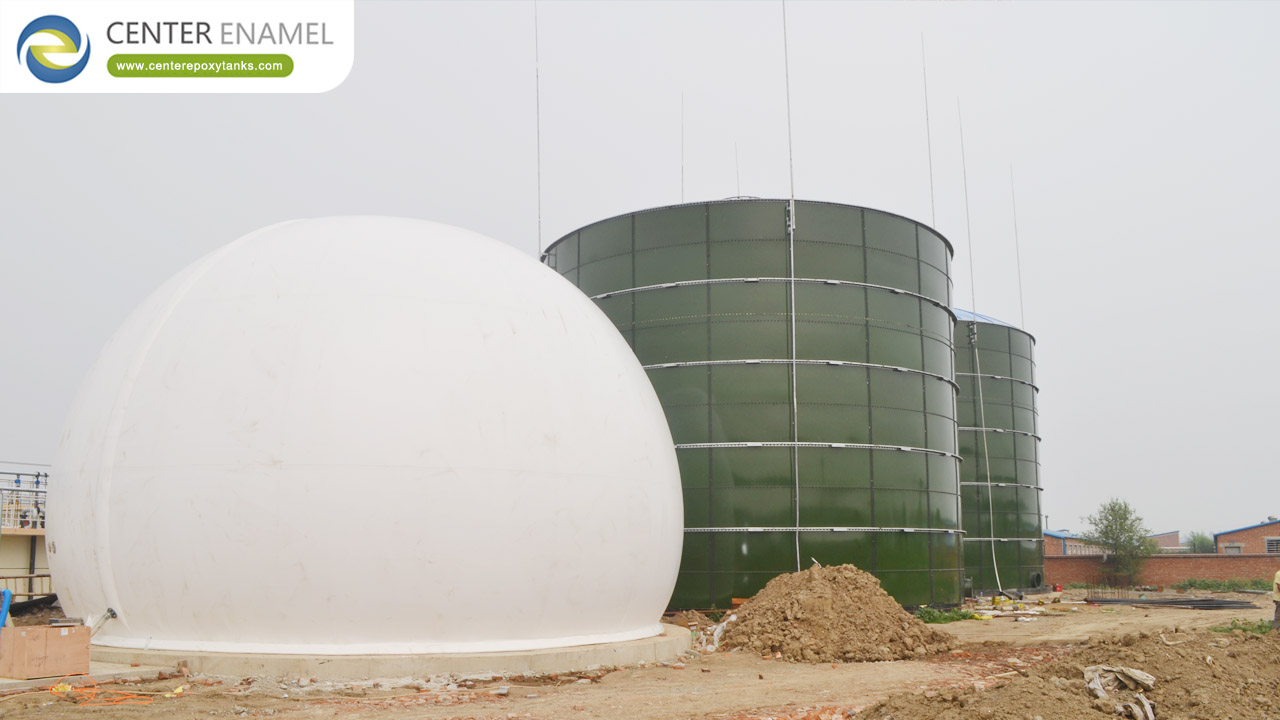
Double Membrane Biogas Storage Balloon: Engineering & Integration Guide
In the rapidly expanding renewable energy sector, capturing and storing biogas (predominantly CH4 and CO2) generated from agricultural waste, municipal sludge, and industrial effluent is a critical capability. As global sustainability initiatives drive the construction of new biogas plants—from European municipal centers to advanced agricultural demonstration projects in northern Mexico—efficient, scalable gas storage is required to bridge the gap between continuous anaerobic digestion and intermittent energy consumption.
The Double Membrane Biogas Storage Balloon (often deployed as an integrated dome atop a digester or as a freestanding unit) has become the industry standard. By utilizing advanced polymorphic textiles and dynamic pressure regulation, these systems provide high-capacity volumetric storage while maintaining the strict environmental and safety controls required for combustible gas management.
1. Structural Architecture & Dynamic Pressure Mechanics
Unlike fixed steel roofs, a double membrane system is a dynamic, volumetric lung. It consists of three primary components: an inner membrane (the gas barrier), an outer membrane (the weather and structural shield), and a bottom membrane (for freestanding configurations).
An automated air blower continuously injects atmospheric air into the interstitial space between the inner and outer membranes. This serves two critical mechanical functions:
1. It keeps the outer membrane fully inflated and structurally rigid against extreme wind and snow loads.
2. It exerts a constant, uniform pressure on the inner gas membrane, ensuring that biogas is delivered to the downstream engine or boiler at a steady flow rate, regardless of the actual volume of gas stored.
Membrane Stress Engineering
To prevent catastrophic structural failure under high internal pressures or external environmental loads, the membrane textile must be engineered to handle high tensile stress. The mechanical stress (sigma) acting on the spherical dome is calculated using the thin-wall pressure vessel equation:
By utilizing high-tenacity polyester yarns woven into a bi-axial grid, top-tier manufacturers ensure the membrane can withstand extreme tensile forces while maintaining a substantial safety factor.
2. Advanced Material Science: Biogas Resistance
Raw biogas is highly aggressive. It is saturated with water vapor and contains hydrogen sulfide (H2S), which can condense into corrosive sulfuric acid. Furthermore, the outer dome is subjected to constant UV radiation and thermal cycling.
● Inner Membrane (Gas Barrier): Coated with specialized PVC or polyurethane formulations that are strictly engineered to be impervious to methane permeation. The coating must also resist acidic condensate and sulfur compounds to prevent embrittlement over its 15 to 20-year service life.
● Outer Membrane (Weather Shield): Utilizes a heavier PVC coating fortified with UV inhibitors and anti-fungal treatments. Advanced surface lacquers (such as PVDF or pure Teflon/PTFE) are often applied to create a self-cleaning "lotus effect," ensuring dirt and snow slide off easily, maintaining the dome's structural geometry and aesthetic profile.
● High-Frequency Welding: The individual panels of the dome are not stitched. They are fused using industrial high-frequency (HF) welding. This process melts the polymer coatings together at the molecular level, creating a seam that is often stronger than the base fabric itself and 100% gas-tight.
3. Integration with Glass-Fused-to-Steel (GFS) Digesters
For utility-scale industrial and agricultural projects, double membrane roofs are most frequently integrated directly onto the top flange of Glass-Fused-to-Steel (GFS) anaerobic digesters. This configuration offers significant engineering advantages.
Engineering Vector | GFS Tank + Membrane Roof | Concrete Tank + Fixed Roof |
Capital Efficiency | Eliminates the need for a separate ground-level gas holder. | Requires separate gas storage infrastructure or expensive concrete domes. |
Corrosion Resistance | Both the GFS shell (glass/steel fusion) and the PVC membrane are highly resistant to H2S attack. | Concrete is highly susceptible to H2S induced micro-cracking and rebar corrosion. |
Deployment Speed | Both the bolted GFS tank and the folded membrane ship in standard containers and assemble rapidly on-site. | Intensive rebar, formwork, and curing timelines delay project commissioning. |
Volumetric Flexibility | Dynamic inner membrane accommodates fluctuating gas production naturally. | Fixed volume; highly susceptible to over-pressurization if safety valves fail. |
4. Safety Systems & Regulatory Compliance
Handling large volumes of methane requires strict adherence to international safety directives, such as the ATEX directive in Europe and NFPA standards in North America.
● Hydraulic Overpressure Valves: Every system must be equipped with mechanical, water-sealed safety valves. If the automated sensors fail and the inner gas volume expands beyond design capacity, these passive valves automatically breach, venting excess biogas to the atmosphere or a flare stack to prevent the dome from rupturing.
● Gas Volume Measurement: Advanced systems utilize ultrasonic sensors or mechanical wire-actuated encoders positioned at the apex of the dome. These devices continuously measure the height of the inner membrane, transmitting real-volume data (4-20mA signals) directly to the plant's SCADA system for precise energy yield calculations.
● Explosion-Proof Components: All electrical components operating near the dome, including the air blowers, pressure transmitters, and radar sensors, must carry strict explosion-proof (Ex-d) ratings to prevent spark ignition in the event of a minor gas leak.
Frequently Asked Questions (FAQ)
Q: Can a double membrane balloon withstand extreme winter conditions?
A: Yes. The constant flow of air from the blower prevents freezing between the layers. Additionally, the outer membrane is designed with a steep spherical geometry to shed snow loads efficiently. For extreme alpine environments, the air intake can be heated to prevent ice formation.
Q: How is the pressure adjusted for different types of downstream gas engines?
A: The operational pressure is dictated by the air blower and the associated pressure control valves. By adjusting the variable frequency drive (VFD) on the blower and setting the mechanical relief valves, the system can maintain precise output pressures, typically ranging from 10 mbar to 30 mbar, depending on the requirements of the generator or gas upgrading unit.
Q: What is the typical maintenance schedule for these membrane systems?
A: Because there are very few moving parts, maintenance is minimal. It generally involves quarterly visual inspections of the membrane for physical damage, checking the tension of the anchoring straps, and annual servicing of the air blowers and hydraulic safety valves.


