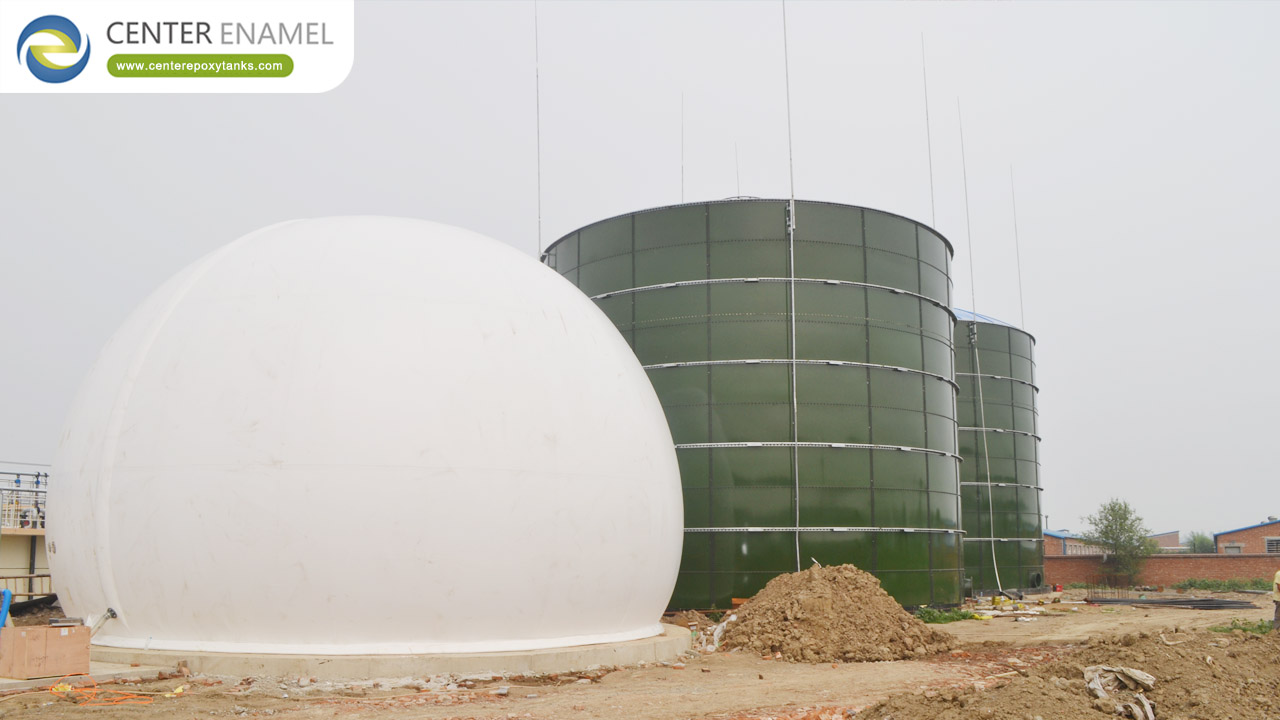
Double Membrane Biogas Storage Balloon for CBG Plants: Engineering & Sizing Guide
In the transition from raw anaerobic digestion to high-value Compressed Biogas (CBG), the double-membrane biogas storage balloon serves as the vital pneumatic buffer. Because digestion is a continuous 24-hour process while biogas purification and compression (CNG) systems often operate on variable demand, a flexible storage solution is mandatory. This technology maintains a constant operating pressure, prevents methane flaring, and ensures a smooth, continuous feed to the compressor intake manifold.
1. Engineering the Pneumatic Buffer
Unlike rigid steel tanks, a double-membrane gas holder is a dynamic, air-supported structure. The engineering design solves a critical operational hurdle: maintaining steady-state gas pressure.
● The Inner Membrane: A gas-tight, flexible chamber that expands and contracts based on gas production and compressor consumption.
● The Outer Membrane: A high-tension, weather-resistant shell that protects the internal system.
● The Air Support Blower: A critical component that continuously pumps ambient air into the interstitial space between the inner and outer membranes. This provides the structural rigidity of the outer dome and applies constant downward pressure against the inner membrane, ensuring the biogas is pushed uniformly toward the outlet manifold.
2. Material Science: Industrial Durability
Biogas (specifically raw biogas) contains hydrogen sulfide (text{H}2text{S}) and saturated water vapor, both of which are highly corrosive. Membranes must be engineered from advanced textiles rather than standard industrial fabrics.
● Substrate: High-tensile Polyester (PES) mesh is used to resist structural stretching and tearing under pneumatic loads.
● Coating: Specialized Polyvinyl Chloride (PVC) or Polyurethane (PU) coatings are used to create a gas-tight barrier that prevents methane diffusion and resists acid degradation.
● UV & Thermal Stability: The outer membrane is treated with anti-aging compounds, allowing the structure to maintain flexibility in temperatures ranging from -30 °C to +70 °C.
3. Sizing the Buffer Volume for CBG
Properly sizing the balloon is essential for CBG plant efficiency. Undersizing results in gas flaring (waste), while oversizing leads to unnecessary capital expenditure.
The required buffer volume (Vb) is calculated based on daily biogas production (Qp) and the desired buffer duration (tb):
Pro-Tip: If your CBG compression system operates in batches (e.g., filling trucks only during daytime hours), a buffer time of 10–12 hours is recommended to capture all nighttime production without flaring.
4. Comparative Analysis: Membrane vs. Steel Gas Holders
For CBG project managers, selecting the storage medium dictates installation speed, maintenance costs, and facility footprint.
Feature | Double-Membrane Balloon | Rigid Steel Gas Holder |
Capital Cost | Low (Minimal foundation req.) | High (Heavy civil works) |
Operating Pressure | Constant (Pneumatically regulated) | Variable (Decreases as gas drawn) |
Corrosion Risk | Zero structural corrosion | High (Requires internal epoxy) |
Installation Time | Rapid (Days) | Extended (Weeks/Months) |
Lifespan | 10–15 years | 25–30+ years |
5. Safety and Instrumentation Protocols
Handling combustible gas requires stringent safety integration directly into the balloon's pneumatic design:
1. Hydraulic Overpressure Valve: A liquid-seal relief valve that safely vents biogas to the atmosphere or a flare system if internal pressure exceeds safety limits (typically 15–50 mbar).
2. Ultrasonic Level Sensors: Mounted at the apex of the outer dome, these provide real-time volume data to the plant’s SCADA system, allowing for automated compressor control.
3. Gas Detection: Methane sniffers are installed at the blower air intake and around the base perimeter to detect membrane tears before gas concentrations reach the Lower Explosive Limit (LEL).
Technical FAQ
Q: Is a double-membrane biogas balloon explosion-proof?
A: The system is designed to prevent explosive atmospheres by maintaining positive pressure (the gas pressure is always higher than ambient air). However, all electrical components (blowers, sensors) must be ATEX/IECEx certified for explosive zones.
Q: Can these balloons be installed in highly windy or snowy regions?
A: Yes. The outer membrane is engineered with specific tensile strengths based on regional ASCE or Eurocode wind/snow load calculations. In high-wind areas, additional tension straps are utilized to secure the dome.
Q: How often do the membranes require replacement?
A: In standard operational conditions, the service life of high-quality industrial biogas membranes is approximately 10 to 15 years. Regular inspection of the outer membrane for UV-related brittleness is recommended.
The double-membrane biogas balloon is the most reliable, cost-effective solution for creating the pneumatic buffer required by high-pressure CBG systems. By prioritizing high-tensile PES substrates and integrating precise automated instrumentation, CBG plant operators can maximize their gas recovery efficiency and ensure the longevity of their downstream compression infrastructure.
Are you currently sizing a biogas storage buffer for a CBG facility, and would you like to review the specific structural loading requirements for your project's regional wind conditions?


