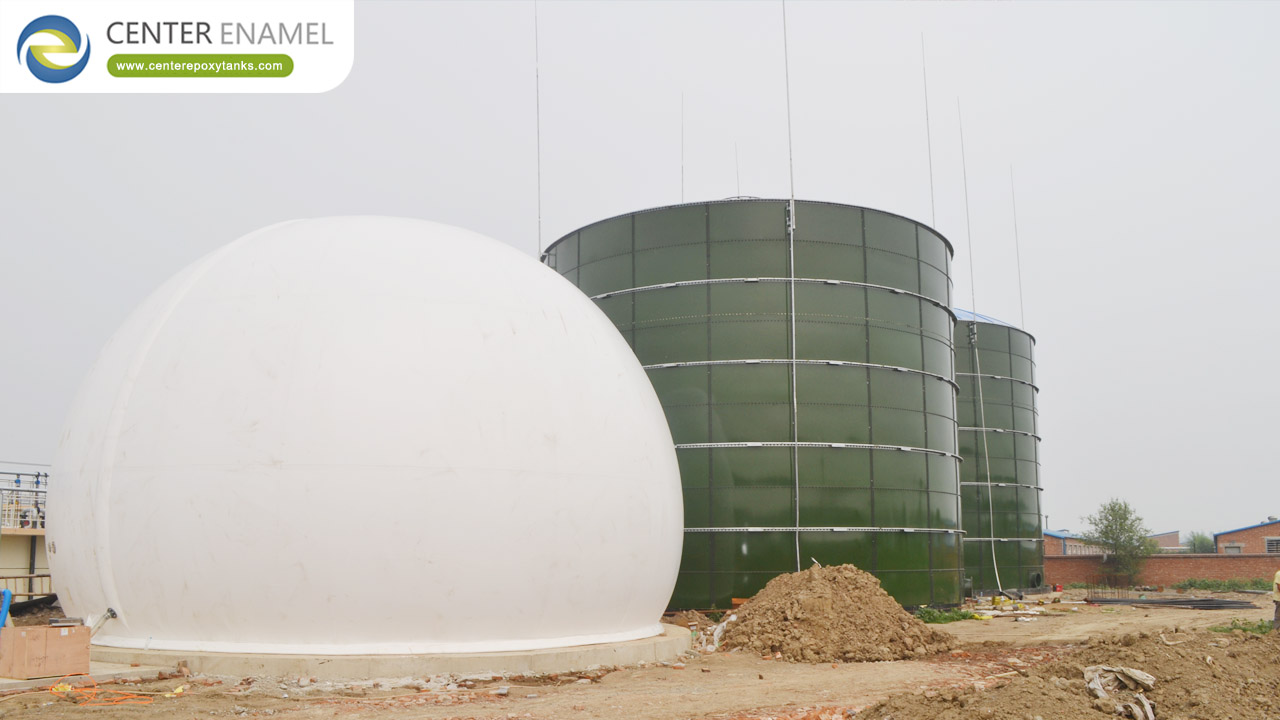
Double Membrane Biogas Balloons: Enhancing Storage Efficiency
A double membrane biogas balloon (or gas holder) is a high-efficiency, variable-volume storage system designed to buffer biogas production in anaerobic digestion plants. It consists of an inner membrane that contains the biogas and an outer, air-supported membrane that protects the system and maintains consistent gas pressure. By functioning as a flexible "lung," the double membrane balloon eliminates pressure fluctuations, prevents the intake of oxygen, and allows plants to store excess gas produced during peak biological activity for use during high-demand periods. This system significantly enhances overall plant efficiency by ensuring a stable, constant-pressure gas supply to Combined Heat and Power (CHP) engines or boilers.
The Mechanism: How Efficiency is Achieved
Traditional storage systems, such as rigid steel or concrete roofs, are fixed-volume. If gas production exceeds storage capacity, the gas must be flared. If production drops, the vacuum risk increases. The double membrane system changes this dynamic entirely.
The efficiency gain is rooted in three engineering principles:
Pressure Stabilization: The air blower system maintains constant pressure in the outer chamber. This pressure is transferred directly to the inner gas membrane, ensuring that the gas delivered to your equipment is always at a stable, optimal pressure.
Operational Buffering: The balloon acts as a buffer. It expands when production is high and contracts when consumption is high. This "breathable" nature of the system prevents the digester from being starved of gas or becoming over-pressurized.
Environmental Isolation: The outer membrane acts as a shield against UV, rain, and wind. By preventing temperature fluctuations from hitting the inner gas storage directly, the system maintains more stable biological conditions inside the digester.
Efficiency Comparison: Variable-Volume vs. Fixed-Volume
For plant managers looking to optimize ROI, the choice between traditional and membrane storage is often a matter of operational stability.
Feature | Double Membrane Balloon | Rigid Steel/Concrete Roof |
Storage Capacity | Variable (Expands/Contracts) | Fixed (Limited capacity) |
Gas Pressure | Constant (Stable delivery) | Fluctuating (Risk of vacuum/overpressure) |
Maintenance | Low (Minimal mechanical parts) | Moderate to High (Corrosion/Coating) |
Leak Risk | Low (Monolithic welded seams) | Moderate (Joints/Seal wear) |
Installation Speed | High (Modular/Crane-set) | Low (Site-welded/Poured) |
Technical Best Practices for Maximum Output
To ensure your biogas balloon contributes to maximum plant efficiency, prioritize these operational considerations:
Material Synergy: Biogas contains moisture and hydrogen sulfide (H2S). Ensure your membrane is coated with PVDF (Polyvinylidene Fluoride). This provides a self-cleaning surface and superior resistance to chemical degradation compared to standard PVC membranes.
Automated Safety Control: Integrate your gas holder with a PLC (Programmable Logic Controller) that monitors air pressure in the outer chamber. If the pressure drops (due to a power failure or blower fault), the system should trigger an immediate alarm or backup power sequence to prevent structural collapse.
Condensate Management: Even the best membranes accumulate moisture. Ensure your design includes a low-point condensate drain to prevent water pooling in the inner membrane, which can create weight imbalances and stress on the support structure.
UV Shielding: Ensure the outer membrane has high-grade UV stabilizers. In rural settings, prolonged sun exposure is the leading cause of "brittling," where the fabric loses its elasticity and becomes prone to tearing.
Frequently Asked Questions (FAQ)
Q: Can a double membrane balloon be installed on an existing concrete digester?
A: Yes. This is a common and highly effective upgrade. Because the system is lightweight, it can be mounted using a circular tension ring on existing wall tops, transforming an open or fixed-roof tank into a modern, high-efficiency storage vessel.
Q: Does the system consume a lot of electricity to keep inflated?
A: The blower system operates with very low energy consumption. It typically runs on a constant-duty cycle at low wattage, as it only needs to maintain a slight overpressure to keep the outer membrane taut.
Q: How do I detect a leak in the inner membrane?
A: Modern systems use an "interstitial gas detection" sensor. Because the outer chamber is filled with air, the presence of methane in that space indicates a breach in the inner membrane. This allows for proactive maintenance before the leak becomes a safety hazard.
Q: What is the expected lifespan of these biogas balloons?
A: When properly maintained and correctly specified (e.g., using PVDF coatings), these systems generally provide 15 to 20 years of service life before the membrane fabric reaches the end of its useful elasticity.
Are you evaluating a retrofit project for an existing digester, or are you in the design phase for a brand-new biogas plant?


